Most roofs do not fail overnight. They decline gradually over years, dropping hints the whole way, and the homeowners who pay attention to those hints replace on their own schedule for a fair price. The ones who do not end up replacing in a panic after water is already running down a bedroom wall, often paying for interior damage on top of the roof itself.
If you own a home in Potomac, Germantown or Clarksburg and your roof has some age on it, these are the seven signs you need a new roof that we tell every homeowner to watch for. Several you can check yourself from the ground. None of them should be ignored.
Why Catching the Signs Early Pays Off
A roof's job is to protect everything beneath it. Once it starts letting water past, the damage spreads fast and invisibly: wet decking rots, insulation loses its R-value, mold grows, and ceilings and walls stain. A roof problem caught at the shingle stage is a roofing bill. The same problem caught after it leaks is a roofing bill plus decking, drywall and sometimes mold remediation.
Watching for these signs lets you replace proactively, on your timeline, with time to choose materials and get competitive quotes. For what that replacement typically costs in this area, see our roof replacement cost guide for Montgomery County.
1. Curled, Cupped or Clawing Shingles
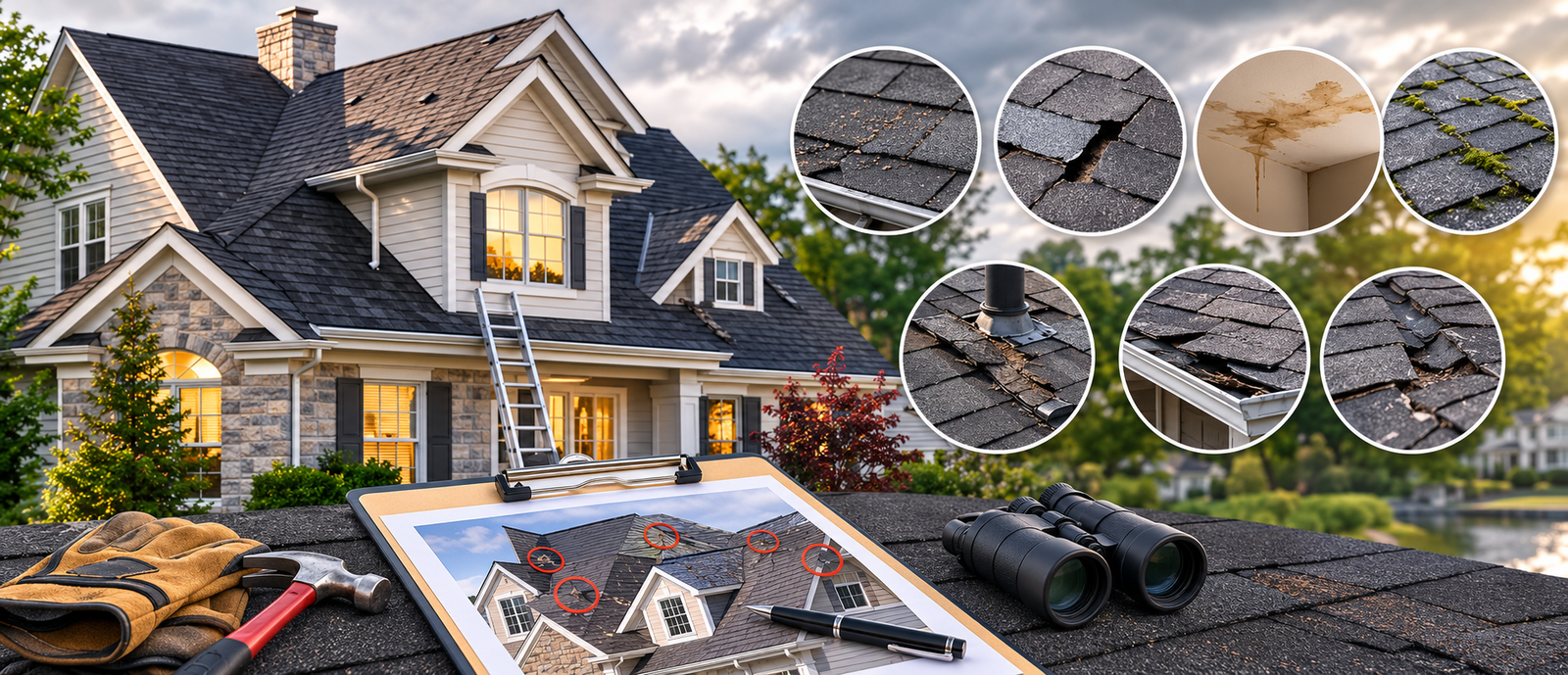
Curled shingles are one of the clearest signals a roof is wearing out. As asphalt shingles age and lose their protective oils, the edges begin to curl up (cupping) or the centers rise (clawing). Curled shingles no longer lie flat, which means wind can get under them and water can get past them. A few curled shingles may be repairable, but widespread curling across the roof means the shingles have reached the end of their service life and the roof needs replacing.
2. Missing Shingles or Bald Patches
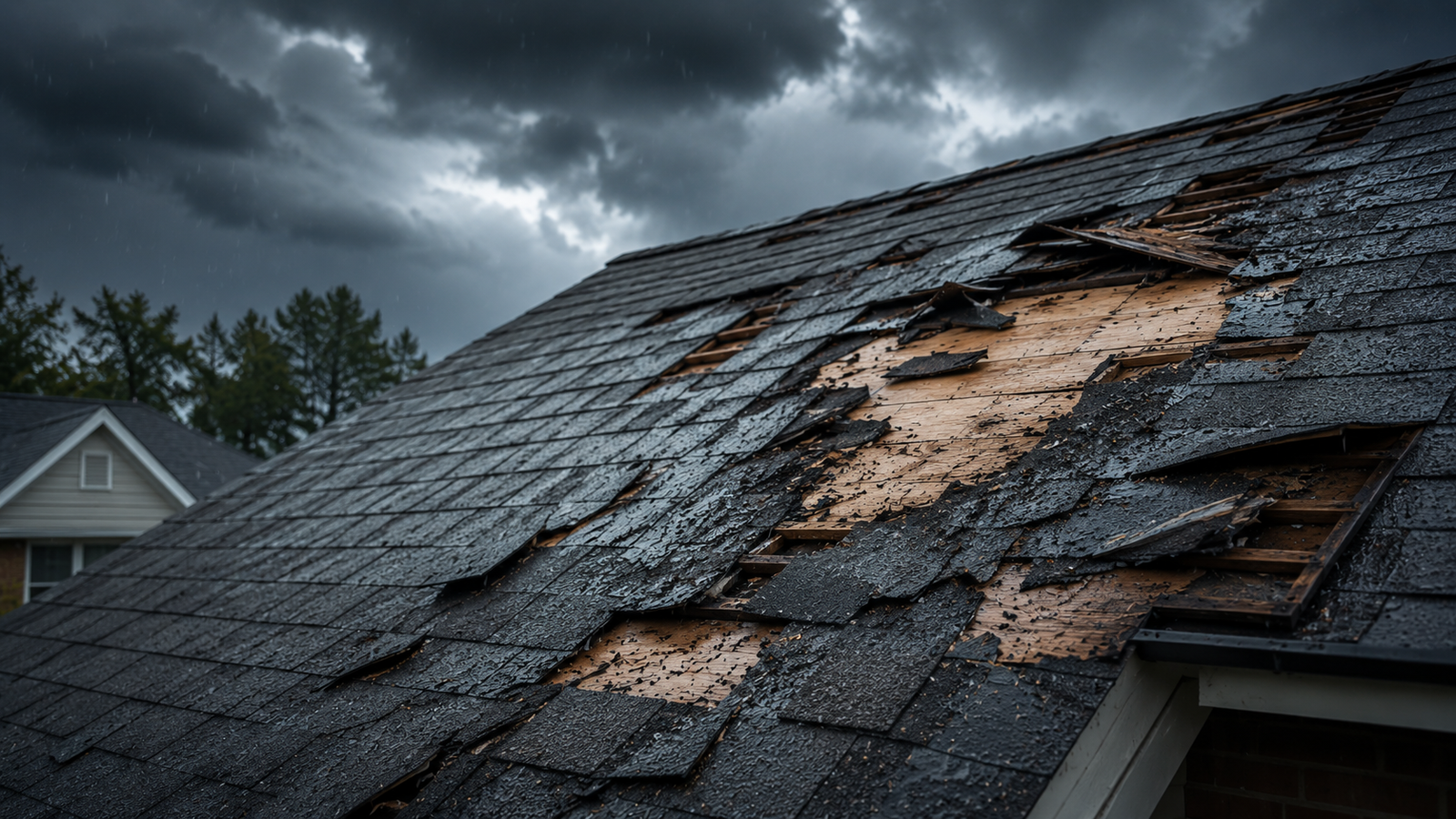
Missing roof shingles leave the underlayment and decking exposed to the weather. After a storm, a few missing shingles can be a simple repair if the rest of the roof is sound. But when shingles are going missing regularly, or when there are bald patches where the shingle has worn down to the mat, the adhesive and material are failing across the board. Recurring loss is a replacement signal, not a patch-and-forget one. Matching old, weathered or discontinued shingles is also difficult, which often tips the decision toward replacement.
3. Granules Collecting in the Gutters
Asphalt shingles are coated in mineral granules that protect the asphalt from UV. As shingles age, they shed those granules, which wash into the gutters and collect under the downspouts looking like coarse black sand. A little granule loss on a new roof is normal. Granules in gutters from an older roof, especially in quantity, mean the shingles are losing their protective layer and aging fast. Bald, granule-stripped shingles fail quickly once the asphalt is exposed.
4. A Sagging Roof Line
This is the most serious sign on the list. A straight, even roof line that develops a dip, wave or sag points to a structural problem underneath, not just worn shingles. A sagging roof line usually means moisture has rotted the decking or rafters, the structure is overloaded (often by multiple layers of old shingles), or there is a framing issue. Unlike worn shingles, a sag is urgent: it indicates the roof structure is failing and, left alone, can progress toward collapse. If you see your roof sagging in the middle or along a ridge, get it inspected right away.
Curling shingles or granule loss can wait a few weeks for a planned inspection. A sagging roof line cannot. It is the one sign on this list that signals a structural problem rather than surface wear, and it should be assessed promptly because the cost and danger only grow with time.
5. Daylight or Water Stains in the Attic
Your attic tells the truth about your roof. Go up with a flashlight, ideally on a bright day and again during rain. If you can see daylight coming through the roof boards, there are gaps that are also letting in water. Dark stains or streaks on the underside of the decking, damp or matted insulation, or a musty smell all mean water is already getting in. Interior ceiling stains are the late-stage version of the same problem. Active moisture in the attic on an older roof is a strong replacement signal.
6. Your Roof Has Simply Reached Its Age
Even a roof that looks okay from the ground may be living on borrowed time based on age alone. The lifespan of an asphalt roof in Maryland is roughly 15 to 20 years for basic 3-tab shingles and 25 to 30 years for architectural shingles. If you know your roof is approaching or past that age, it is worth a professional inspection even without obvious damage, because the final years of a roof's life are when leaks suddenly appear. If you do not know the roof's age, a home inspection report or the original permit can often tell you.
7. Moss, Rot or Widespread Damage
Heavy moss and algae growth, particularly in shaded areas, traps moisture against the roof and accelerates decay, and it often signals that the shingles are already breaking down. Combined with soft, spongy spots underfoot (which indicate rotted decking) and visible widespread damage, this points to a roof that is failing as a system rather than in one location. When the problems are everywhere instead of in one spot, replacement is almost always the better value than chasing repairs across the whole roof.
Seeing One or More of These Signs?
A free professional inspection tells you exactly where your roof stands and whether it is a repair or a replacement, with no pressure either way. We serve Potomac, Germantown, Clarksburg and all of Montgomery County.
Repair or Replace? How to Decide
One or two of these signs in isolation, on a younger roof, often means a repair. Several signs together, or any of them on a roof that is already near its age limit, usually points to replacement. The honest deciding factors are simple:
- Age: A roof near or past its expected lifespan is a replacement candidate even if damage looks minor.
- Extent: Problems in one spot favor repair. Problems across the whole roof favor replacement.
- Cost trend: When repairs start adding up to a meaningful fraction of replacement cost, replacing is the better value.
- Structure: Any sagging or structural sign moves the needle hard toward replacement.
A reputable roofer recommends repair when repair genuinely makes sense. If your roof took recent storm damage, our guide on spotting hidden roof storm damage covers what to document for insurance. And when it is time to choose materials, our CertainTeed vs GAF comparison helps. We provide free, honest inspections through our roof and gutter service across Potomac, Germantown and Clarksburg.