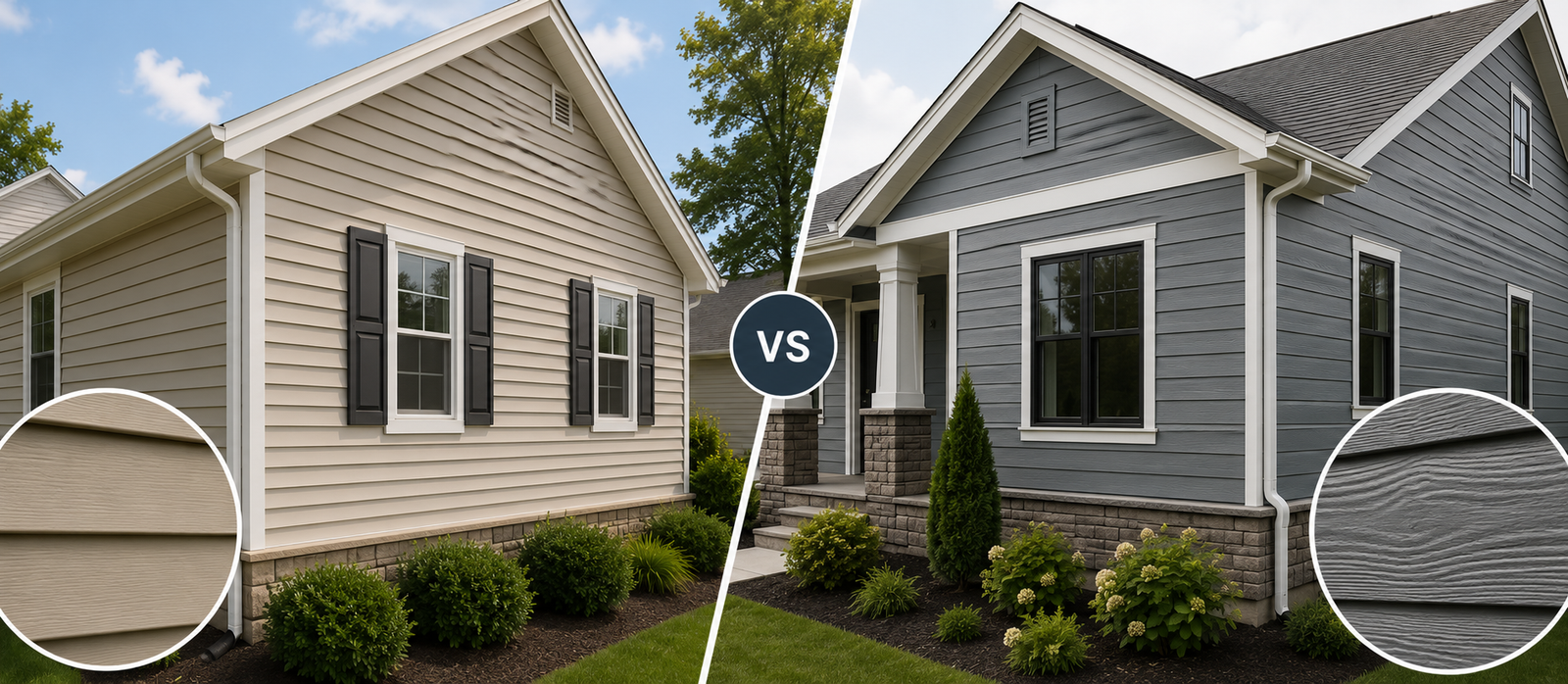
Siding does two jobs at once: it is the single biggest visual element of your home's exterior, and it is the weather barrier that keeps rain, wind and pests out of the walls. When it fails or dates a home, replacing it transforms both curb appeal and protection. Understanding siding replacement cost in Montgomery County starts with the two materials that dominate the decision here, vinyl and James Hardie fiber cement, and what separates them.
The numbers below reflect the market we work in every day through our siding and windows service: a high-cost metro with a humid, freeze-thaw climate that puts real demands on exterior materials. This is the honest breakdown, built to help you plan before anyone hands you a quote.
Siding Replacement Costs in 2026: The Overview
For a whole-house reside in Montgomery County, plan on roughly 8,000 to 25,000 dollars for vinyl and roughly 20,000 to 50,000 dollars for James Hardie fiber cement. The spread within each range reflects your home's size, height, detail and the condition of what is under the old siding. The gap between the two materials reflects a genuine difference in durability, longevity and appearance, which the rest of this guide unpacks so you can decide which fits your home and budget.
Siding Cost Per Square Foot
On a siding cost per square foot basis, installed:
| Material | Installed Cost / Sq Ft | Whole-House (Typical) |
|---|---|---|
| Vinyl Siding | $4 – $12 | $8,000 – $25,000 |
| James Hardie (Fiber Cement) | $10 – $20 | $20,000 – $50,000 |
Square footage here means wall area, not floor area, so a two-story home has far more siding than its floor plan suggests. Where you land within each range depends on the factors covered further down, but the material choice is the first and biggest lever.
Vinyl Siding
Vinyl siding is the most popular residential siding in the country, and for good reason: it is affordable, low-maintenance and comes in a huge range of colors and styles. Made from PVC, it never needs painting, an occasional wash keeps it looking good, and because the color runs through the material, scratches are less noticeable than on painted surfaces. Insulated vinyl, with a foam backing, is available for a modest bump in energy performance.
Lifespan: quality vinyl lasts about 20 to 40 years. Its limitations: it can crack in extreme cold or from hard impact, warp or melt near a strong heat source (a grill too close, or sunlight reflected off a neighbor's low-E windows), and fade gradually over many years, though modern vinyl resists fading far better than older products. Lower-grade vinyl can also read as less premium up close. For budget-conscious projects and homeowners who want minimal upkeep, vinyl is a proven, sensible value.
James Hardie / Fiber Cement Siding
James Hardie is the leading brand of fiber cement siding, a material made from cement, sand and cellulose fiber, and "Hardie board" has become nearly synonymous with the category. It sits at the premium end of siding for a reason: it is exceptionally durable and, importantly for Maryland, well suited to a humid, freeze-thaw climate.
Its strengths are substantial: it is non-combustible and fire-resistant, it resists rot, moisture, impact and pests, it holds paint beautifully (and Hardie's factory-applied ColorPlus finishes last a long time before any repainting), and it delivers a realistic wood-grain look that vinyl only approximates. Lifespan: typically 30 to 50 years or more, backed by long manufacturer warranties. The trade-offs: it costs roughly double vinyl, it is heavy and requires specialized installation (which is part of the higher labor cost), and painted (non-ColorPlus) versions will eventually need repainting. For durability, curb appeal and resale, it is hard to beat.
Vinyl vs James Hardie Compared
| Factor | Vinyl | James Hardie |
|---|---|---|
| Cost / sq ft installed | $4 – $12 | $10 – $20 |
| Lifespan | 20 – 40 years | 30 – 50+ years |
| Maintenance | Occasional wash, no painting | Low; eventual repaint (ColorPlus delays it) |
| Durability | Good; can crack or warp | Excellent; impact, rot & pest resistant |
| Fire resistance | Can melt / burn | Non-combustible |
| Appearance | Good, improving | Premium, realistic wood grain |
| Best for | Budget, low maintenance | Long-term value, curb appeal, resale |
Is Hardie Board Worth the Extra Cost?
The honest answer to whether Hardie board is worth the extra cost depends on your timeline and priorities. Hardie runs roughly double vinyl, but it returns more: longer life, fire resistance, superior durability against Maryland's humidity and freeze-thaw cycles, a more premium look, and one of the highest resale returns of any exterior remodel in national cost-versus-value research.
For homeowners staying long-term, focused on curb appeal and resale, or living in higher-end neighborhoods where the look and durability fit the home and the street, Hardie is frequently worth the premium. For budget-driven projects or shorter-term ownership, quality vinyl performs well and stretches the budget further. The test is not the sticker price alone, it is how long you will own the home and what you want the siding to do for it.
Want a Real Number for Your Home?
Siding cost depends entirely on your home's size, height and condition, so ranges only go so far. We measure your home, assess what is under the existing siding, and give you a detailed written estimate for both vinyl and Hardie so you can compare directly. Free consultations across Gaithersburg, Germantown and all of Montgomery County.
What's Underneath: House Wrap
The most important part of a siding job is the part you will never see once it is finished. House wrap is a weather-resistant barrier installed on the wall sheathing beneath the siding, and its role is to manage moisture: it sheds water that inevitably gets behind siding while letting water vapor escape so the wall can dry, together protecting the wood sheathing and framing from rot and mold over the decades the siding is up.
A reside is the ideal, and often only practical, time to install or replace house wrap and to correct the flashing around windows, doors and other penetrations, because those layers are exposed only when the old siding comes off. This is precisely where cutting corners causes expensive hidden damage: siding installed over damaged, missing or improperly lapped house wrap can trap moisture and rot a wall from the inside out, invisibly, for years.
When comparing siding quotes, ask each contractor exactly how they handle house wrap and flashing, not just which siding they are installing. The visible material is only as good as the moisture barrier behind it, and a low bid that reuses old wrap or skips proper flashing is not a bargain, it is deferred, hidden damage. A quality contractor treats the wrap and flashing as seriously as the siding itself, and will also inspect and repair any rotted sheathing found once the walls are opened, since that is the moment to fix it.
What Drives the Price
Beyond the material choice, these factors move siding cost the most:
- Home size. More wall area means more material and labor, this is the biggest single driver.
- Number of stories. Taller homes require staging and are more labor-intensive and costly to work on safely.
- Material and grade. Vinyl versus fiber cement, and the tier within each, sets the baseline.
- Trim and architectural detail. Gables, dormers, angles and decorative trim add cutting and fitting labor.
- Condition of the sheathing. Any rot found under the old siding must be repaired before new siding goes on.
- Removal and disposal. Tearing off and hauling away the old siding is part of the job.
- House wrap, insulation and accessories. New moisture barrier, optional added insulation, and corners, soffit and fascia all factor in.
Siding ROI
Siding ROI is among the strongest of any exterior remodel. National cost-versus-value research consistently shows both fiber cement and vinyl siding recouping a large share of their cost at resale, frequently in the range of roughly 60 to 80 percent, with fiber cement regularly ranking near the very top of all recouped-value projects. The reason is curb appeal: siding is the first thing a buyer sees, and fresh, quality siding signals a well-maintained home and shapes the entire first impression, which genuinely helps a home show and sell in a competitive market like Montgomery County.
Beyond resale, new siding improves weather protection and, with insulated options, can modestly improve energy efficiency. As with any remodel you rarely recoup 100 percent at sale, and the rest of the value comes from years of protection, lower maintenance and better looks while you live there. Of the major exterior projects, siding is one of the more reliable investments in both value and performance.
Signs You Need New Siding
Several clear signs indicate it is time to replace rather than patch your siding:
- Visible damage: cracking, warping, buckling, rotting, or boards pulling away from the wall.
- Widespread fading or a chalky surface that no longer holds up.
- Recurring mold, mildew or moss, which can point to moisture problems.
- Peeling paint or wallpaper on interior walls, a possible sign of moisture getting through the siding.
- Rising energy bills, which can indicate failing siding and insulation.
- Frequent repairs or repainting, where replacement becomes more economical than ongoing upkeep.
- Age: siding near the end of its lifespan (20–40 years vinyl, 30–50+ fiber cement) is worth evaluating even if it still looks passable.
If several of these appear together, especially any hint of moisture intrusion, have the siding assessed, because hidden damage to the sheathing behind it only grows more expensive the longer it waits.
Siding in Gaithersburg, Germantown and Across the County
Siding replacement is in steady demand across our service area, and it climbs heading into late summer and fall as homeowners prepare for winter. As a siding contractor in Gaithersburg MD and for siding installation in Germantown MD, we reside homes in both vinyl and James Hardie, matching the material to the home, the neighborhood and the budget, our work across Germantown and the surrounding communities spans both. Throughout Rockville, Olney, Damascus and the rest of the county, the approach is the same: honest comparison of your options, meticulous attention to the house wrap and flashing underneath, and clean, weather-tight installation.
Whether you choose budget-friendly vinyl or premium Hardie fiber cement, the constants are what protect your home and your investment: honest guidance on the right material for your situation, proper moisture barrier and flashing beneath the siding, and clean, correct installation. That is how we handle every siding replacement in Montgomery County MD, family-owned, MHIC licensed, 75+ years of combined experience, and a strict zero-subcontractor policy that keeps the tear-off, the barrier work and the new siding under one accountable crew, so the layers you cannot see are done as carefully as the ones you can.