Ask ten homeowners how long a roof lasts and you will get ten different answers, most of them wrong, because they are thinking of one material and applying it to all. A basic asphalt roof and a slate roof can differ in lifespan by seventy years or more. So the honest answer always starts with a question: what is your roof made of? Once you know that, and factor in Maryland's climate and how the roof was installed and maintained, you can estimate its remaining life with real confidence.
Below we walk through every common roofing material, from the shortest-lived to the longest, with realistic Maryland numbers rather than the optimistic figures on a manufacturer's brochure. Then we cover the local factors that push those numbers up or down, how to spot an aging roof, and how to squeeze every possible year out of the one over your head.
Roof Lifespan at a Glance
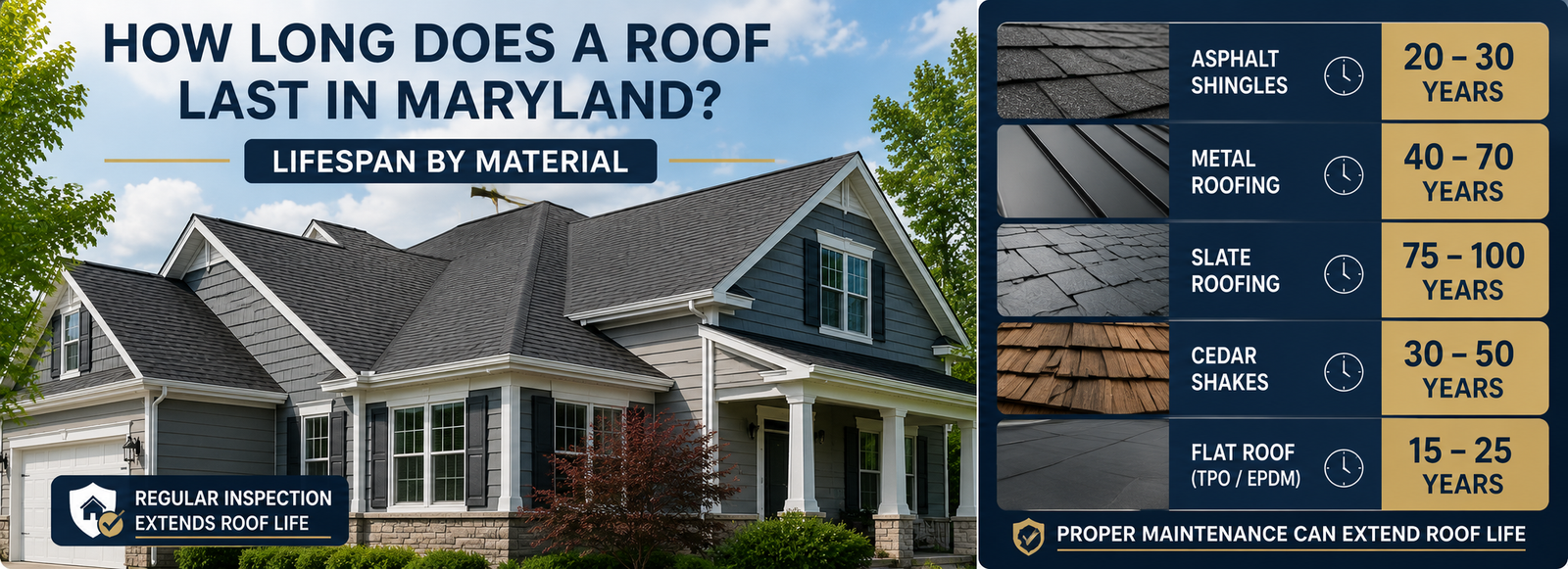
Here is the quick reference. These are realistic service-life ranges for properly installed, reasonably maintained roofs in the Maryland climate. Think of them as starting points, not guarantees, since installation quality and ventilation can move a roof up or down within, and sometimes beyond, its range.
| Roofing Material | Typical Lifespan (MD) | Best For |
|---|---|---|
| 3-Tab Asphalt Shingle | 15 to 20 years | Budget replacements, rentals |
| Architectural Asphalt Shingle | 25 to 30 years | Most Maryland homes, best value |
| Cedar Shake | 30 to 40 years | Traditional and historic looks |
| Metal (Standing Seam) | 40 to 70 years | Longevity, low maintenance |
| Natural Slate | 75 to 100+ years | Historic and premium homes |
3-Tab Asphalt Shingles: 15 to 20 Years
Basic 3-tab asphalt shingles are the most affordable option and the shortest-lived. They are flat, uniform, single-layer shingles, and in Maryland they typically last 15 to 20 years. They handle normal weather fine but are more vulnerable to wind uplift and show their age sooner than premium options.
The asphalt shingle lifespan at the lower end reflects our climate: hot, humid summers and freeze-thaw winters are tougher on thin shingles. If your roof is 3-tab and pushing 15 years or more, it is worth watching closely. For many homeowners replacing a 3-tab roof, upgrading to architectural shingles is the smarter long-term move, and our CertainTeed vs GAF shingle comparison can help you choose.
Architectural Shingles: 25 to 30 Years
Architectural shingles, also called dimensional or laminate shingles, are the most popular choice for Maryland homes and for good reason. They are thicker, heavier, multi-layered, and far more wind-resistant than 3-tab, and they typically last 25 to 30 years here. They also look better, with a dimensional, textured appearance that many homeowners prefer.
For the great majority of homeowners, architectural shingles are the best balance of cost, durability and appearance, which is why they dominate new roofs in the county. A well-installed, well-ventilated architectural roof on a home with reasonable tree cover will often reach the top of its range. Push the ventilation or installation quality the wrong way and it can fall short. This is the material most of our roof replacements use, and you can learn more on our roof and gutter service page.
Metal Roofing: 40 to 70 Years
A quality metal roof, particularly standing-seam, is a generational investment. In Maryland, metal roofs commonly last 40 to 70 years, roughly two to three times the life of architectural asphalt. They shed snow and rain efficiently, resist wind and fire, and require little maintenance. The trade-off is a higher upfront cost.
Because of that metal roof durability, they appeal to homeowners planning to stay in place long-term, or those who simply do not want to think about their roof again for decades. Over a long enough horizon, a metal roof can be competitive on cost per year even though the initial price is higher, since you may replace an asphalt roof two or three times in the lifespan of one metal roof.
Cedar Shake: 30 to 40 Years
Cedar shake roofs bring a natural, rustic look that suits traditional and historic Maryland homes beautifully, and they typically last 30 to 40 years. Cedar has natural resistance to the elements, but it demands more maintenance than asphalt or metal, especially in our humid climate, where moss, mildew and rot are real threats without upkeep.
With proper maintenance, treatment and good ventilation, a cedar roof rewards you with decades of distinctive character. Neglected, it can fail well before its potential. Cedar is a material where the homeowner's care genuinely moves the lifespan, and it is often chosen alongside other premium options on higher-end and historic homes, which we cover in our guide to specialty roofing for historic homes.
Natural Slate: 75 to 100+ Years
Natural slate is the longest-lived roofing material by a wide margin. A properly installed slate roof can last 75 to 100 years or more, genuinely outliving the people who install it. It is stone, so it is exceptionally durable, fire-resistant and timeless in appearance, which is why it graces so many of the region's finest and most historic homes.
The slate roof lifespan comes at the highest upfront cost and requires specialized installation and repair expertise, since slate is heavy and unforgiving of amateur work. But on the right home, especially a historic property where character matters, slate is unmatched. Many slate roofs that appear to "need replacing" actually just need expert restoration, which preserves both the roof and the home's authenticity.
Two roofs of the same material and age can be in dramatically different shape. Installation quality, attic ventilation, sun exposure, tree cover, storm history and maintenance all shift the timeline. A well-ventilated architectural roof on a shaded lot may outlast a poorly ventilated one of the same age by years. When in doubt, condition tells you more than the calendar, and an inspection reads the condition.
How Maryland's Climate Affects Roof Lifespan
National lifespan averages get adjusted downward a bit for Maryland, because our climate is genuinely demanding on roofs. Several local factors shape roof lifespan in the Maryland climate:
- Humid summers: High humidity and heat accelerate shingle aging, especially without good ventilation, and encourage moss and algae growth that hold moisture against the roof.
- Freeze-thaw winters: Repeated freezing and thawing stresses roofing materials, and water that gets into small cracks expands as it freezes, widening them.
- Storms: Summer thunderstorms, occasional tropical systems and wind events cause both sudden damage and cumulative wear.
- Sun exposure: South- and west-facing slopes take more UV and heat and often age faster than shaded or north-facing sections.
- Tree cover: Trees provide shade that helps, but also drop debris and organic matter that trap moisture and promote decay.
None of this means Maryland roofs fail early, only that the honest local numbers sit slightly below the sunniest brochure claims, and that our climate rewards good ventilation and maintenance even more than milder regions do.
Why Attic Ventilation Is the Hidden Lifespan Factor
If there is one under-appreciated factor that determines how long a roof lasts, it is attic ventilation. A poorly ventilated attic traps heat and moisture directly beneath the roof deck. That trapped heat literally cooks the shingles from below, aging them prematurely, while trapped moisture promotes rot in the decking and the growth that shortens shingle life.
Proper ventilation, a balanced system of intake at the soffits and exhaust at the ridge, lets that heat and moisture escape, keeping the roof cooler and drier. The payoff is real: good ventilation routinely adds years to a roof's usable life and protects the structure underneath, while poor ventilation quietly steals years off it. When we inspect or replace a roof, ventilation is one of the first things we assess, because getting it right is one of the cheapest ways to protect an expensive investment.
Not Sure How Much Life Your Roof Has Left?
A free inspection tells you your roof's real condition, its estimated remaining lifespan, and whether you should plan for replacement now or years from now, with no pressure either way. Serving Potomac, Darnestown and all of Montgomery County.
Signs Your Roof Is Reaching the End
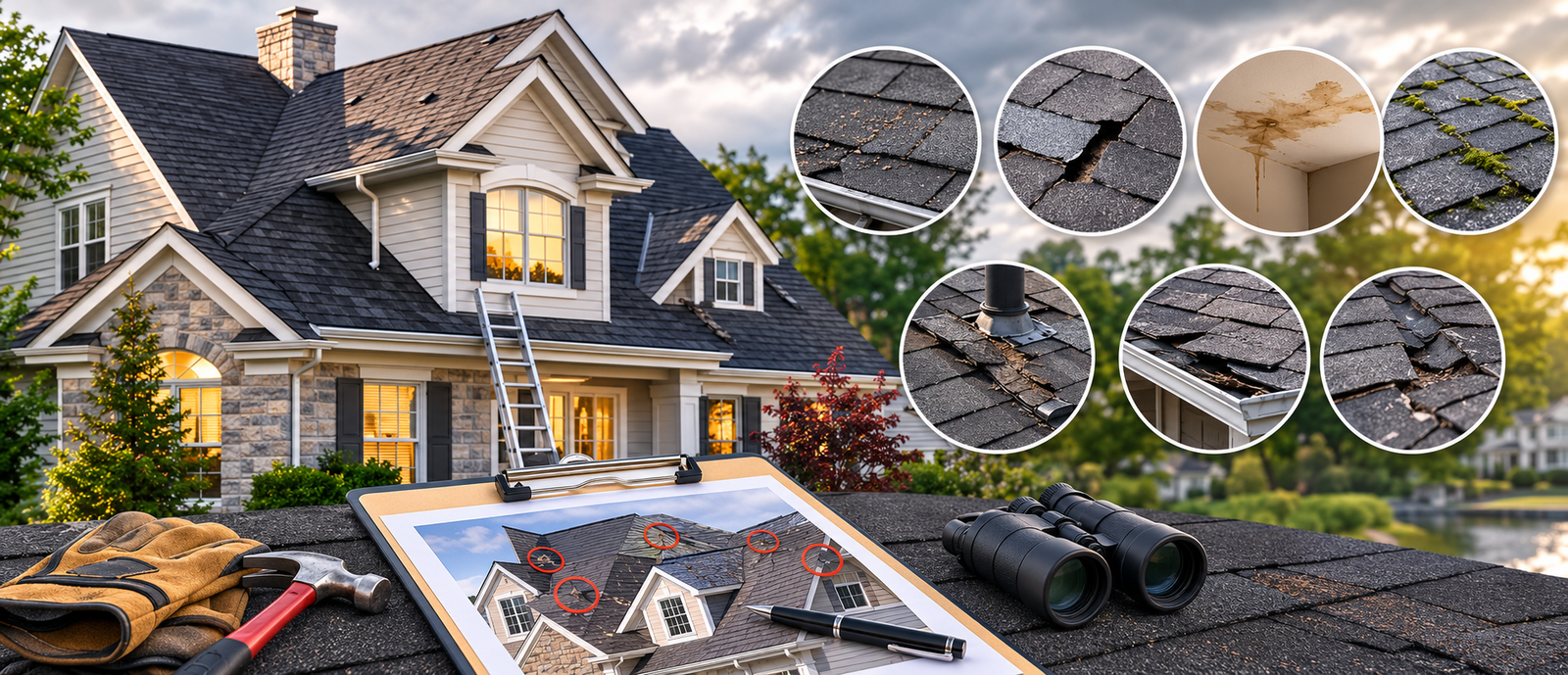
Age is a guide, but condition is the truth. These roof aging signs tell you a roof is nearing the end regardless of the number on the calendar:
- Curling, cupping or clawing shingles, a classic sign of asphalt reaching the end of its life.
- Granules in the gutters, as aging shingles shed their protective mineral coating.
- Bald or missing shingles appearing across the roof rather than in one spot.
- Moss, algae or dark streaks, which trap moisture and accelerate decay.
- Daylight or leaks in the attic, or water stains on the ceiling.
- A sagging roof line, the most serious sign, pointing to structural or decking issues.
We cover these in depth in our guide to the 7 warning signs your roof needs replacement. If you are seeing several of them, it is time for an inspection regardless of the roof's exact age.
How to Make Your Roof Last Longer
You cannot make a roof last forever, but good habits routinely add years. The most effective roof maintenance tips for Maryland homes:
- Ensure proper attic ventilation and insulation, the single biggest lever on lifespan.
- Keep gutters clean so water drains properly and does not back up under shingles or rot the fascia.
- Trim overhanging branches that drop debris, scratch shingles and shade the roof enough to keep it damp.
- Remove moss and algae before they spread and hold moisture against the surface.
- Fix small problems early, a lifted shingle or failed flashing, before they become leaks and structural damage.
- Inspect annually and after major storms, so minor issues are caught while they are still minor.
Regular inspections are the cheapest insurance a roof can have. Most serious roof problems start small and give warning, and catching them early is the difference between a repair and a replacement, a distinction we break down in our roof repair vs replacement guide.
When Is a Roof Simply Too Old?
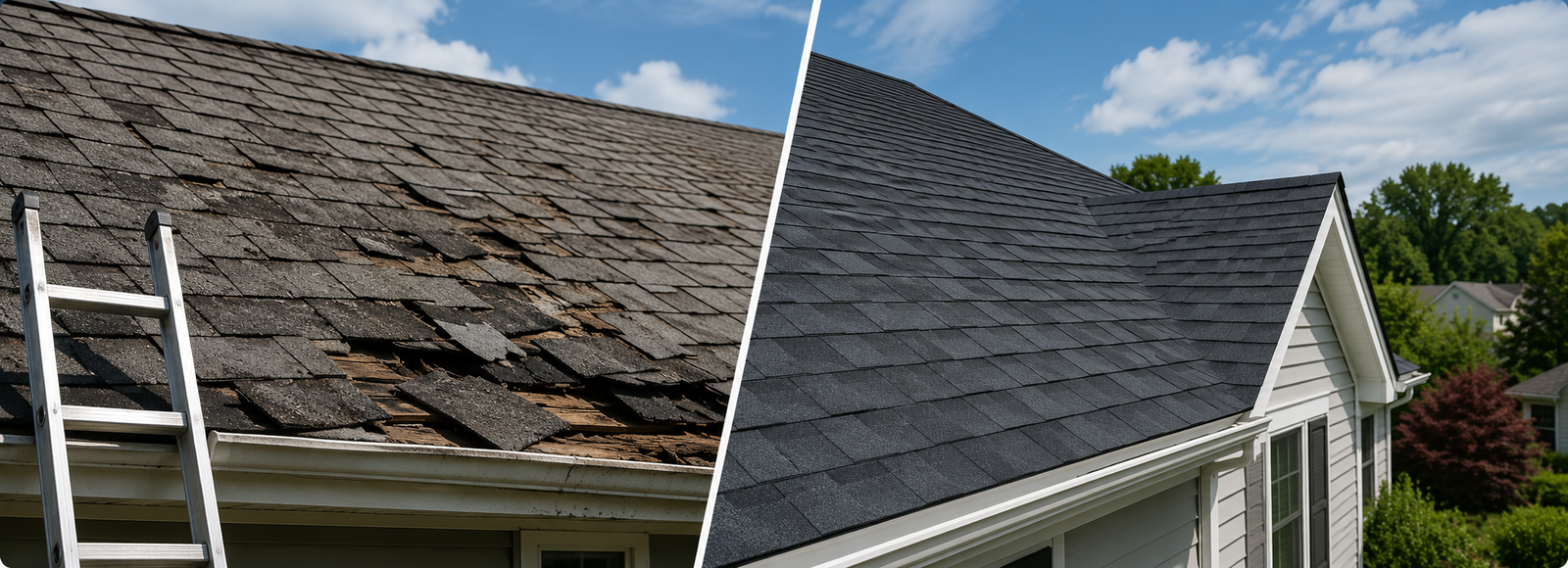
A roof crosses into replacement territory when it is near or past its material's lifespan and showing widespread wear rather than isolated damage. For asphalt, that generally means approaching or passing 20 years for 3-tab, or 25 to 30 for architectural, combined with the aging signs above. At that point, money spent on repairs that will soon be redone as a full replacement is money wasted, and matching aged, weathered or discontinued shingles becomes difficult or impossible.
The smartest approach is to know your roof's material and age, watch for the signs, and plan replacement proactively, before a leak forces the decision on a rainy night. That way you replace on your schedule, choose your material calmly, and get competitive quotes. When you reach that point, our roof replacement cost guide and our guide on choosing a roofing contractor will help you do it right. We provide free, honest lifespan assessments across Potomac, Darnestown and all of Montgomery County.