The neighborhoods of Chevy Chase, Takoma Park and Washington DC NW hold some of the region's most beautiful historic homes, and many of them are crowned by roofs that are works of craftsmanship in their own right. Slate, cedar and tile roofs were built to last generations, and when one needs attention, the worst thing an owner can do is hand it to a contractor who treats it like any other asphalt job.
Working on a historic roof is a specialized trade. The materials are unforgiving, the matching is difficult, and the stakes are high because mistakes are visible from the street and often irreversible. This guide explains the materials that belong on these homes, when repair beats replacement, and what to look for in specialty roofing contractors who actually know this work.
Why Historic Home Roofing Is a Different Trade
A standard asphalt roof is designed to be replaced every 20 to 30 years by crews trained for speed. Historic roofs are the opposite: built from premium natural materials meant to last most of a century, installed and repaired with techniques that prioritize preservation over speed.
Three things make historic roofing fundamentally different. The materials, slate and cedar especially, crack, split or fail if handled by someone who does not understand them. The matching is genuinely hard, because a 90-year-old slate roof needs replacement pieces that match in color, thickness and weathering, which requires sourcing salvaged or specialty stock. And the rules matter, because many of these homes sit in historic districts where the roof cannot simply be changed at will. None of that is a problem for a true specialty roofer. All of it is a disaster waiting to happen with a general crew.
The Best Specialty Roofing Materials
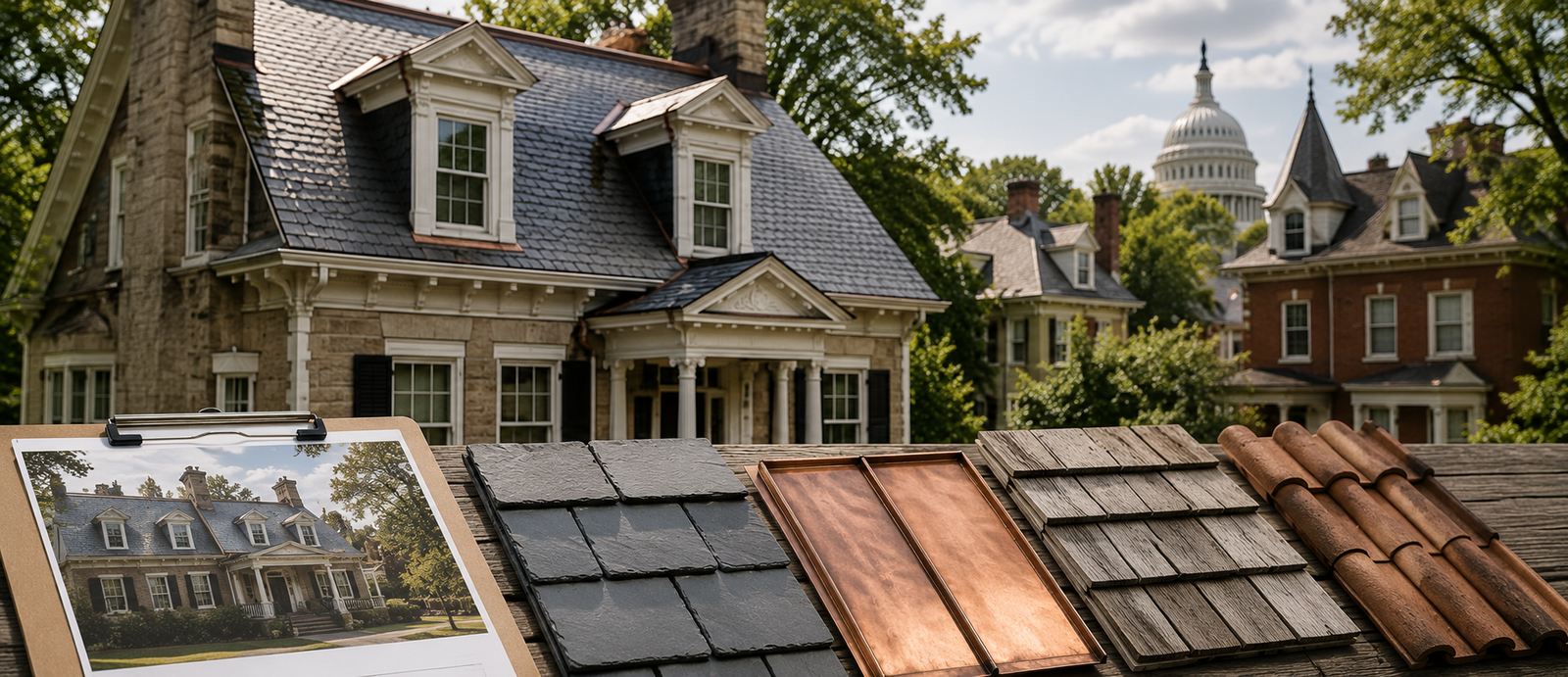
For historic homes in this area, the strongest choices are natural slate, cedar shake and premium synthetic slate, with traditional clay or concrete tile relevant on certain architectural styles. The right one depends on what the home originally had, the architecture, the budget and any district requirements.
Natural Slate Roofing
Slate is the gold standard for grand historic homes, and for good reason. A properly installed natural slate roof can last 75 to 100 years or more, often outliving its owners. It is fireproof, impervious to rot and insects, and its depth of color and texture cannot be faked. On the stately homes of Chevy Chase and DC NW, slate is frequently the original material and the only one a historic board will approve.
The trade-offs are weight and skill. Slate is heavy, so the roof structure must be able to carry it, and it demands an experienced installer because each slate is fastened individually and the material cracks if walked on carelessly. This is precisely why slate roof restoration is a specialty, not a side service. Done right, slate is the most authentic and longest-lasting option available.
Cedar Shake Roofing
Cedar shake brings warmth and natural texture that suits Craftsman, Victorian, Tudor and shingle-style historic homes beautifully. A quality cedar shake roof replacement lasts roughly 30 to 40 years with proper installation and maintenance, and the material weathers to a silvery patina that many homeowners prize.
Cedar's longevity depends almost entirely on installation and upkeep. Correct spacing for airflow, proper ventilation underneath, and prompt attention to debris and moss are what separate a cedar roof that lasts decades from one that rots early. It is a living material that rewards craftsmanship and care, which makes the installer's experience just as important as the wood itself.
Synthetic Slate and Luxury Options
Modern luxury roofing materials have come a long way. Premium synthetic and composite slate now mimics the look of natural slate convincingly while weighing a fraction as much, which solves the structural-load problem on homes that cannot support real slate. It is also more affordable and, in some cases, easier to get approved where natural slate sourcing is difficult.
Synthetic slate is not always permitted on a contributing historic structure, so its suitability depends on your district. But for homes where authenticity rules allow it, or for outbuildings and additions, it offers the historic look with practical advantages. Pairing the right material with the architecture is part of the custom roof design work a specialty contractor brings to the table, balancing authenticity, budget and the realities of the structure.
The biggest mistake we see on historic homes is choosing a material because it is fashionable or cheap rather than because it belongs on that architecture. A slate-look asphalt shingle on a true slate-era home reads as wrong to buyers and review boards alike, and it can hurt resale value. The right move is always to start from what the home was designed to wear, then adapt for budget and structure within those bounds.
Slate Roof Repair vs Replacement
One of the most common questions historic homeowners ask is whether a tired-looking slate roof needs full replacement. Often, the answer is no. Because slate lasts so long, the slate itself frequently outlives the flashing, fasteners and underlayment around it. A roof that looks like it is failing may simply need targeted repair and reflashing.
Repair is usually the answer when: the slate is sound but flashing has corroded, fasteners have failed, or a limited number of individual slates have slipped or cracked. Replacing those components and matching in new slates can add decades for a fraction of replacement cost.
Replacement makes sense when: the slate has delaminated or softened across the whole roof, the structure can no longer bear the load safely, or the roof has been so heavily patched with the wrong materials that piecemeal repair is no longer cost effective.
The catch is that this assessment must be made by someone who actually works in slate. A general roofer's instinct is often to recommend tear-off and asphalt, because that is what they know. A specialty roofer can frequently save a roof a general contractor would have condemned.
Have a Historic Roof That Needs Expert Eyes?
Slate, cedar and tile roofs deserve an assessment from someone who works in them daily, not a general crew. We provide free, no-obligation inspections and honest repair-or-replace guidance across Chevy Chase, Takoma Park and DC NW.
Historic District Rules in Chevy Chase & DC
Many homes in Chevy Chase, Takoma Park and Washington DC NW sit within historic districts or are subject to design review, and a visible roof change can require approval before work begins. The specifics vary, but these rules commonly govern the material, color and profile of the roof to preserve the character of the streetscape.
In practice this means you may not be free to swap slate for asphalt on a contributing historic structure, and even a like-for-like replacement can need sign-off. The DC Historic Preservation Office and your local jurisdiction set these requirements. We help homeowners identify which rules apply and choose compliant materials, but you should always confirm the specifics with your local preservation office before committing to a material, because the wrong choice can mean tearing out finished work.
How to Maintain a Historic Roof Without Losing Its Charm
Preservation, not modernization, is the guiding principle. A well-maintained slate or cedar roof keeps both its beauty and its watertightness for generations. The fundamentals:
- Inspect regularly. Catch slipped slates, failed flashing and early cedar wear before they become leaks. An annual or post-storm look is cheap insurance on an expensive roof.
- Keep it clear. Remove debris, leaves and moss, which trap moisture and accelerate decay, especially on cedar and in shaded valleys.
- Repair with matching materials. Replace damaged slates or shakes with salvaged or period-appropriate stock, never modern substitutes that stand out and cheapen the look.
- Reflash promptly. Flashing usually fails long before the slate does. Replacing it on schedule is the single highest-value maintenance task.
- Never power wash. High pressure damages slate and strips cedar. Cleaning should be gentle and material-appropriate.
- Keep asphalt off it. Never let a general roofer patch a slate roof with asphalt or sealant. It is the classic damage we are called in to undo.
How to Choose Specialty Roofing Contractors
For a historic roof, the contractor matters more than almost any other decision. Ask anyone you are considering:
- Do you actually install and repair slate and cedar? Not "can you," but do you do it regularly. Ask to see recent historic projects.
- How do you source matching materials? A real specialty roofer has channels for salvaged and period-correct slate and shakes.
- Are you familiar with local historic district requirements? They should know the review process for Chevy Chase, Takoma Park and DC NW.
- Are you licensed and insured in MD and DC? Verify it. Historic work magnifies the cost of an uninsured mistake.
- Do you use subcontractors or in-house crews? We use only our own team. Here is why that matters on delicate work.
- What is your written warranty? Specialty work should be warrantied in writing.
Cliffbrook Construction installs and restores slate, cedar and CertainTeed specialty systems through our specialty roofing service, serving historic homes across Chevy Chase, Takoma Park and Washington DC NW. If you are weighing a full new roof on a more standard home, our roof replacement cost guide covers the numbers.