Every roof eventually reaches a fork in the road: fix what is wrong, or start over. The frustrating part is that contractors do not always give the same answer, and some have an incentive to push whichever option makes them more money. This guide cuts through that with a straightforward, honest framework you can apply to your own home.
The roof repair vs replacement decision comes down to three things: the age of the roof, how widespread the damage is, and how the costs compare over time. Get those three right and the answer usually becomes obvious.
The Quick Answer
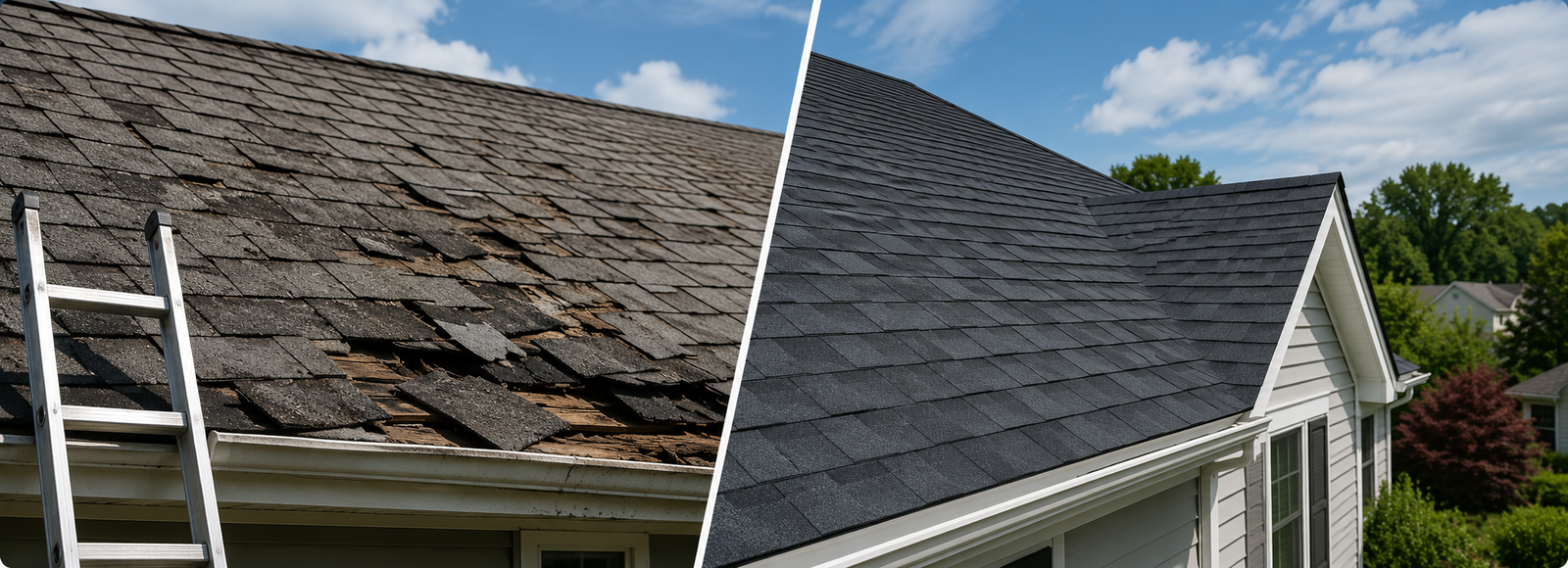
If your roof is relatively young and the damage is isolated to one area, repair. If your roof is near or past its lifespan, or the problems are showing up across the whole roof, replace. Most situations fall clearly into one camp or the other once you look at age and extent honestly. The tricky middle cases, an older roof with one bad section, are where a professional inspection earns its keep.
When Roof Repair Makes Sense
Repair is the right, cost-effective choice when the roof has real life left and the problem is contained. Good repair candidates include:
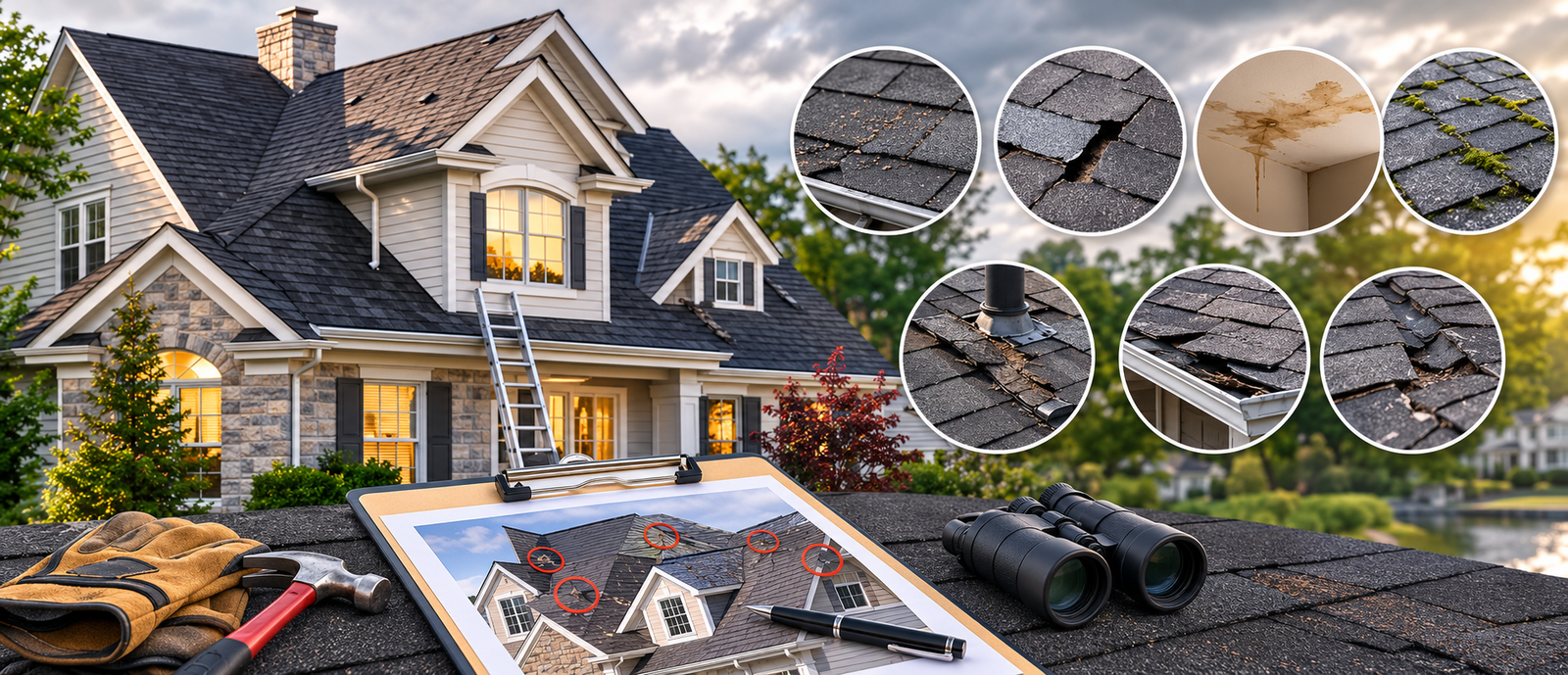
- A younger roof with storm damage: A few shingles lost or lifted by wind on an otherwise sound roof is a classic repair. Our guide on spotting hidden storm damage covers what to look for.
- Isolated flashing failures: Leaks around a chimney, skylight or vent are usually a flashing or boot problem, not a whole-roof problem, and reflashing solves them.
- A single localized leak traced to a clear, specific cause on a roof that is otherwise in good shape.
- Minor shingle repair where matching material is still available and the surrounding roof is healthy.
In these cases, shingle repair or a targeted fix restores the roof for a fraction of replacement cost and there is no reason to spend more.
When Roof Replacement Makes Sense
Replacement becomes the better value, even though it costs more up front, when:
- The roof is near or past its lifespan. Repairing a roof with a year or two left is throwing money at a short-term problem.
- Damage is widespread. Curling, granule loss, missing shingles or leaks appearing across the whole roof mean the system is failing, not one spot. Our guide on the 7 signs you need a new roof walks through these.
- Repairs are piling up. When you are calling a roofer every season and the costs are adding up toward replacement territory, replacing once is cheaper than repairing repeatedly.
- There is a structural issue. Any sagging or rot in the decking pushes hard toward replacement.
- You are selling soon and the roof is a known liability that will scare buyers or trigger repair credits.
Roof Repair vs Replacement Cost in Maryland (2026)
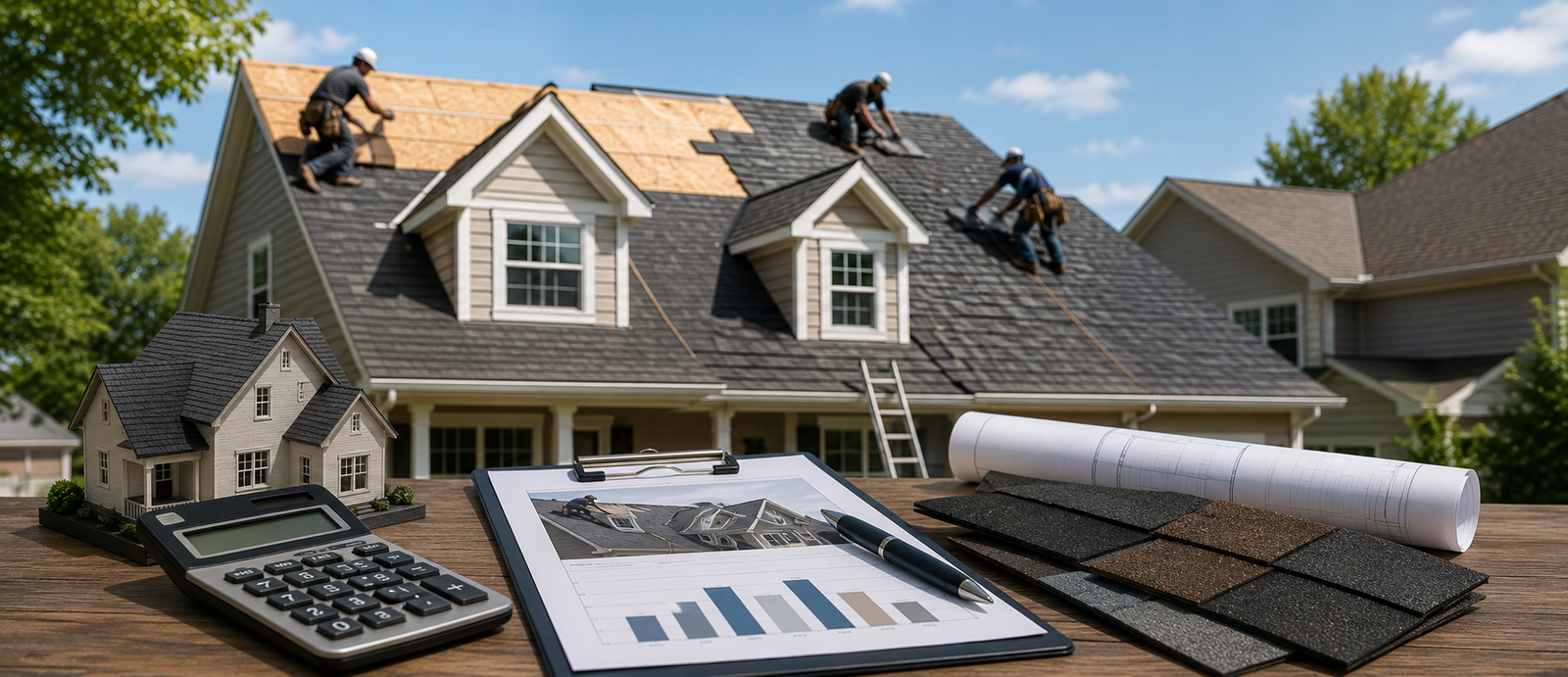
Cost is usually the first thing homeowners look at, so here is the honest comparison for Montgomery County in 2026. Repair wins on up-front price every time; the real question is value over time.
| Option | Typical Cost | Best When |
|---|---|---|
| Minor Repair (few shingles, flashing, small leak) |
$400 to $1,500 | Young, sound roof with isolated, clearly-caused damage |
| Moderate Repair (section, some decking, larger leak) |
$1,500 to $4,000 | Contained damage on a roof with years of life left |
| Partial Replacement (one slope / section re-roofed) |
$4,000 to $10,000 | Damage confined to one area, rest of roof sound |
| Full Replacement (complete tear-off & new roof) |
$10,000 to $22,000+ | Old or widely-failing roof; best long-term value |
For a full breakdown of replacement pricing by material and roof size, see our roof replacement cost guide. The key insight: a $1,000 repair looks cheaper than a $15,000 replacement, but if you spend that $1,000 three times in three years on a dying roof and still replace it, you have wasted the repairs.
The most expensive path is often neither a clean repair nor a clean replacement, it is repairing a failing roof over and over, then replacing it anyway. If a roofer is recommending yet another patch on a roof that has needed several, ask directly how many good years it realistically has left. The honest answer often points to replacement.
Partial Replacement and Re-Roofing
Two middle-ground options deserve a mention.
Partial roof replacement means re-roofing one slope or section rather than the whole roof. It can make sense when damage is confined to one area, say one side struck by a fallen tree while the rest is sound and of similar age. The trade-offs are matching, since new shingles rarely match weathered ones exactly, and the fact that the untouched sections keep aging on their original clock. It is a reasonable middle path in the right situation, but not always cheaper per square than doing the whole roof.
Re-roofing (overlay) means installing new shingles over the existing layer instead of tearing off. It is cheaper and faster, but it hides whatever is underneath, adds weight, and generally does not last as long as a full tear-off and replacement. Maryland also limits how many layers a roof may have. In the re-roofing vs replacement question, a full tear-off is almost always the better long-term choice, though overlay occasionally fits a tight budget on a sound deck.
Repair or Replace? Get an Honest Answer.
We offer both, so we have no reason to push you toward one. A free inspection gives you a documented, straight recommendation on whether your roof needs a repair or a replacement, and a written estimate either way.
Is It Worth Repairing a 20-Year-Old Roof?
This deserves its own section because it comes up so often. For an asphalt shingle roof, the honest answer is usually no. A basic asphalt roof lasts about 15 to 20 years and an architectural roof 25 to 30, so a 20-year-old asphalt roof is typically at or near the end of its roof lifespan. Spending money to repair it, then replacing it a year or two later anyway, is rarely good value, and matching aged or discontinued shingles is difficult.
The exceptions are longer-lived materials, a slate or cedar roof at 20 years is barely middle-aged, and a genuinely high-quality architectural roof in excellent condition. Condition matters as much as age, which is why a professional inspection, not just the calendar, should make the call.
The Truth About Patching
Roof patching has a place, but it is a short-term fix, not a diagnosis. A leak is a symptom; the real question is what caused it. If the cause is one failed flashing or a cracked vent boot on a healthy roof, a proper repair at the source solves it for years. If the leak is a symptom of a broadly worn-out roof, a patch just buys a little time before the next leak appears somewhere else. Beware any roofer who patches without explaining what actually caused the leak, and prefer one who fixes the cause, not just the drip.
How to Make the Call
Run your situation through these questions:
- How old is the roof, and what material? Near end of life leans toward replacement.
- Is the damage in one spot or everywhere? Isolated leans repair; widespread leans replace.
- How many times have you repaired it already? Repeated repairs lean replace.
- Any structural signs? Any sagging leans hard toward replace.
- What is your timeline in the home? Selling soon can change the math.
Because we offer both roof repair and full replacement through our roof and gutter service, we have no incentive to steer you either way, we just tell you what your roof actually needs. When it is time to hire, our guide on how to choose a roofing contractor helps you pick right. We serve Damascus, Clarksburg and all of Montgomery County.