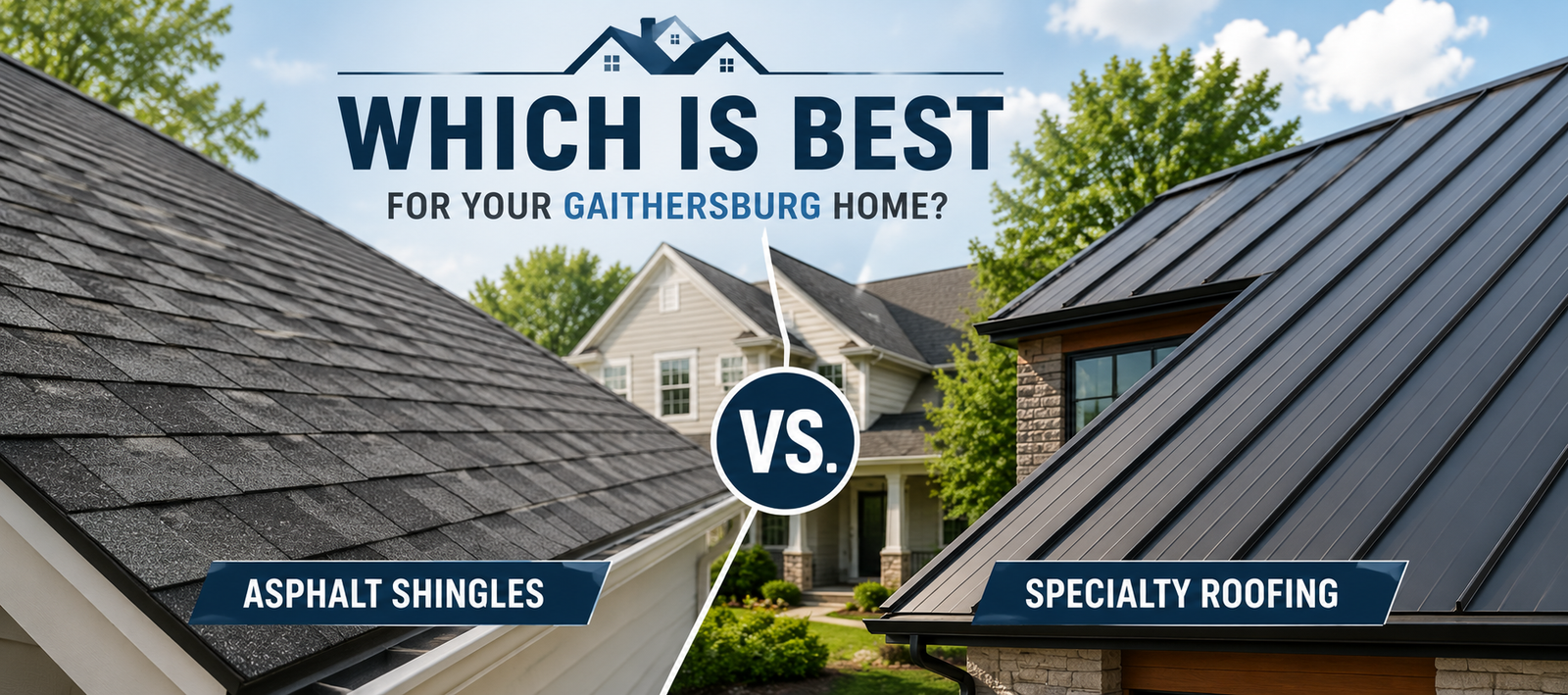
Every roof replacement conversation eventually arrives at the same fork: quality asphalt shingles, or a specialty material like slate, cedar or metal. Both are legitimate answers, and anyone who tells you one is always right is selling something. The honest comparison depends on your home's architecture, your budget, how long you plan to stay, and how your roof handles what Maryland's climate throws at it.
We install both, asphalt as a CertainTeed Master Shingle Applicator, and slate, cedar and metal through our specialty roofing service, so we have no incentive to steer you either way. What follows is the same specialty roofing comparison we walk homeowners through at kitchen tables across Gaithersburg every week.
The Two Paths: Asphalt and Specialty
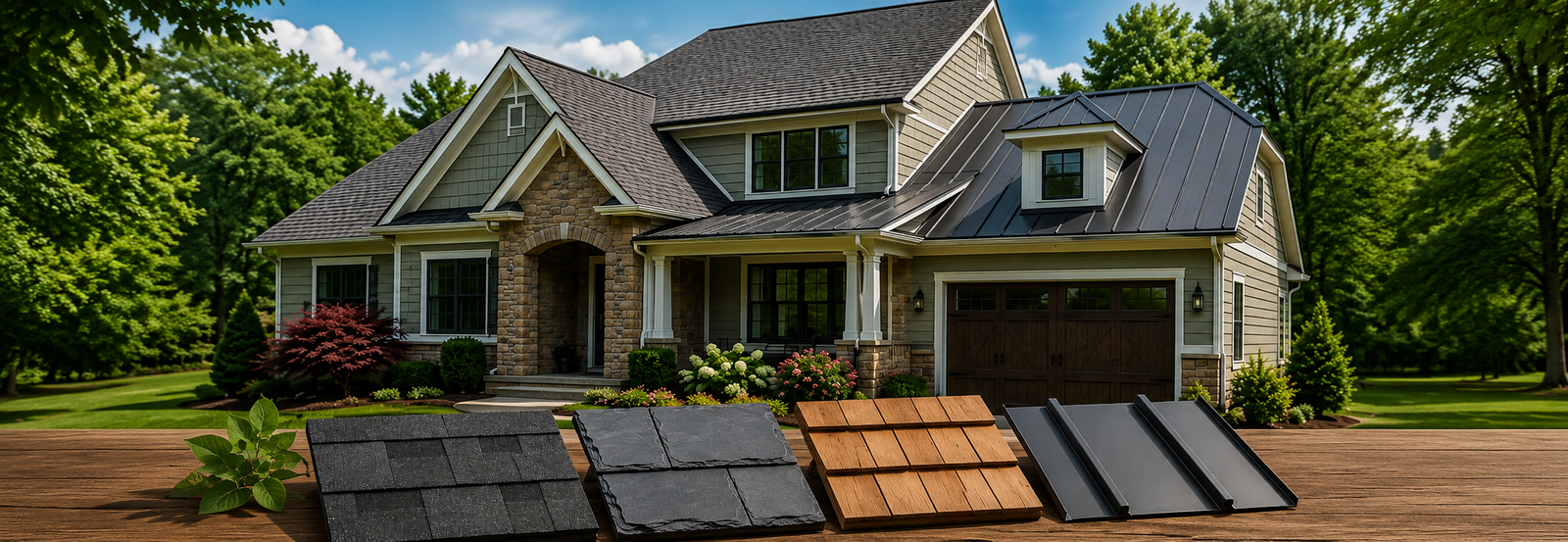
First, the map. Asphalt shingles cover roughly four out of five homes in America, and they come in two main roof shingle types: basic 3-tab and architectural (also called dimensional or laminated). Specialty roofing is everything beyond asphalt: natural slate, cedar shakes and shingles, standing-seam and metal roofing, and synthetic composites that imitate slate or wood.
The two paths differ in cost, lifespan, appearance and, importantly, in who can install them properly. Asphalt is a mature, standardized trade. Specialty materials are genuine crafts with their own techniques, and installer skill matters as much as the material itself. Keep that in mind as we compare, a great material badly installed loses to a good material installed well, every time.
3-Tab vs Architectural Shingles: The Asphalt Decision
If you stay on the asphalt path, the first question is what is the difference between 3-tab and architectural shingles, and the answer is: a lot more than the modest price gap suggests.
3-tab shingles are the original budget option: a single flat layer of asphalt cut into three tabs per strip. They are the lightest, thinnest and cheapest shingle made, with wind ratings around 60 to 70 mph and realistic lifespans of 15 to 20 years, less on roofs that take sun and weather hard.
Architectural shingles laminate multiple asphalt layers into a thicker, heavier shingle, roughly half again the weight of 3-tab. That construction buys real performance: wind ratings of 110 to 130 mph, better impact resistance, 25 to 30+ year realistic lifespans, and a dimensional, shadow-lined appearance that reads like wood shake from the street. Nearly every shingle roof we install today is architectural, and the reasons are practical:
- Maryland thunderstorms. Our summer storms regularly gust past what 3-tab is rated for. Architectural shingles hold on.
- Better cost per year. The upfront premium is modest; the extra decade of life is not.
- Algae-resistant options. Most quality architectural lines offer AR granules that fight the black streaking our humid summers cause.
- Curb appeal and resale. Buyers and appraisers notice the difference.
Today, 3-tab mainly makes sense for matching repairs on an existing 3-tab roof, or on outbuildings. For the house you live in, architectural is the asphalt answer, and it is the baseline we compare specialty materials against below. For a deeper brand-level look at shingle quality, see our CertainTeed vs GAF comparison.
The Case for Staying With Asphalt
Architectural shingles win the value argument for most homes, and it is worth stating plainly why. An asphalt shingle roof in Gaithersburg costs a fraction of any specialty material, installs in days, comes in dozens of colors and profiles, and, installed correctly with ice and water shield at the eaves and proper attic ventilation, reliably protects a home for 25 to 30 years through everything our climate does.
Certification sharpens the value further. As a CertainTeed Master Shingle Applicator, our installations qualify for enhanced manufacturer warranty coverage that a standard installation does not get, meaning the material warranty is actually backed by installation credentials rather than undermined by installer error, the leading cause of denied shingle warranty claims. For the typical colonial, split-level or townhome in Montgomery County, quality architectural shingles installed by a certified crew are, honestly, the best answer, and we say that as a company that profits more from selling you slate.
The Specialty Options: Slate, Cedar and Metal
So when does specialty make sense? When the home, the neighborhood or the owner's time horizon changes the math. The three main durable roofing options beyond asphalt:
Natural Slate
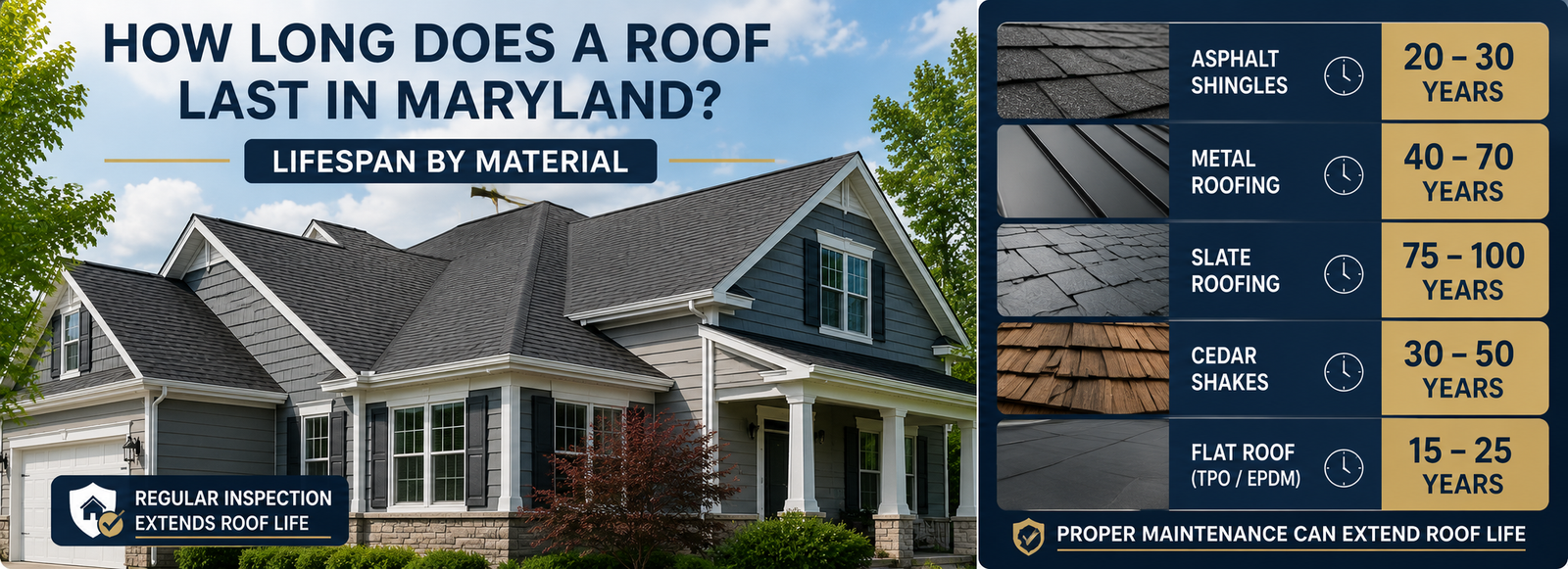
Stone, quarried and split by hand, with a service life of 75 to 100+ years, the last roof a house ever needs. Slate does not burn, rot or absorb meaningful water, and it gives historic and estate homes an appearance nothing else matches. The trade-offs: it is the most expensive roof there is, it is heavy enough that the structure must be verified to carry it, and it demands genuine slate craftsmen, an asphalt crew walking a slate roof wrong will crack tiles with every step.
Cedar Shakes and Shingles
Natural wood with warmth and texture that weathers to a silver-gray patina. Realistic lifespan of 25 to 40 years with maintenance, cedar wants periodic treatment and good airflow in our humid climate. It suits craftsman, cottage and rustic architecture beautifully. The trade-offs: higher maintenance than any other option here, and installation details (spacing, breathable underlayment, fastening) that punish inexperience.
Metal Roofing
Standing-seam panels or metal shingles, with lifespans of 40 to 70 years. Metal sheds rain and snow instantly, laughs at wind, and reflective coatings make it the energy-efficiency leader. Modern systems are quiet and handsome, and it has become the fastest-growing specialty choice. The trade-offs: two to three times the cost of architectural shingles, and details like fastener systems and expansion allowances that require metal-specific expertise. We compared it head-to-head with asphalt in our metal roof vs shingles guide.
For the full material-by-material breakdown, including synthetics and algae-resistant options, our best roofing materials for Maryland's humid climate guide is the deep dive; this article is about choosing between the paths.
Which Roof Lasts Longest in Heavy Rain and Snow?
Maryland roofs earn their keep in two seasons: summer thunderstorm season and winter freeze-thaw. Here is how the materials rank as weather-resistant roofs in our specific climate:
- Slate is effectively weatherproof. Stone does not care about rain volume, snow load (on an adequate structure) or freeze-thaw cycling. 75 to 100+ years.
- Metal sheds rain and snow immediately, nothing accumulates long enough to cause trouble, and there are no granules to strip in hail or downpours. 40 to 70 years.
- Architectural shingles handle our weather well when the system around them is right: ice and water shield at the eaves for winter backup, correct flashing, and ventilation that keeps the deck cold. 25 to 30 years.
- Cedar manages rain fine when maintained and ventilated, but our humidity works against wood over time. 25 to 40 years with upkeep.
- 3-tab shingles are the weak link, wind is their enemy, and Maryland has plenty. 15 to 20 years.
Two honest caveats. First, longevity is a system property, not just a material one: eave protection against ice dams, flashing quality and attic ventilation decide whether any roof reaches its rated life, which is why our lifespan guide leans so hard on installation and maintenance, see how long a roof lasts in Maryland. Second, longest-lasting is not automatically best value; that is what the next section is for.
Cost and Value: The Real Comparison
| Material | Relative Upfront Cost | Realistic Lifespan | Best For |
|---|---|---|---|
| 3-Tab Shingles | Lowest | 15–20 years | Matching repairs, outbuildings |
| Architectural Shingles | Baseline | 25–30 years | Most Maryland homes |
| Metal (Standing Seam) | 2–3x shingles | 40–70 years | Long-term owners, energy focus |
| Cedar Shakes | 2–3x shingles | 25–40 years | Craftsman & rustic architecture |
| Natural Slate | 4–5x+ shingles | 75–100+ years | Historic & estate homes |
The way to read this table is cost per year of service, filtered by how long you will own the home. Metal costing 2.5x shingles but lasting twice as long is roughly a wash on paper, and better than a wash if you stay past the first shingle roof's retirement, worse if you sell in eight years. Slate can outlast three shingle roofs, but only an owner (or a home) with that horizon captures the value. There is no universal winner; there is a right answer per house.
How long will you own this home? Under 10 to 15 years: quality architectural shingles almost always win, and the roof will still look new at sale. Twenty-plus years, or a forever home: specialty materials stop being a splurge and start being the cheaper roof per decade, while sparing you an entire future replacement project.
Not Sure Which Way to Go?
We install both, certified CertainTeed asphalt and true specialty slate, cedar and metal, so our recommendation follows your house and your plans, not our sales targets. Free inspections and honest side-by-side quotes across Gaithersburg, Poolesville and all of Montgomery County.
Roof Colors and Energy Efficiency
Color is not just cosmetic. Lighter roofs, light gray, beige, weathered wood tones, reflect more sunlight and keep attics cooler through Maryland summers, while dark charcoal and black absorb heat and run substantially hotter on a July afternoon. In our mixed climate the effect on bills is real but moderate, and there are two useful nuances.
First, cool-roof rated shingles now exist in medium and even darker shades, using reflective granules that bounce infrared heat while keeping the color homeowners want, so you are no longer forced to choose between a dark roof and a cool attic. Metal with reflective coatings is the outright efficiency leader. Second, and more honestly: attic insulation and ventilation move your energy bills more than shingle color does. A dark roof over a well-ventilated attic beats a light roof over a stuffy one. Pick the color that suits the house, coordinate with brick, siding and neighborhood character, then make sure the attic underneath is doing its job.
Making the Decision: A Simple Framework
Boil everything above down to four questions:
- How long will you own the home? Under 15 years favors architectural shingles; 20+ years opens the specialty math.
- What does the architecture ask for? A slate-roofed Victorian or a cedar-shake craftsman loses real value under asphalt; a standard colonial gains little from slate.
- What is the neighborhood standard? In premium areas, the roof is part of the home's market position. In most subdivisions, quality shingles are exactly right.
- Who will install it? If the answer to a slate or cedar quote involves subcontractors of unknown skill, the material's advantages are already compromised.
Run your home through those four and the answer usually announces itself. When it is genuinely close, get both quotes and compare cost per expected year, that number settles most ties.
Roofing Choices in Gaithersburg, Poolesville and Montgomery County
Locally, the pattern follows the housing stock. Across Gaithersburg and Germantown, with their colonials, split-levels and townhome communities, architectural shingles in Montgomery County's proven brands are the overwhelming right answer, and an asphalt shingle roof in Gaithersburg from a certified installer is about as safe as home-improvement decisions get.
The best roofing options in Poolesville and the county's rural west often read differently: larger properties, farmhouses and custom homes where standing-seam metal suits the architecture and the long ownership horizons, and where a distinctive roof is part of the property's character. And in Potomac, Darnestown and the historic districts, slate and cedar are frequently not upgrades but the correct material for the home, which is precisely the work our specialty roofing crews exist for.
Whichever side of the fork your home lands on, the constants are the same: honest assessment, correct installation and one accountable crew. We provide all three, with 75+ years of combined experience, MHIC licensing, CertainTeed Master Shingle Applicator certification and zero subcontractors, on every roof, asphalt or specialty, we put our name on.