When it is time to replace a roof, most Maryland homeowners quickly narrow the field to two options: asphalt shingles, the familiar, affordable standard, and metal, the durable, long-lived premium choice. Both are legitimately good. The question is not which is better in the abstract, it is which is better for you, given your budget, your timeline in the home and your priorities.
This is the definitive metal roof vs shingles comparison for Maryland homes. We will go factor by factor, honestly, including where each option wins, so that by the end you know exactly which direction fits your situation.
Meet the Two Contenders
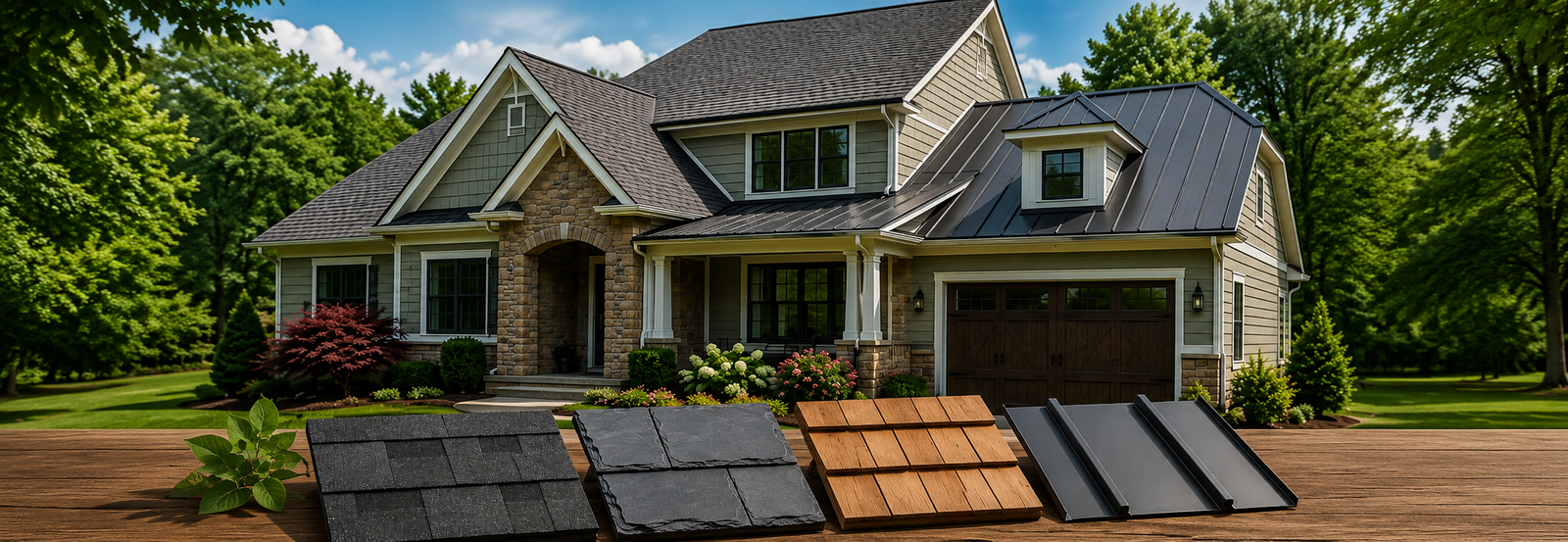
Asphalt shingles are by far the most common roofing material in Montgomery County. The workhorse option is the architectural (dimensional) shingle, thicker, more durable and better-looking than basic 3-tab. They are affordable, widely available, come in many styles, and every roofer knows how to install them well.
Metal roofing, most commonly standing-seam, is the premium long-term choice. It is far more durable and long-lived, sheds water and snow beautifully, reflects heat, and requires little maintenance. It costs considerably more upfront and requires a contractor experienced in metal installation. With the contenders introduced, let us see how they compare where it counts.
Cost: The Upfront vs Long-Term Story
This is where the two differ most starkly, and where the honest answer requires looking beyond the sticker price. Asphalt shingles win decisively on upfront cost, they are one of the most affordable roofing options available, which is a big reason they dominate. A metal roof costs significantly more to install, often two to three times the price of an asphalt roof of the same size.
But upfront cost is only half the story. Because a metal roof lasts so much longer, the cost per year of service can actually favor metal over a long horizon. If you replace an asphalt roof two or three times during the 40-to-70-year life of one metal roof, plus factor in metal's lower maintenance and potential energy savings, the long-term math narrows considerably. The rule of thumb: asphalt wins if you are looking at upfront cost or a shorter stay; metal can win if you are looking at decades of ownership and cost per year. For real numbers on the asphalt side, see our roof replacement cost guide.
A $15,000 asphalt roof lasting 25 years is about $600 per year. A $35,000 metal roof lasting 50 years is about $700 per year, and you avoid the disruption and repeated cost of re-roofing, plus you may save on cooling. The gap is far smaller than the upfront prices suggest. This is why "which is cheaper" has no single answer, it depends entirely on your time horizon.
Lifespan and Durability
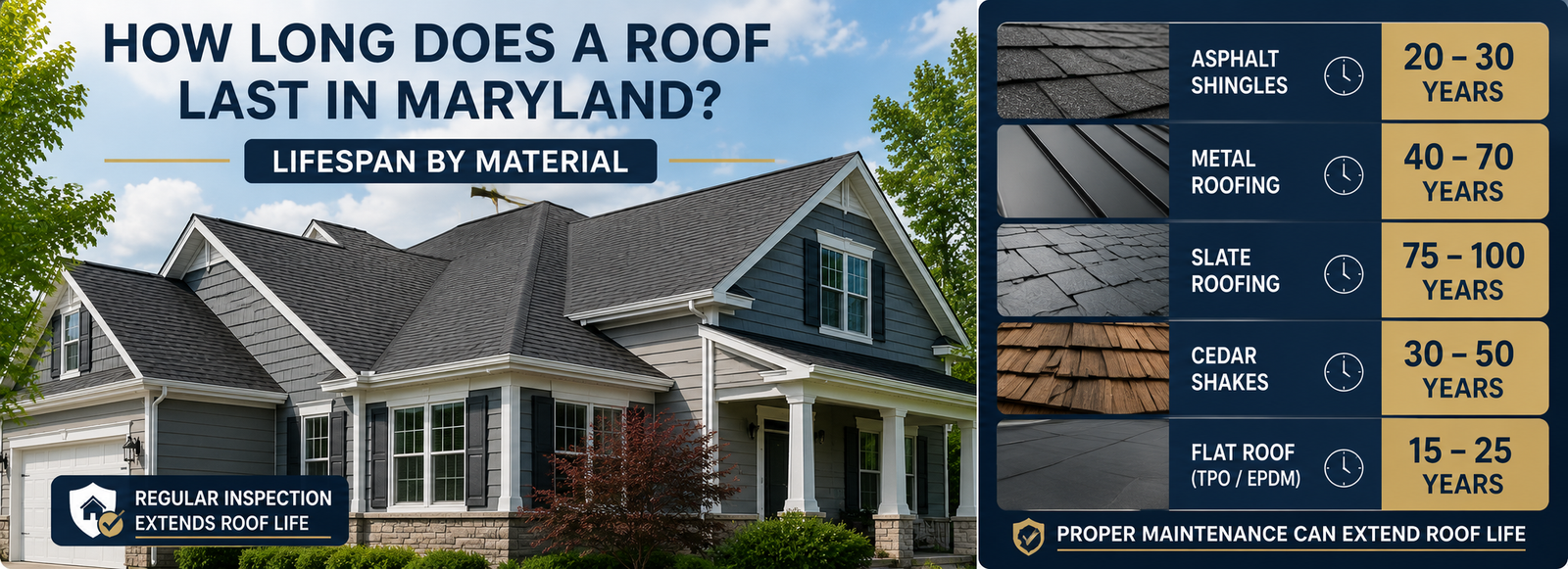
Metal wins clearly on longevity. A quality standing-seam metal roof commonly lasts 40 to 70 years in Maryland. Architectural asphalt shingles last about 25 to 30 years, and basic 3-tab 15 to 20. In practice, a metal roof can be a once-in-a-lifetime installation, while asphalt will be replaced two or three times over the same span.
On durability, metal also leads, it stands up to wind, sheds snow and ice, resists fire, and does not suffer the granule loss that ages shingles. That said, quality asphalt shingles are far from fragile; architectural and impact-resistant versions handle Maryland's storms well. Both materials depend heavily on proper installation and attic ventilation to reach their potential, a factor we explain in our guide on how long a roof lasts in Maryland. But if raw lifespan and toughness are your priority, metal is the winner.
Energy Efficiency
Metal has the edge on energy efficiency. Metal roofing, especially in lighter or reflective finishes, bounces solar heat away rather than absorbing it, which can reduce attic heat and ease summer cooling costs, a real benefit in Maryland's hot, humid summers. Asphalt shingles absorb more heat, though modern reflective and lighter-colored shingles have narrowed the gap, and some carry solar-reflectance ratings.
For a homeowner focused on lowering cooling bills and comfort, metal's reflectivity is a genuine advantage. As always, the benefit is amplified by proper attic ventilation and insulation, which matter enormously regardless of which roofing material sits on top. We cover this more in our guide to the best roofing materials for Maryland's humid climate.
Resale Value and ROI
Both a new metal and a new asphalt roof support resale value, a new roof is one of the more reliable improvements at sale time, because buyers value not having to replace it soon. The roofing ROI question is where nuance comes in.
Metal can be a strong selling point: its longevity, durability and efficiency appeal to buyers who love the idea of never replacing the roof, and some will pay a premium for it. But the return varies by neighborhood and buyer expectations. In many Montgomery County markets, a quality architectural shingle roof is exactly what buyers expect and delivers excellent value for far less money, meaning its ROI as a percentage of cost is often very competitive. Metal shines in markets and homes where its premium character is appreciated. The honest takeaway: both are good for resale; which is better depends on your specific home, neighborhood and how soon you will sell.
Get a Real Comparison for Your Specific Home
The best way to decide is with real numbers for your roof. We install both metal and asphalt, so we will give you honest side-by-side estimates and an unbiased recommendation based on your home, budget and how long you plan to stay. Free, no-pressure consultation across Montgomery County.
The Noise Question: Are Metal Roofs Loud?
This is the concern that stops many homeowners from even considering metal, and it is largely a myth. The image of rain hammering deafeningly on a metal roof comes from old, uninsulated barns and sheds, not modern homes. A residential metal roof installed over solid decking with proper underlayment and normal attic insulation is not meaningfully louder than an asphalt roof in the rain. Most homeowners barely notice a difference.
If quiet is a high priority, it is worth discussing underlayment and insulation with your contractor, but noise should not be the reason you rule metal out. In a properly built home, both roofs sound essentially the same from inside.
Appearance and Style
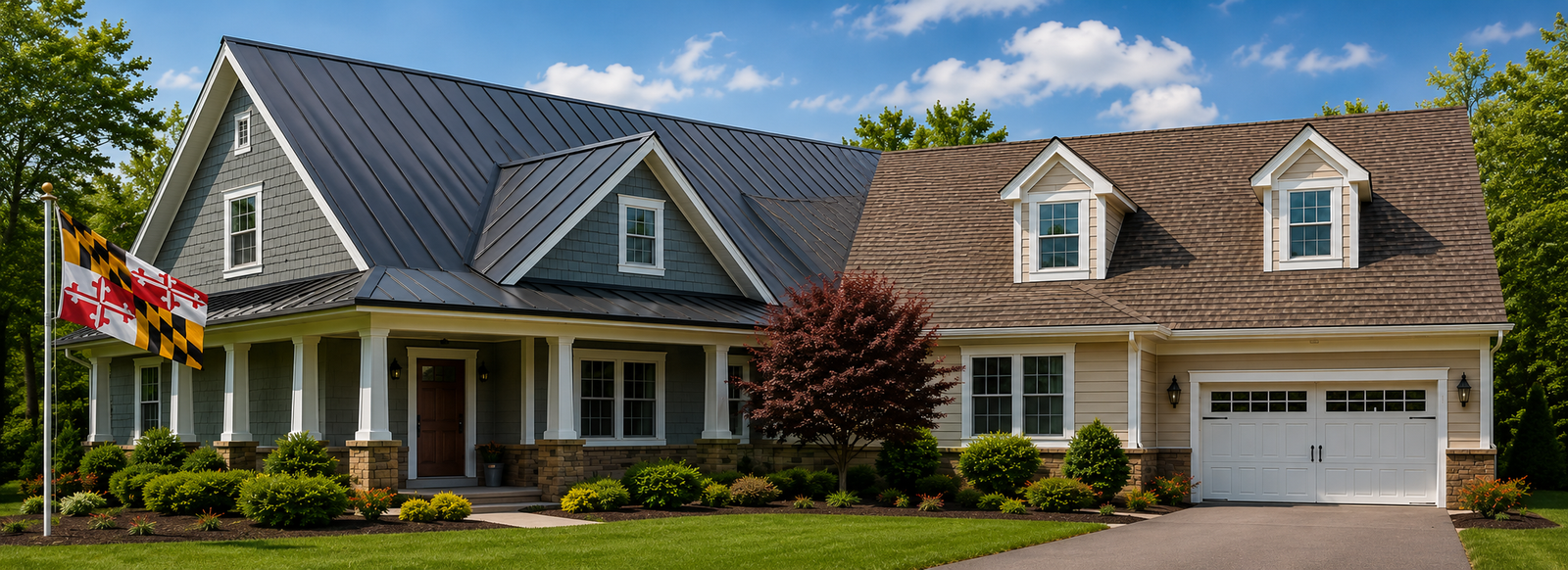
This one is genuinely subjective. Asphalt shingles offer a traditional look that suits the vast majority of Maryland homes and comes in many colors and styles, including dimensional profiles that mimic wood or slate. Metal offers a clean, modern, distinctive appearance, and standing-seam in particular has a sleek, architectural look, though it also comes in styles that mimic tiles or shingles. Neither is objectively better-looking; it comes down to your home's architecture and your taste. For historic or traditional homes, asphalt or specialty materials often fit best; for modern or farmhouse-style homes, metal can be striking.
Maintenance
Metal wins on low maintenance. A metal roof generally needs very little upkeep, occasional cleaning and inspection, and it resists the moss and algae that plague roofs in humid climates. Asphalt shingles need a bit more attention over their life: watching for algae streaking, replacing the occasional damaged shingle, and keeping an eye on aging. Neither is high-maintenance, but metal's near-set-and-forget nature is a real perk for homeowners who would rather not think about their roof. Both benefit from the routine inspections we describe in our roof inspection guide.
How Each Performs in Maryland's Climate
Both handle our climate well, with different strengths. Metal excels at shedding rain and snow, resisting humidity-driven moss and algae, and reflecting summer heat, all valuable in Maryland. Asphalt, particularly quality architectural shingles with algae-resistant granules, also performs reliably here and remains the popular default for good reason. Neither is a poor choice for Maryland weather. The deciding factors are the ones we have covered, cost, longevity, efficiency and taste, not climate suitability, since both stand up to what Maryland throws at them when properly installed and ventilated.
Metal vs Shingles: Side by Side
| Factor | Asphalt Shingles | Metal Roof |
|---|---|---|
| Upfront Cost | Lower (winner) | 2 to 3x higher |
| Lifespan | 25 to 30 yrs (architectural) | 40 to 70 yrs (winner) |
| Cost Per Year | Competitive short-term | Competitive long-term |
| Energy Efficiency | Good (reflective options) | Better (winner) |
| Maintenance | Low-moderate | Very low (winner) |
| Durability | Good | Excellent (winner) |
| Noise | Quiet | Quiet (when insulated) |
| Resale Appeal | Expected, strong value | Premium selling point |
| Style | Traditional, versatile | Modern, distinctive |
The Verdict: Which Should You Choose?
There is no single winner, only the right winner for your situation. Here is the honest bottom line:
Choose asphalt shingles if you want the lowest upfront cost, you may move within 10 to 15 years, or you want the traditional look that fits most Maryland homes. Quality architectural shingles deliver excellent performance and value, which is exactly why they are the most popular choice in Montgomery County.
Choose metal if you plan to stay long-term, you want maximum longevity and minimal maintenance, you value energy efficiency, or you love the modern look and never want to replace your roof again. The higher upfront cost buys decades of durability and peace of mind.
Because we install both, we have no reason to push you one way or the other, our recommendation on any given home is based on your budget, timeline and goals. If you are weighing the two, the smartest next step is a free consultation with real numbers for your specific roof. We serve homeowners considering both options across Potomac, Damascus and all of Montgomery County, and you can learn more on our specialty roofing and roof and gutter pages, or by reading our guide on choosing a roofing contractor.