In a mild, dry climate almost any roofing material performs well, and you can choose mostly on looks and price. Maryland is not that climate. Between summer humidity that breeds moss and algae, thunderstorms and occasional hail, and winters that freeze and thaw repeatedly, our roofs work harder than most. That makes material selection a real, practical decision, not just an aesthetic one.
So what is the best roofing material for Maryland? The honest answer is that it depends on your home, budget and how long you plan to stay. But some materials clearly handle our climate better than others, and this guide walks through each one on the criteria that count here: moisture and algae resistance, storm durability, energy efficiency, longevity and cost.
What Actually Matters in a Humid Climate
Before comparing materials, it helps to know what to judge them on. In Maryland, the factors that separate a roof that ages gracefully from one that fails early are:
- Moisture management: how quickly the material sheds water and resists holding dampness.
- Algae and moss resistance: our humidity breeds the blue-green algae behind those dark roof streaks, and the moss that traps moisture.
- Storm and impact durability: wind and hail resistance for our summer storm season.
- Temperature tolerance: handling freeze-thaw cycles and big seasonal swings without cracking or warping.
- Energy efficiency: reflecting summer heat to ease cooling costs.
- Longevity and value: total cost over the years the roof actually lasts.
One factor cuts across every material: attic ventilation. Even the best roofing material ages prematurely over a poorly ventilated attic that traps heat and moisture. Get the ventilation right and every option on this list performs closer to its potential.
Architectural Shingles: The Maryland Workhorse
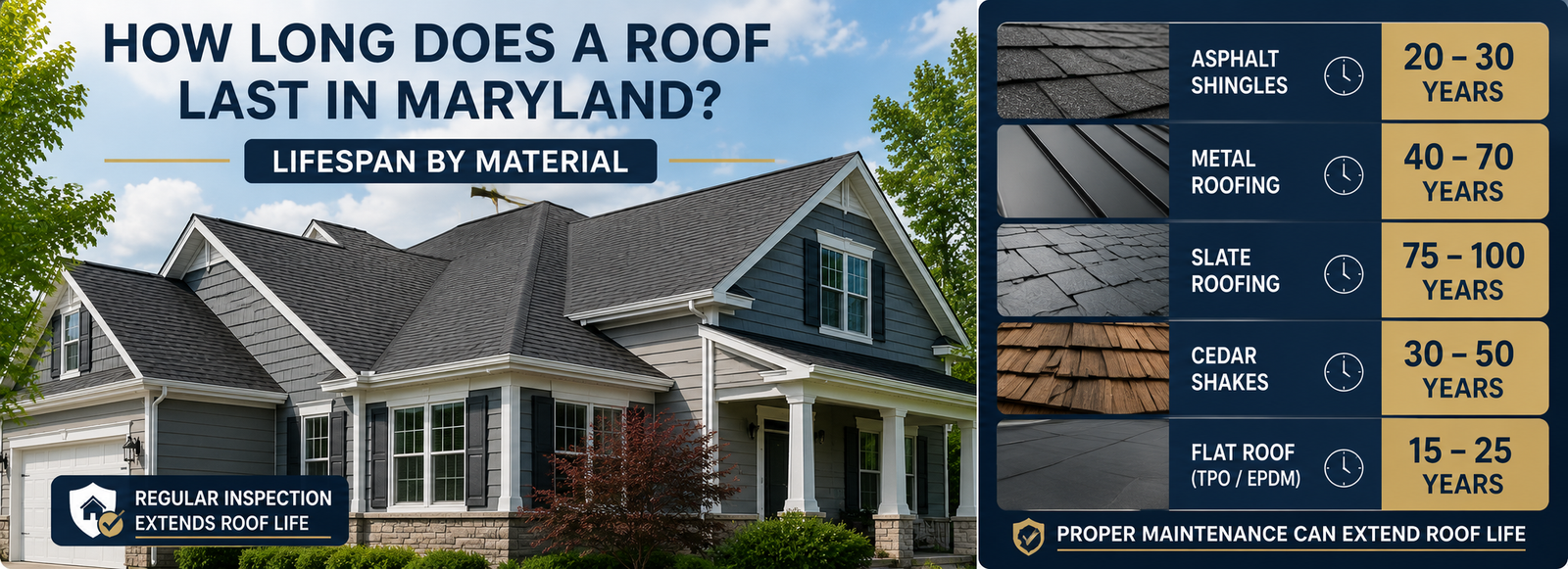
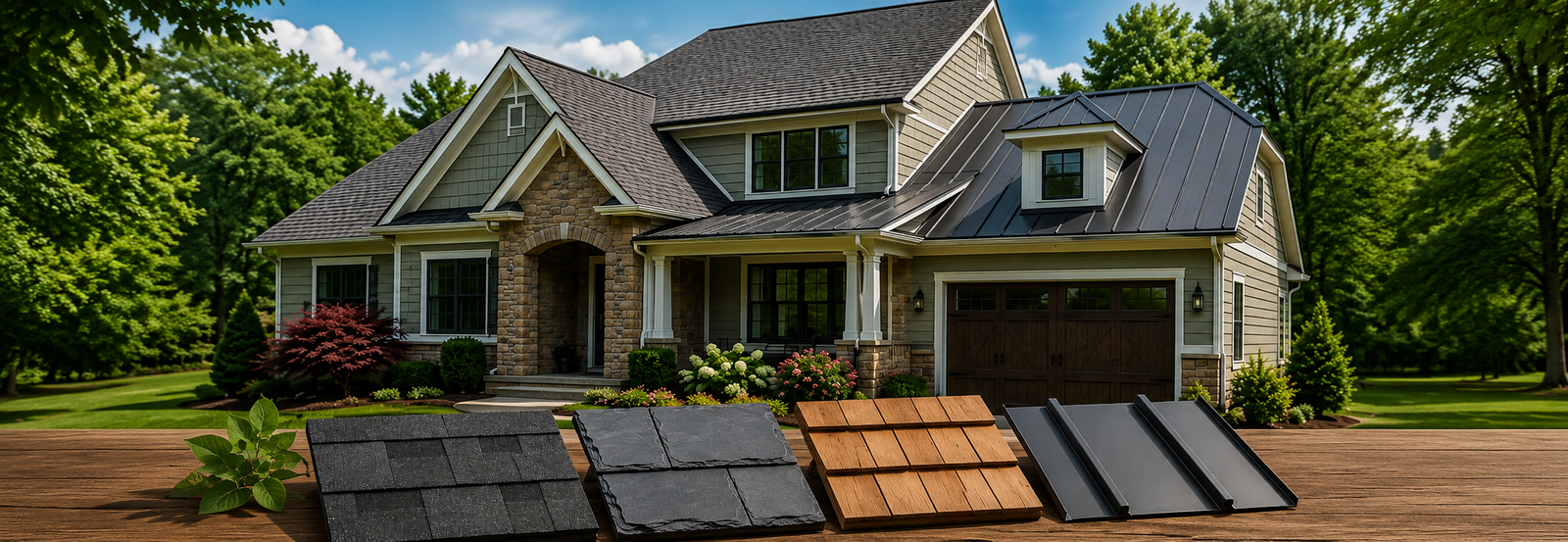
Architectural shingles (also called dimensional or laminate) are the most popular roofing choice in Montgomery County, and for good reason. They are thicker, heavier and more wind-resistant than basic 3-tab shingles, they look far better with their textured, dimensional appearance, and they last roughly 25 to 30 years here. Crucially, they are widely available with algae-resistant granules, which addresses one of Maryland's biggest roofing headaches directly.
For most homeowners, architectural shingles hit the sweet spot of humidity performance, durability, appearance and cost. They are the default for a reason. If you go this route, the key upgrades to ask about are algae-resistant granules and, if your area sees frequent hail, an impact-resistant version. To compare leading brands, see our CertainTeed vs GAF shingle guide.
Algae-Resistant Shingles: A Near-Must in Maryland
Those ugly dark streaks you see running down so many Maryland roofs are not dirt, they are blue-green algae, and our humidity is ideal for growing them. Algae-resistant shingles contain copper or zinc granules that inhibit that growth, keeping the roof looking cleaner for far longer. Major manufacturers offer them as a standard or upgrade option, frequently with an extended algae-resistance warranty.
In our climate, this is one of the easiest good decisions a homeowner can make. Untreated shingles on shaded or north-facing slopes commonly streak within a few years, while algae-resistant granules hold that off for much longer. If you are installing asphalt shingles in Maryland, algae resistance should be on your list.
Impact-Resistant Shingles: Storm Insurance
Impact-resistant shingles are engineered to better withstand hail and flying debris and carry a Class 4 rating, the highest impact class. Given Maryland's summer thunderstorms and occasional hail, they are worth considering, particularly in areas that see frequent severe weather. Beyond the protection itself, many insurers offer a premium discount for Class 4 roofs, which can offset part of the added cost over time.
They are not essential for every home, but in a storm-prone climate they add real resilience, and pairing impact resistance with algae resistance tackles two of Maryland's biggest roofing challenges at once. If your roof has taken storm damage before, our guide on spotting hidden storm damage is a useful companion read.
Metal Roofing: Excellent for Humidity
Metal roofing is one of the best performers in a humid climate. Standing-seam metal sheds water and snow almost instantly, giving moss and rot nowhere to take hold, resists wind and fire, and reflects summer heat for genuine energy savings. It also lasts 40 to 70 years, two to three times longer than asphalt.
The catch is a higher upfront cost. Whether metal roofing in Maryland is worth it comes down to how long you plan to stay and your budget. For a long-term home, the durability, near-zero maintenance and energy efficiency often justify the price over decades, since you may replace an asphalt roof two or three times in the life of one metal roof. For homeowners who never want to think about their roof again, metal is hard to beat.
A metal or slate roof looks expensive next to asphalt until you divide the price by the years it lasts. A roof that costs more but lasts three times as long can be competitive, or even cheaper, per year of service, and you skip the disruption and repeated cost of multiple asphalt replacements. For a long-term home, the longer-lived materials often make more financial sense than they first appear.
Slate: The Premium, Long-Term Choice
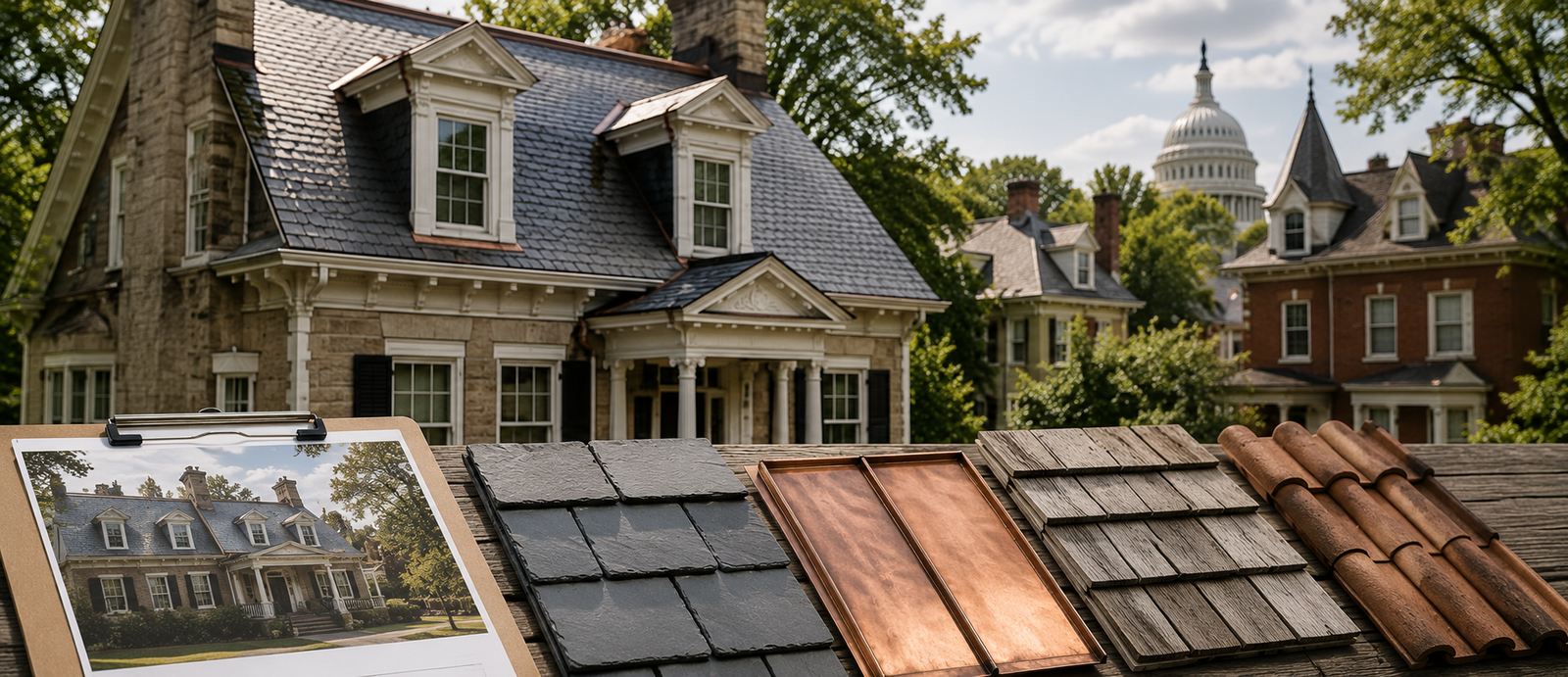
Natural slate roofing is essentially stone, so it handles humidity and weather superbly and lasts 75 to 100 years or more, genuinely outliving the people who install it. It is fire-resistant, timeless in appearance, and unmatched on historic and high-end homes. In premium areas like Potomac and Darnestown, slate is a natural fit for the homes and the neighborhoods.
The trade-offs are the highest upfront cost and the need for specialized installation and repair, since slate is heavy and unforgiving of amateur work. But on the right home, especially a historic property where character matters, nothing else compares. Many aging slate roofs need expert restoration rather than replacement, which preserves both the roof and the home's authenticity. We cover this in our guide to specialty roofing for historic homes.
Cedar Shake: Beautiful, but Higher Maintenance
Cedar shake brings a warm, natural, rustic character that suits traditional and historic Maryland homes, and it lasts 30 to 40 years. Cedar has natural resistance to the elements, but here is the honest caveat for our climate: in Maryland's humidity, cedar demands more maintenance than other materials, since moss, mildew and rot are real threats without regular upkeep and treatment.
For a homeowner who loves the look and is prepared for the care, cedar rewards you with decades of distinctive beauty. For one who wants a low-maintenance roof, our humidity makes cedar a harder sell than metal or quality asphalt. It is a material where honesty about the maintenance commitment matters before you commit.
Synthetic and Composite Options
Modern synthetic and composite roofing, engineered products designed to mimic slate or cedar, deserve a mention. They aim to deliver the premium look with lower weight, easier installation and often strong impact and weather resistance, at a cost between asphalt and true slate or cedar. For homeowners drawn to the slate or cedar aesthetic but wary of the cost, weight or maintenance, a quality synthetic can be an appealing middle path. The right product varies, so it is worth discussing specific options for your home.
A Note on Energy Efficiency
Energy-efficient roofing matters more in Maryland's hot, humid summers than many homeowners expect. Lighter-colored and reflective roofing, and metal in particular, bounces more solar heat away, easing the load on your air conditioning and moderating attic temperatures. Some shingles are specifically rated for solar reflectance. Combined with proper attic ventilation and insulation, an energy-conscious roof can make a real difference in summer comfort and cooling costs, and it is worth factoring into your material decision rather than treating it as an afterthought.
Not Sure Which Material Fits Your Home?
We install every material on this list, from architectural asphalt to slate, so our advice is about what is right for your home and budget, not what we happen to sell. Free consultation and estimate across Montgomery County.
Quick Comparison
Here is how the main options stack up for a Maryland home. Lifespans assume proper installation, maintenance and ventilation.
| Material | Lifespan (MD) | Humidity / Algae | Best For |
|---|---|---|---|
| Architectural Shingle | 25 to 30 yrs | Good with algae-resistant granules | Most homes, best value |
| Metal (Standing Seam) | 40 to 70 yrs | Excellent, sheds water fast | Long-term homes, low maintenance |
| Slate | 75 to 100+ yrs | Excellent | Premium & historic homes |
| Cedar Shake | 30 to 40 yrs | Fair, needs maintenance | Traditional looks, willing owners |
| Synthetic / Composite | 40 to 50 yrs | Very good | Slate/cedar look, less upkeep |
Our Honest Recommendation
For the majority of Montgomery County homeowners, quality architectural shingles with algae-resistant granules, and impact resistance if your area sees hail, are the best overall value: strong humidity performance, good looks, solid lifespan and reasonable cost. If you are staying long-term and can invest more upfront, metal is an outstanding humid-climate performer that you may never replace. For premium and historic homes, especially in Potomac and Darnestown, slate (or high-quality synthetic) is worth every penny.
There is no universally "best" roof, only the best roof for your home, budget, timeline and style. That is exactly the conversation we have on every estimate. Because we install all of these materials, our recommendation is based on your situation, not on what we are trying to sell. When you are ready, our guides on roof replacement cost and choosing a roofing contractor help you take the next step, and we install across Germantown, Potomac, Darnestown and all of Montgomery County through our specialty roofing and roof and gutter services.