Finishing a basement turns unused square footage into some of the most versatile living space in the house, and because the foundation, walls and roof are already there, basement finishing cost in Montgomery County is typically far lower per square foot than building an addition. The catch is that the range is enormous, and a handful of decisions and site conditions do most of the work in setting your number. Let us break it down clearly.
What Basement Finishing Includes
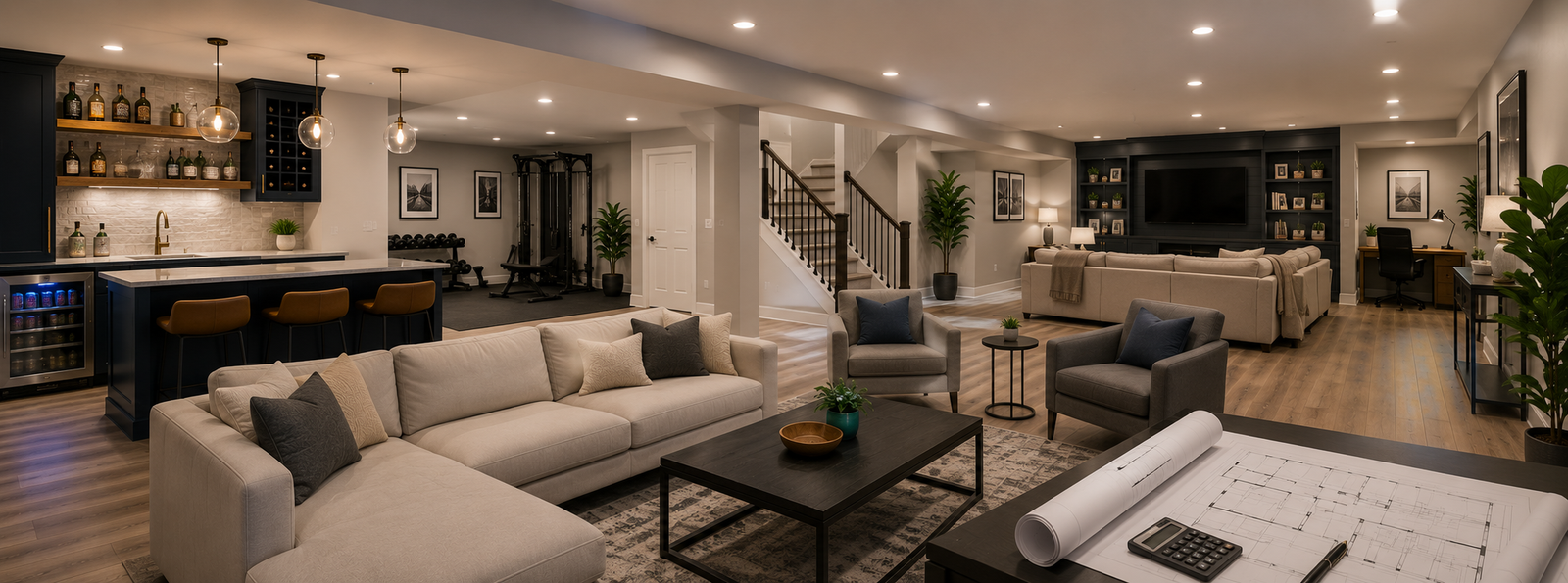
A typical basement finish covers framing the walls, insulation, drywall, a ceiling (drop or drywall), flooring, electrical and lighting, and often HVAC adjustments to condition the space, plus painting and trim. From there, the scope, and the budget, expands with what you add: a bathroom, a wet bar or kitchenette, enclosed bedrooms or offices, an egress window, and higher-end finishes. Before any of that, the space has to be dry and code-ready, which is where waterproofing and egress come in.
Cost Per Square Foot
Most basement finishing in Montgomery County lands somewhere around 35 to 85 dollars per square foot, and where you fall depends almost entirely on finish level and features:
- Basic finish (~$30–$50/sq ft): open layout, framing, insulation, drywall, budget-friendly flooring and lighting, no plumbing.
- Mid-range finish (~$50–$85/sq ft): a more built-out space, some enclosed rooms, better finishes, often a half or full bath.
- High-end finish (~$85–$130+/sq ft): full bathroom, wet bar or kitchenette, premium flooring and finishes, custom features.
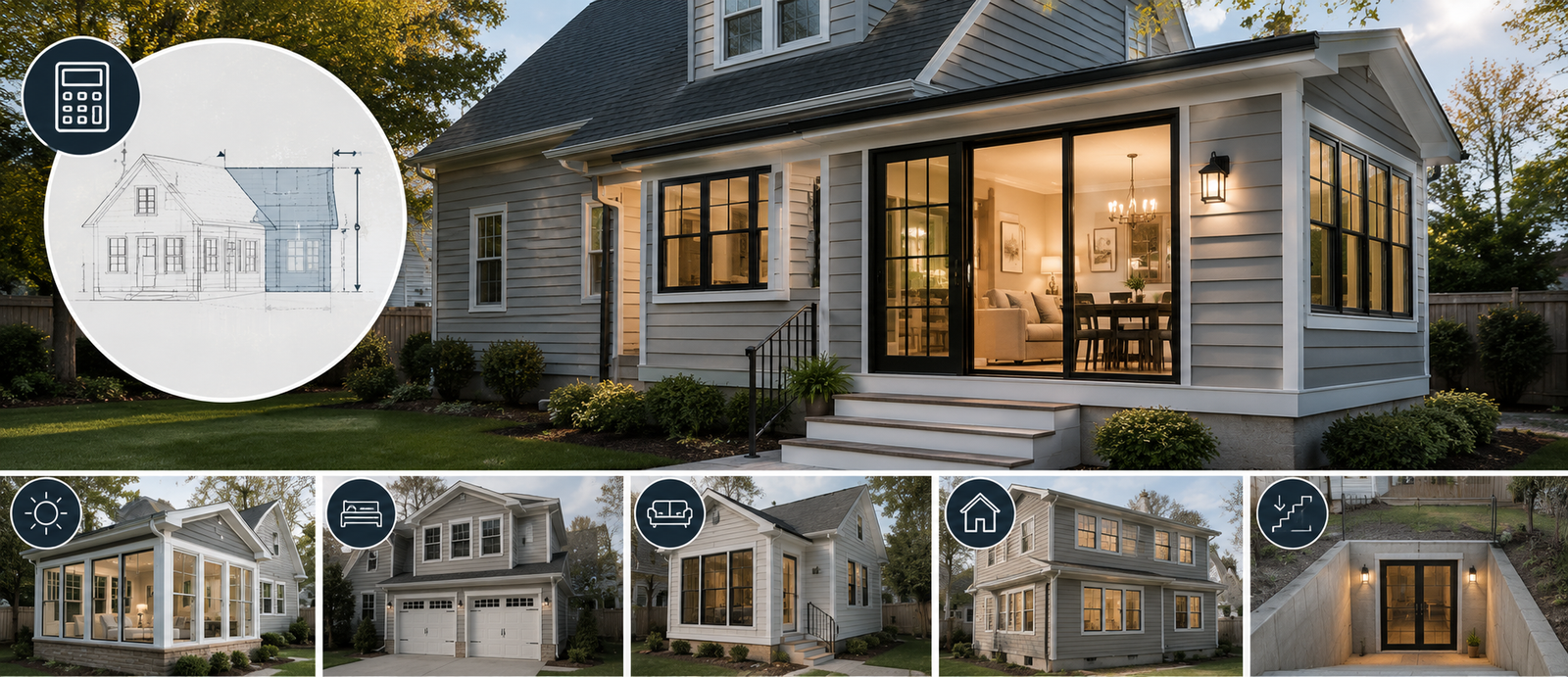
Below-grade space almost always costs less per square foot to finish than adding new space above grade, which our home addition cost guide covers, precisely because you are not building a new structure, only finishing an existing one.
Cost by Basement Size
| Basement Size | Typical Total Cost | Notes |
|---|---|---|
| Small (~500 sq ft) | $20,000 – $45,000 | Rec room or single-purpose space |
| Medium (~1,000 sq ft) | $35,000 – $85,000 | Multi-use; often a bath at the higher end |
| Large (~1,500+ sq ft) | $55,000 – $130,000+ | Bath, bar, bedroom, multiple rooms |
So for the common question of finishing a 1,000 square foot basement, plan on roughly 35,000 to 85,000 dollars, with the low end being a clean, open, no-plumbing finish and the high end including a bathroom and more built-out rooms.
What Drives the Cost
Five things move a basement budget more than anything else:
- A bathroom. Below-grade plumbing is the biggest single cost driver (more below).
- Moisture and waterproofing. Any water issue must be solved before finishing, and that cost varies widely.
- Egress. A legal bedroom requires an egress window, which means cutting the foundation.
- Ceiling height and obstructions. Low ceilings, ductwork, and beams can require creative (and costlier) framing.
- Layout and finishes. More enclosed rooms and higher-end materials raise the per-square-foot figure.
Want a Real Number for Your Basement?
Every basement is different, ceiling height, moisture, existing rough-ins and your goals all move the price. We assess your space, flag anything that needs to be handled first, and give you a detailed, line-item estimate rather than a vague per-foot guess. Free basement consultations across Derwood, Rockville, Silver Spring and all of Montgomery County.
Cost by Feature
| Feature | Added Cost | Notes |
|---|---|---|
| Bathroom addition | $15,000 – $35,000 | Below-grade plumbing, often an ejector pump |
| Egress window | $3,000 – $6,000+ | Required for a legal bedroom; cuts the foundation |
| Wet bar / kitchenette | $5,000 – $20,000+ | Cabinets, sink, plumbing, appliances |
| Flooring | Varies by material | LVP is budget-friendly and moisture-tolerant; tile and carpet cost more |
| Waterproofing (if needed) | $3,000 – $12,000+ | Must be done before finishing |
Waterproofing & Moisture
This is the most important part of any basement project, and the one homeowners most often want to skip. If your basement has any history of dampness or water intrusion, it must be addressed before finishing. Framing, insulating and drywalling over a moisture problem leads to mold, ruined materials and an expensive redo, so the water gets solved first, whether that means grading and downspout work outside, sealing the foundation, or an interior drainage system with a sump pump.
In our climate, even a basement that seems dry benefits from the right vapor barrier and below-grade-appropriate materials. Basement waterproofing, when needed, can range from a few thousand dollars for minor work to over ten thousand for a full interior drainage system, and it is money that protects the entire finished investment. A contractor who offers to finish over a known water issue is one to avoid.
Egress & Code
If your plan includes a basement bedroom, code requires an egress window: a properly sized emergency escape and rescue opening a person can climb out of and a firefighter can enter. It is a life-safety requirement, not an upgrade. Installing one in an existing basement means cutting the foundation wall, excavating a window well, and waterproofing the opening, typically around 3,000 to 6,000 dollars or more, with walkout-style or larger installs costing more.
If your finish is a family room, gym or office with no bedroom, an egress window generally is not required, though it adds daylight and can make a below-grade space feel far less like a basement. Either way, calling a room a bedroom without compliant egress is unsafe and a code issue that surfaces at resale.
Does a Finished Basement Add Value?
Yes. A finished basement adds usable, livable square footage at a lower cost per foot than an addition, which makes it one of the more sensible investments a homeowner can make. Industry estimates commonly put the resale return around 70 percent of cost, though that figure varies by market and finish, and in day-to-day terms the added living space, another gathering space, a guest suite, a home office, is often worth as much to a family as the resale number suggests.
To protect that value, keep the work permitted and up to code (unpermitted finished space becomes a problem at resale), solve any moisture issues properly, and finish to a standard that matches the rest of the home. For a precise read on resale impact for your specific property, a local real estate professional is the best source, since we are contractors rather than appraisers.
The Cheapest Way to Finish a Basement
The most affordable path is to keep it simple and skip the expensive elements: an open layout with few walls, no added bathroom or plumbing, and budget-friendly finishes like luxury vinyl plank flooring and a painted or drop ceiling. That combination can bring a basic finish toward the lower end of the range.
What you should not cut is the work that protects the space and keeps it legal, waterproofing and egress. Skipping moisture control to save money almost always costs more later when the finished space is damaged, and skipping a required egress window makes a bedroom both unsafe and non-compliant. The genuinely cheap basement is a simple, dry, permitted one, not one with the wrong corners cut.
Basement as an In-Law Suite
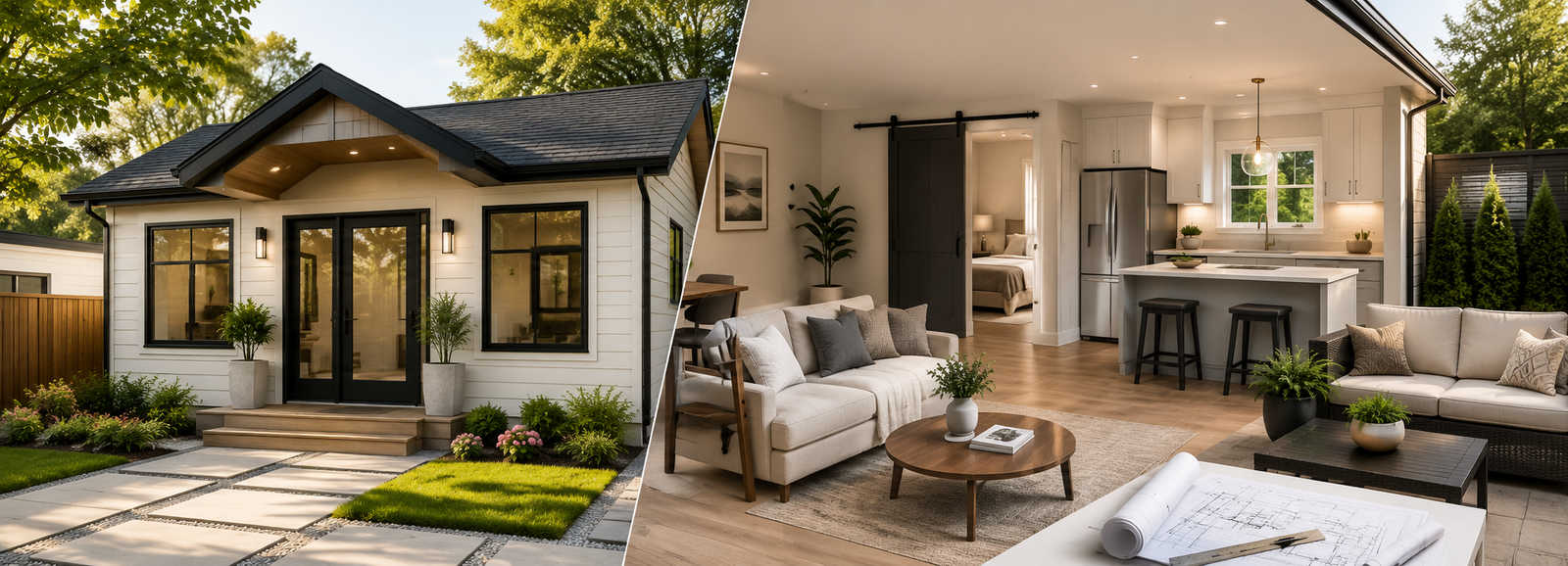
Finishing a basement for general living space, a rec room, guest room or office, is different from converting it into a fully independent living unit with its own kitchen and entrance. If your goal is the latter, an in-law suite or accessory dwelling unit (ADU), that is a distinct project with its own rules, costs and permitting, and a basement is one of the most common and cost-effective ways to create one. We cover that scenario in detail in our guide to in-law suites and ADUs in Montgomery County. For a straightforward finished basement, though, the costs and considerations in this guide are what apply.
Permits
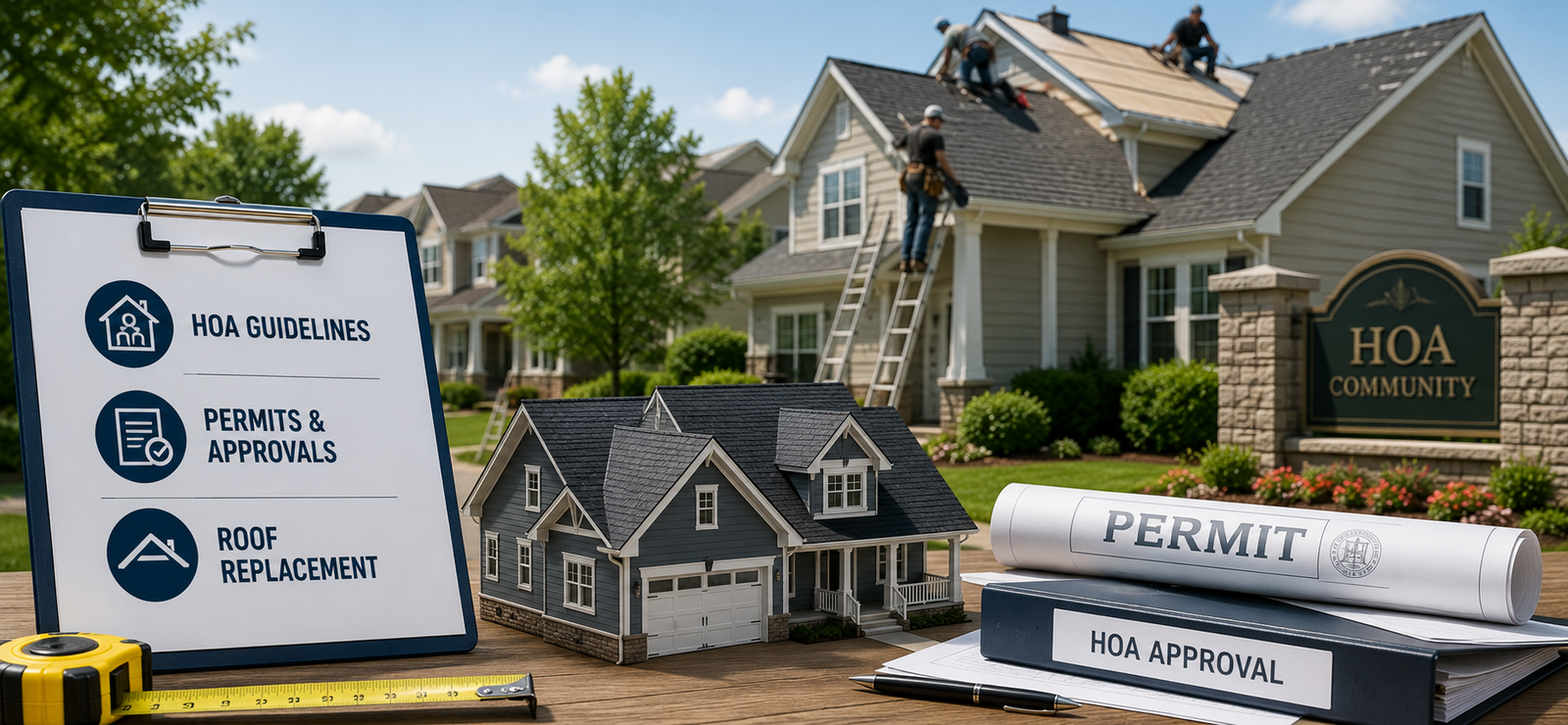
Finishing a basement requires a Montgomery County permit, and the work is inspected, framing, electrical, plumbing (if added), and final. That is a feature, not a hurdle: a permitted, inspected basement is safe, code-compliant, and counts as legitimate finished space at resale, while unpermitted work can force costly corrections or reduce value when it surfaces in an inspection. Your contractor should pull the permits and manage the inspections as the responsible party. If your home is in an HOA, most interior basement work does not require approval, but it is worth checking, and the same permitting principles in our HOA rules and permits guide apply.
Basement Finishing in Derwood, Gaithersburg and Across the County
We finish basements throughout Montgomery County, and demand is strong because it is such an efficient way to gain space in homes families want to stay in. Whether it is basement remodeling in Derwood MD, where we work across Derwood, a finished basement in Gaithersburg MD, or basement projects in Rockville and Silver Spring, the approach is the same: assess moisture and conditions first, plan a layout around how you will really use the space, budget honestly for the features that matter, and handle permits and inspections end to end. For basement finishing in Montgomery County MD, that combination of dry-first discipline and transparent budgeting is what separates a basement that lasts from one that disappoints.
Because a basement touches framing, electrical, often plumbing, moisture control and finish work all at once, having one accountable crew coordinate it matters. That is how we handle every basement finishing project in Montgomery County MD, family-owned, MHIC licensed, 75+ years of combined experience, and a strict zero-subcontractor policy that keeps the waterproofing, the rough-ins and the finish under a single team that stands behind the whole result.