The honest headline on deck cost in Montgomery County is that material choice, more than anything else, determines your number. Two decks of identical size and design can differ by tens of thousands of dollars purely on whether the surface is pressure-treated wood or composite. Once you understand the per-square-foot pricing and what pushes it up or down, budgeting becomes straightforward. Let us break it down.
This guide reflects the deck work we do through our decks, porches and patios service, and it is peak deck-building season, so demand and lead times are at their yearly high.
What Drives Deck Cost
Before the numbers, the levers. A deck's price is set mainly by: the decking material (the single biggest factor), the size in square feet, the railing type, whether the deck is elevated (which adds footings, framing and stairs), the complexity of the shape and any built-in features, and site conditions like slope and access. Labor and permits round it out. Change the material and the railing, and you have moved most of the budget.
Cost Per Square Foot
Installed, all-in, most decks in Montgomery County fall into these per-square-foot ranges by material:
- Pressure-treated wood: ~$30–$45/sq ft - the budget standard.
- Cedar / premium wood: ~$40–$55/sq ft - a natural look with more upkeep.
- Composite (Trex, TimberTech): ~$55–$80/sq ft - low-maintenance, long-lived.
- PVC / capped premium: ~$65–$95+/sq ft - the top of the range.
These cover materials and installation for a straightforward deck. Use them as a deck cost calculator shortcut, multiply your planned square footage by the figure for your material, but remember a real estimate adds railings, stairs, height and footings a simple per-foot number leaves out.
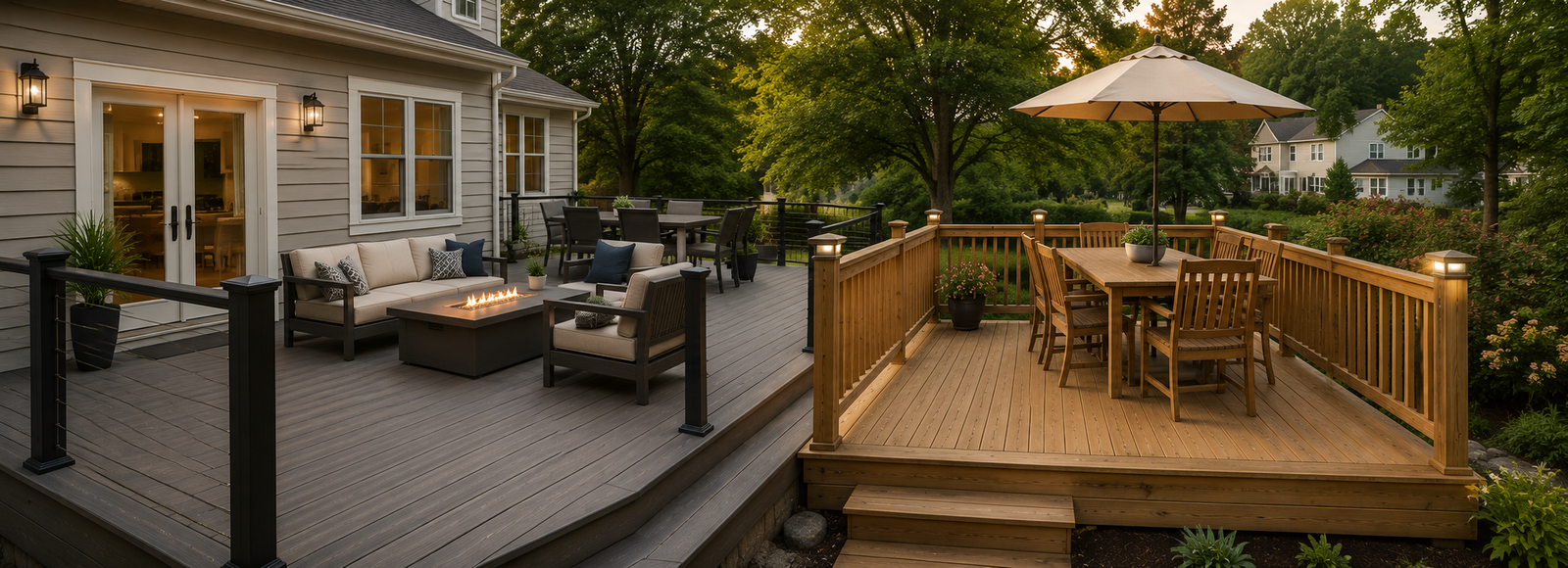
Composite vs Wood: The Real Comparison
| Factor | Pressure-Treated Wood | Composite |
|---|---|---|
| Cost/sq ft (installed) | ~$30–$45 | ~$55–$80 |
| Upfront cost | Lowest | ~1.5–2x wood |
| Maintenance | Annual clean, sand, stain, seal | Occasional wash |
| Lifespan | ~15–20 years | ~25–30+ years |
| Warranty | Limited | Often decades |
| Look | Natural wood | Uniform; many colors |
Cost by Deck Size
| Deck Size | Pressure-Treated | Composite |
|---|---|---|
| 12 x 12 (~144 sq ft) | $4,000 – $6,500 | $8,000 – $11,500 |
| 16 x 16 (~256 sq ft) | $8,000 – $11,500 | $14,000 – $20,500 |
| 20 x 20 (~400 sq ft) | $12,000 – $18,000 | $22,000 – $32,000 |
So a 20 by 20 deck, a very common size, generally runs about 12,000 to 18,000 dollars in pressure-treated wood or 22,000 to 32,000 dollars in composite, before any premium railings, multiple levels or an elevated design.
Want an Exact Deck Price?
Per-foot ranges get you in the ballpark, but your real number depends on size, material, railing, height and your yard. We measure, walk you through composite and wood options with side-by-side pricing, and give you a detailed, line-item estimate, no vague lump sums. Free deck consultations across Clarksburg, Germantown and all of Montgomery County, and it is peak season, so booking early matters.
Material Options & Pricing
The main choices, from most to least budget-friendly:
- Pressure-treated wood - the most affordable and most common. Strong and proven, but needs regular sealing and staining and has the shortest lifespan of the group.
- Cedar and other natural woods - a warmer look and naturally more rot-resistant than PT, at a higher price, and still requiring maintenance.
- Composite (Trex, TimberTech and similar) - a wood-and-plastic blend that resists rot, fading and insects, needs little maintenance, and lasts decades. The most popular upgrade.
- PVC and capped composite - all-synthetic or capped boards at the premium end, with the best moisture and stain resistance and the highest price.
Labor Cost
Labor typically makes up around half of a deck's total cost, which is why installed prices land at roughly double the material cost. Composite and wood take similar labor to build the structure, the material choice mostly changes the material line, not the labor, though an elevated deck, complex shape, multiple levels, picture-frame borders or difficult site access all add hours. Because labor is such a large share, the cheapest quote is not automatically the best value: a deck is a structural element attached to your house and holding people above the ground, so the skill behind the build matters. A good contractor gives you a line-item estimate that separates materials from labor.
Is Composite Worth It?
For homeowners planning to stay a while, composite often wins on total cost of ownership even though it costs more upfront. You pay roughly 1.5 to 2 times the wood price on day one, but you skip the annual staining and sealing wood needs, and a composite deck commonly lasts 25 to 30 years or more versus 15 to 20 for wood. Spread the higher upfront cost over that longer, lower-maintenance life and the gap narrows or reverses.
Wood still makes sense when the priority is the lowest upfront price, when you like the natural look, or when the deck is a shorter-term feature. There is no wrong answer, only the right one for your budget and how long you will enjoy it. We price both so you can compare the day-one and lifetime numbers directly.
What Else Adds Cost
Beyond size and material, these move the total:
- Railings: basic wood is cheapest; composite, metal, and cable railings cost progressively more.
- Stairs and height: an elevated deck needs more footings, taller posts, and stairs, all added labor and material.
- Built-in features: benches, planters, pergolas, lighting and multiple levels each add cost.
- Footings and site work: sloped or hard-to-access yards increase excavation and framing.
- Permits: a required and worthwhile line item, covered next.
Permits
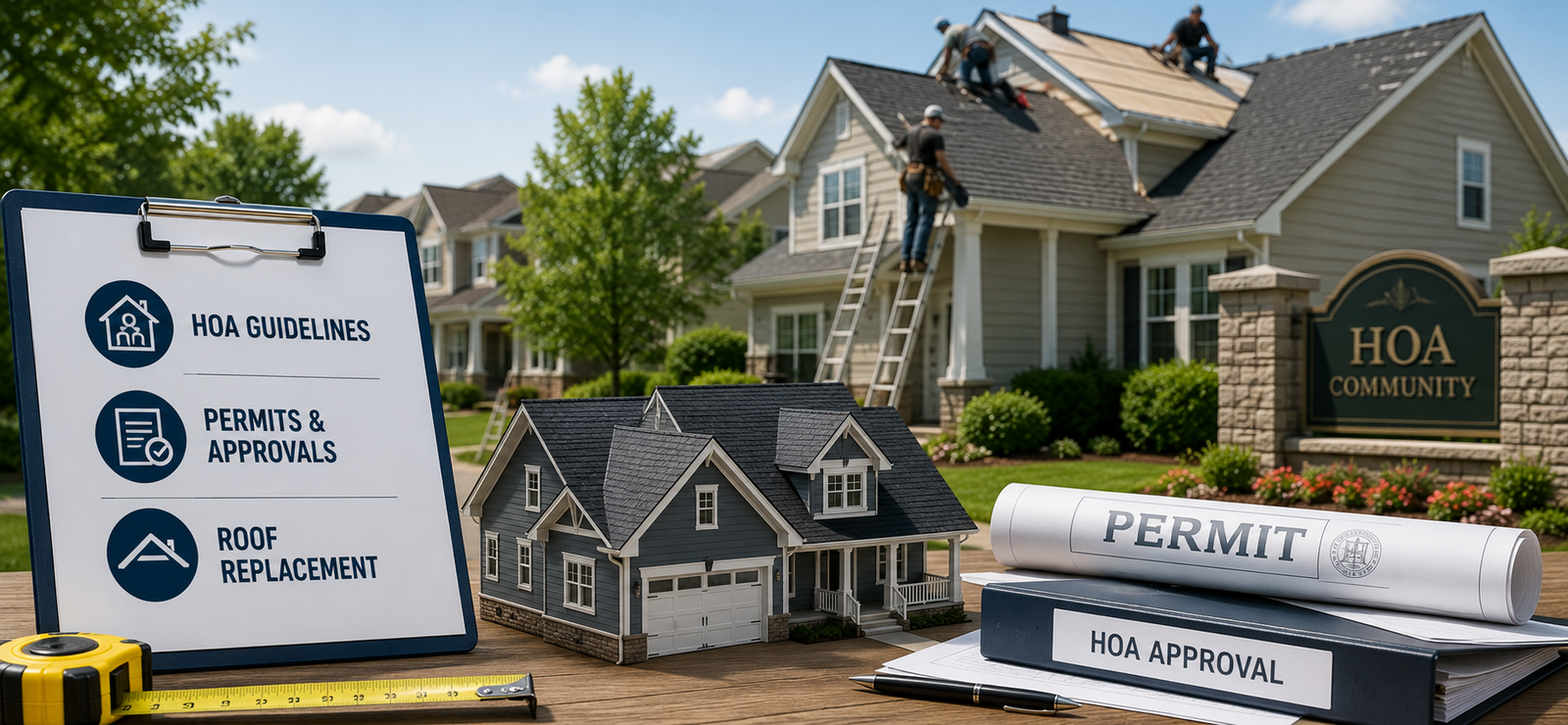
A deck almost always requires a Montgomery County permit, because it is a structural element attached to your home that holds people above the ground. The permit and inspections verify the things that keep a deck safe: footings below the frost line, correct framing and spans, a securely attached ledger board (poor attachment is a leading cause of deck failures), and code-compliant guardrails and stairs. An unpermitted deck is both a safety risk and a resale problem. If you are in an HOA community, you will typically need HOA approval too. Your contractor should pull the permit, build to code and manage inspections, the same permitting principles in our HOA rules and permits guide apply here.
Financing
Because a quality deck is a meaningful investment, many homeowners use financing, home equity lines, home improvement loans, or contractor financing programs, to spread the cost, especially when upgrading to composite. That can make the lower-maintenance, longer-life option affordable now rather than later. We are contractors rather than lenders, though, so the specifics of rates and terms are best worked out with a qualified lender or financial professional for your situation, this is general information, not financial advice.
Deck Building in Clarksburg, Germantown and Across the County
Deck season is short and intense here, and demand runs highest in the fast-growing communities north and west of the county. As a deck builder in Montgomery County MD, we design and build in both wood and composite for every yard and budget. Whether it is deck installation in Clarksburg MD, where our Clarksburg deck building keeps us busy through the season, a composite deck in Germantown MD through our work across Germantown, or a deck anywhere else in the county, the approach is the same: measure the space, price wood and composite side by side, build to code with proper footings and attachment, and handle the permit end to end. Our decks, porches and patios service covers the full range of outdoor living, from ground-level platforms to elevated multi-level decks.
Because a deck is a safety-critical structure that also has to look right and last, the experience behind the build matters as much as the material on top. That is how we approach every deck in Montgomery County MD, family-owned, MHIC licensed, 75+ years of combined experience, and a strict zero-subcontractor policy that keeps the footings, the framing and the finish under one accountable crew that stands behind the whole structure.