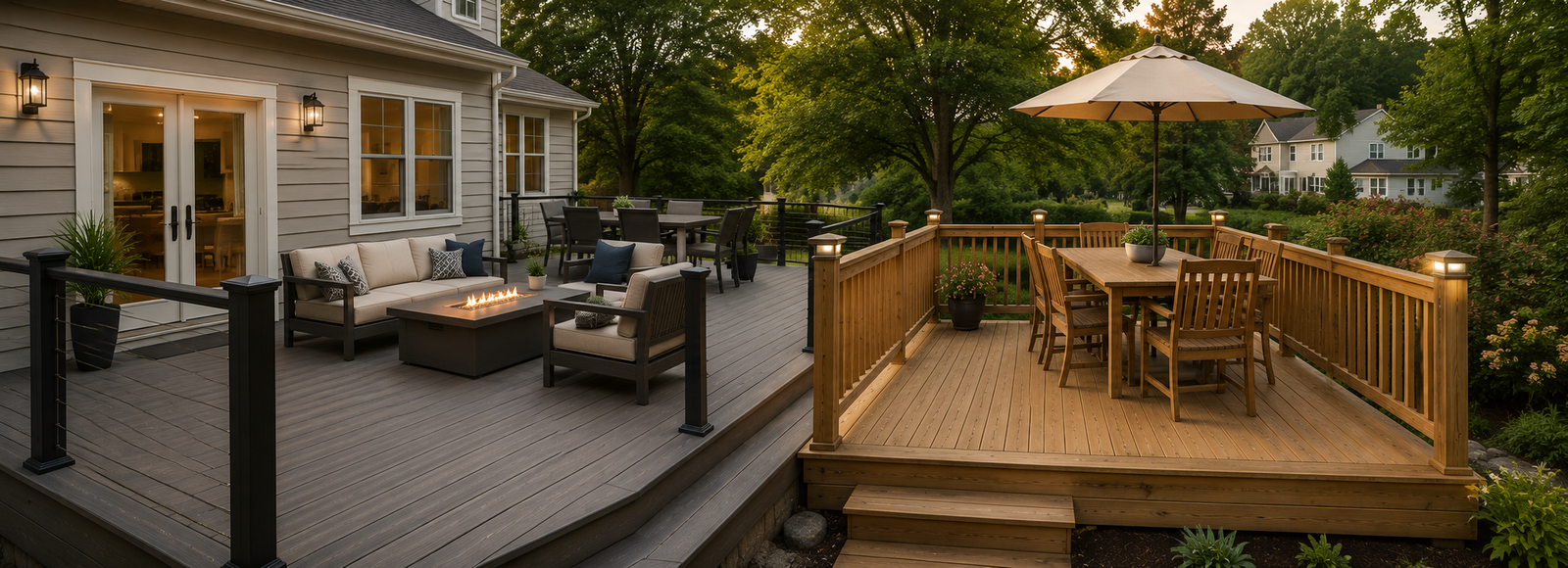
A deck permit in Montgomery County is not paperwork to avoid, it is the process that confirms your deck is built to hold everyone you put on it. Because a deck is a structure attached to your home, elevated off the ground and carrying real weight, the county regulates it closely, and getting the permit, the code and the inspections right is what separates a safe, legal, lasting deck from a hazard and a resale headache. Here is exactly how it works.
This guide is the permit companion to our deck cost guide, and it reflects the deck work we do through our decks, porches and patios service.
Do You Need a Permit?
Yes, in nearly all cases. Montgomery County requires a building permit for deck construction, with code-compliant plans and inspections. The reason is simple: a deck is a structural element that attaches to your house, holds people and furniture, and often sits well above the ground, so it has to be built and verified to code. The permit is what confirms the footings, framing, attachment and railings are all safe.
The question homeowners often really mean is "can I avoid one," and the honest answer is that it is not worth trying. The consequences of an unpermitted deck, which we cover below, far outweigh the fee and the modest effort a permit involves, especially since your contractor handles it.
What Size Deck Needs a Permit?
The safe assumption is that your deck needs a permit. Almost any real deck, one attached to the house, raised more than a low step off the ground, or of a usable size, requires one. Some jurisdictions carve out a narrow exemption for very small, very low, freestanding platforms not attached to the house, but whether such an exemption exists in Montgomery County and what its exact thresholds are is specific and subject to change, so it has to be confirmed with the county rather than assumed.
Trying to design a deck small enough to skip the permit usually means a deck too small to be useful. The sensible approach is to plan the deck you actually want and permit it, and let your contractor confirm whether any exemption applies to your specific project.
What a Deck Permit Costs
A deck permit is a relatively small line item, commonly in the range of a few hundred dollars, and the exact fee is set by the county's current fee schedule, generally scaling with the size or value of the project. Because that schedule can change and depends on your specific deck, the reliable figure comes from the county or from your contractor's estimate. On most projects the contractor pulls the permit and either includes the fee in the quote or lists it as a pass-through. Relative to the total cost of a deck, the permit is minor, and the protection it buys, inspections that confirm the deck is safe, plus a clean record at resale, is well worth it.
We Handle the Permit For You
On every deck we build, we pull the permit, build to current code, and manage the inspections as the responsible party, so you get a safe, legal, resale-ready deck without navigating the county process yourself. We confirm the requirements for your specific project up front. Free deck consultations across Poolesville, Damascus and all of Montgomery County.
The Permit Process
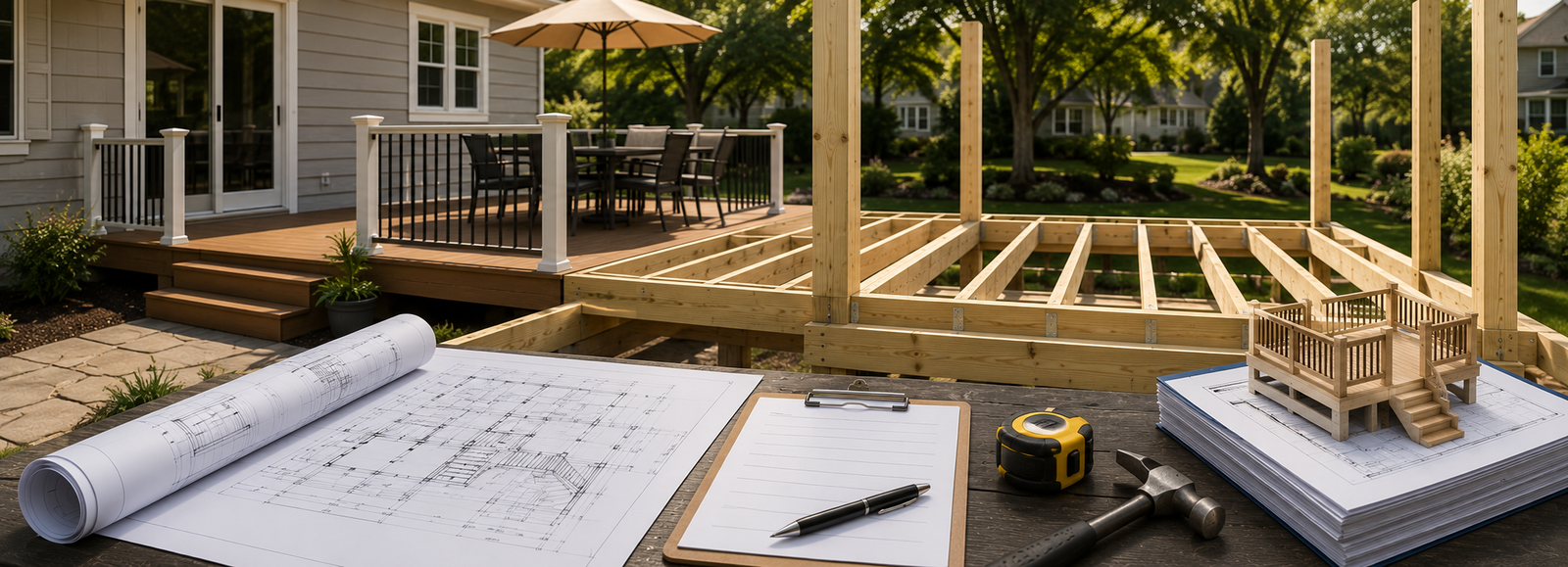
On a professional deck project, your contractor manages this as the responsible party. In broad strokes it runs: plans and application submitted to Montgomery County's Department of Permitting Services, showing the deck's size, structure, footings and attachment; plan review and permit issuance; then construction with staged inspections at key points; and a final inspection and sign-off at completion. Because the plans have to show code-compliant framing, footings and railings, working with a contractor who builds decks regularly keeps the submission clean and the project moving.
Deck Building Code Basics
A permit exists to enforce the code that keeps a deck safe. The details most relevant to homeowners:
- Guardrails / railing height: guardrails are generally required on any deck more than 30 inches above the grade below, and residential guardrails are typically required to be at least 36 inches high, with baluster spacing tight enough that a 4-inch sphere cannot pass through.
- Footing depth: footings must extend below the frost line so freezing and thawing cannot heave them, in Maryland commonly around 30 inches, and be sized to carry the load.
- Ledger attachment: where the deck attaches to the house, the ledger board must be properly fastened and flashed, a poorly attached ledger is a leading cause of deck collapses.
- Framing, spans and stairs: joist and beam sizes and spans must meet code, and stairs need compliant treads, risers and handrails.
The figures above, guardrail heights, baluster spacing and footing depth, are the standard code minimums homeowners will encounter, but the exact requirements that apply to your deck follow the specific building code Montgomery County has adopted along with any local amendments, and these can change over time. Before building, confirm the current specifics with Montgomery County's Department of Permitting Services, or have your contractor build to the code that applies at permit time.
Inspections
A permitted deck is inspected in stages so each check happens before the next step covers it up. The key ones are usually the footing inspection (after the footing holes are dug, before concrete is poured, confirming depth, size and location, this must be first because footings are buried), the framing inspection (once the structure and ledger attachment are built but before the decking hides them), and the final inspection (confirming guardrail height, baluster spacing and stair compliance). This staged approach is exactly why unpermitted work is risky: what an inspector would catch gets buried instead. Your contractor schedules and meets the inspectors and handles any corrections.
What Happens If You Build Without a Permit
Skipping the permit trades a small fee for a set of real risks:
- Stop-work orders and fines: if unpermitted work is discovered in progress, you can be ordered to stop and permit it after the fact.
- Uncovering finished work: to permit a deck retroactively, an inspector may require exposing footings or framing to verify them, and bringing anything non-compliant up to code.
- Resale problems: an unpermitted deck routinely surfaces in a buyer's inspection, an appraisal, or county records, complicating a sale or reducing value.
- Insurance risk: a claim tied to an unpermitted structure, especially after an injury, can be denied.
- Safety: underneath it all, an uninspected deck may have the exact defects, shallow footings, a poorly attached ledger, non-compliant railings, that cause decks to fail.
An unpermitted deck is a liability that follows the house. If you have inherited one, a contractor can assess it and help bring it into compliance, the broader principles in our HOA rules and permits guide apply here too.
HOA Approval
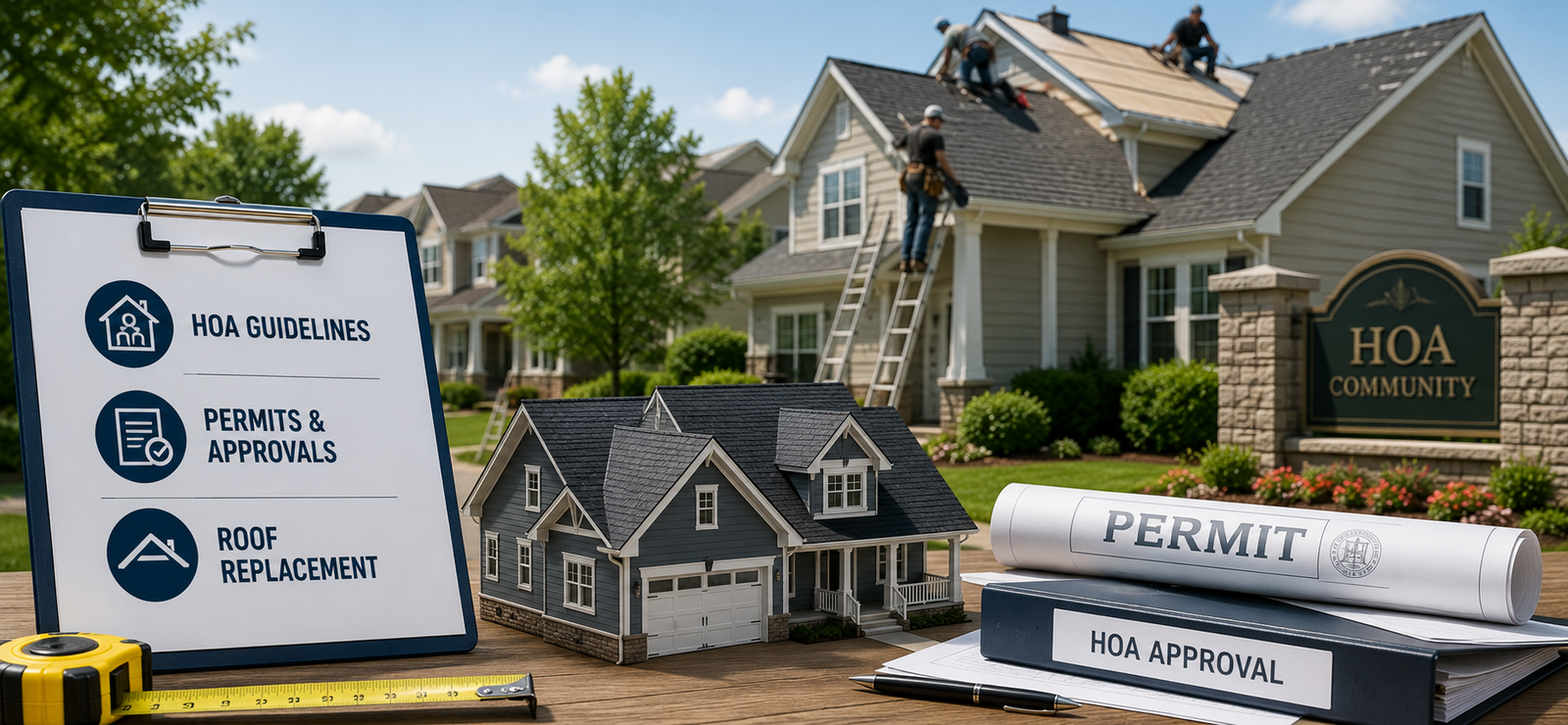
If your home is in an HOA community, a deck almost always needs HOA approval in addition to the county permit, because it changes the exterior of the home. That usually means submitting a design, materials and sometimes color to the architectural committee before building. It is a separate approval from the county permit, and both are needed, so it is worth starting the HOA review early since it can add time. A contractor experienced in the area can help prepare what the HOA needs alongside the county submission.
Deck Permits in Poolesville, Damascus and Across the County
We handle the permit and code side of deck projects throughout the county, so homeowners do not have to decode building requirements themselves. Whether you are working with a deck contractor in Poolesville MD, where we build across Poolesville, sorting out deck permits in Damascus MD through our work in Damascus, or planning a deck in Clarksburg or anywhere else in the county, the approach is the same: confirm what the current code requires, design the footings, framing and railings to meet it, pull the permit, and pass every inspection. For a deck builder in Montgomery County MD, that is what makes the finished deck safe, legal and genuinely yours to keep and enjoy.
Because a deck is a safety-critical structure holding people above the ground, the permit and inspections are not obstacles, they are the proof the deck was built right. That is how we approach every deck in Montgomery County MD, family-owned, MHIC licensed, 75+ years of combined experience, and a strict zero-subcontractor policy that keeps the footings, the framing, the railings and the permits under one accountable crew that stands behind the whole structure.