Ask most homeowners what protects their roof, and they will say the shingles. True, but the gutters are the unsung partner in that job. Their entire purpose is to carry water away from the roof, walls and foundation. When they fail, water goes exactly where you do not want it, and because the damage happens slowly and out of sight, it is usually well advanced by the time anyone notices. That is what makes gutter problems and the roof damage they cause so insidious.
In Montgomery County, with its heavy tree cover and four distinct seasons, gutters take a beating, especially every fall when leaves pile in. This guide breaks down the specific ways failing gutters harm your roof and home, how to catch the warning signs, and when it is time to stop patching and replace.
Why Gutters Matter More Than You Think
A roof and its gutters are a system. The shingles shed water down the slope; the gutters catch it at the edge and route it, through the downspouts, safely away from the house. Break any link in that chain and water starts attacking the parts of your home it was designed to protect: the roof edge, the fascia, the decking, the siding and the foundation.
Because gutters sit quietly at the edge of the roof, they are easy to ignore, and easy to neglect. But a small gutter problem left unaddressed does not stay small. It compounds, quietly, into some of the most expensive damage a home can suffer. Understanding the specific failure modes is the first step to preventing them.
Clogged Gutters and Roof Leaks
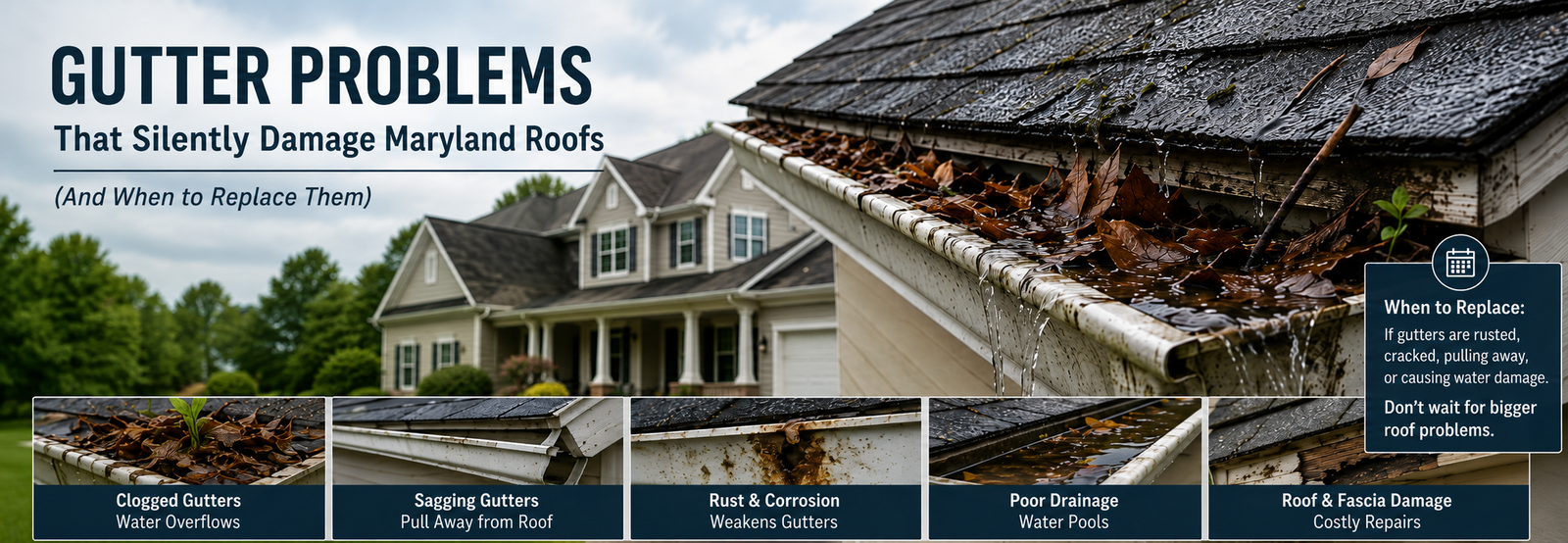
The most common gutter problem is also one of the most damaging: clogs. When leaves, twigs and debris fill a gutter, water can no longer flow to the downspouts. Instead it backs up and overflows, and critically, it pools along the roof edge.
That is where the trouble starts. Standing water at the roof edge seeps under the shingles, soaking the underlayment and the wooden roof decking beneath. Over time this causes rot, mold and, eventually, interior leaks that show up as stains on ceilings and walls, long after the damage began. So yes, clogged gutters absolutely cause roof leaks, they are one of the leading preventable causes. In a leaf-heavy area like much of Montgomery County, especially in fall, keeping gutters clear is one of the cheapest and most important things you can do for your roof.
The dangerous thing about gutter-caused roof damage is the delay. Water backs up, soaks the decking, and rots the wood for months before any sign reaches your ceiling. By the time you see a stain, the repair is often far larger than a clean gutter would ever have cost. This is exactly why "out of sight, out of mind" is the wrong approach to gutters.
Fascia and Soffit Damage
The fascia is the board that runs along the roof edge, the surface your gutters are attached to, and the soffit is the underside of the overhang. When gutters overflow or leak, that water runs down and saturates the fascia and soffit, causing them to rot. As the fascia weakens, it can no longer hold the gutters securely, so the gutters begin to sag and pull away, which makes them drain even worse, which causes more overflow, a destructive cycle.
Rotted fascia and soffit are not just cosmetic. They compromise the roof edge, invite pests into the attic, and often require carpentry to repair on top of the gutter work. Catching gutter problems early prevents this cascade. Fascia damage is one of the clearest signs that gutters have been failing for a while.
Ice Dams: Winter's Hidden Threat
In Maryland's freeze-thaw winters, gutters play a direct role in one of the most damaging cold-weather roof problems: ice dams. Here is how they form. Heat escaping into a poorly insulated attic warms the upper roof and melts the snow on it. That meltwater runs down to the cold roof edge, and the gutters, where it refreezes, building a ridge of ice. That ice dam then traps more meltwater behind it, which has nowhere to go but under the shingles and into the home.
Clogged or poorly draining gutters make ice dams worse by holding water and ice right at the vulnerable roof edge. The best defenses are twofold: proper attic insulation and ventilation to keep the roof deck cold (so snow does not melt unevenly), and clear, well-functioning gutters. Ventilation's role here connects to roof lifespan overall, which we cover in our guide on how long a roof lasts in Maryland. In our climate, ice dams are a genuine threat, and gutters are part of both the problem and the solution.
Foundation and Landscape Damage
Gutter damage does not stop at the roof. When gutters and downspouts fail to carry water away from the house, that water dumps straight down beside the foundation. Over time this can erode landscaping, flood basements and crawl spaces, and contribute to foundation problems, some of the most expensive repairs a home can face. The gutters' job of directing water away from the house protects far more than the roof; it protects the entire structure from the ground up. A failing gutter system quietly puts all of that at risk.
Warning Signs Your Gutters Are Failing
Gutters usually give plenty of warning before they cause major damage. Watch for these warning signs:
- Overflowing during rain, water spilling over the sides instead of draining through downspouts.
- Sagging or pulling away from the house, a sign of weight, clogs or failing fascia.
- Cracks, splits or holes in the gutters themselves.
- Rust, peeling paint or visible corrosion.
- Pooling water or eroded soil beneath the gutters and downspouts.
- Peeling exterior paint or stains on the siding beneath the gutters.
- Rotted fascia boards or soft spots at the roof edge.
- Water in the basement or around the foundation after rain.
One of these might just mean a cleaning or a minor repair. Several together, especially on aging gutters, point toward replacement.
Worried Your Gutters Are Damaging Your Roof?
We inspect your gutters and roof together, identify any hidden damage, and give you an honest assessment, repair, replace, or simply maintain. Free, no-pressure inspection across Montgomery County, ahead of the fall leaf season.
When to Repair vs Replace Your Gutters
Not every gutter problem means replacement. A single clog, a loose bracket or a small leak at a seam is usually a repair or a cleaning. Replacement becomes the better choice when the problems are widespread or the gutters are aging. Consider gutter replacement when:
- The gutters are near or past their expected lifespan (around 20 years for aluminum).
- You are seeing multiple warning signs at once, sagging, cracks, rust, chronic overflow.
- You are repairing them constantly, and the repairs are no longer holding.
- There is already fascia damage from long-term gutter failure.
- The system was undersized or poorly installed to begin with.
The logic mirrors roofs: patching an old, broadly failing system is throwing money at something that needs replacing anyway. When gutters reach that point, new ones protect your roof far better and end the cycle of repairs. A professional can tell you honestly which side of that line your gutters are on, as part of the same inspection that covers your roof.
Do Gutter Guards Actually Work?
In a tree-heavy area like much of Montgomery County, gutter guards are a genuinely useful investment. Quality guards keep leaves and larger debris out, dramatically reducing how often gutters clog and need cleaning, which directly reduces the risk of the roof damage we have described. They are not completely maintenance-free, fine debris and pollen can still get through, and occasional checking is wise, but good guards cut the workload and the clog risk substantially.
The caveat is quality and installation. Cheap guards installed poorly can trap debris on top or cause water to sheet over the edge, creating new problems. Well-chosen, properly installed guards from a reputable contractor, on the other hand, are often well worth it for homes surrounded by trees, exactly the situation where clogs are most frequent and most damaging. If you are tired of cleaning gutters every fall, they are worth a conversation.
Seamless vs Sectional Gutters
If you are replacing gutters, you will likely choose between sectional and seamless. Sectional gutters are pre-cut pieces joined together, with a seam at every joint, and those seams are the most common place for leaks and clogs to develop. Seamless gutters are custom-formed on site in one continuous run per side of the house, with joints only at corners and downspouts.
The advantage of seamless gutters is right there in the name, far fewer seams means far fewer failure points, fewer leaks and fewer places for debris to catch. They also tend to look cleaner and perform better over the long haul, which is why they have become the standard for quality installations. They cost a bit more upfront than sectional, but the reduction in leaks and maintenance makes them the preferred choice for most Maryland homes.
| Feature | Sectional Gutters | Seamless Gutters |
|---|---|---|
| Seams | Many (leak points) | Corners & downspouts only |
| Leak Risk | Higher | Lower (winner) |
| Appearance | Visible joints | Clean, continuous |
| Maintenance | More | Less |
| Upfront Cost | Lower | Slightly higher |
Should You Replace Gutters With Your Roof?
If you are already planning a roof replacement, it is smart to evaluate the gutters at the same time. When gutters are aging or damaged, replacing them alongside the roof is often more efficient and cost-effective than doing it separately later, the crew is already on site, and the two systems coordinate perfectly. New gutters also protect your new roof investment from exactly the kind of water damage this article describes.
That said, if your gutters are relatively new and in good shape, there may be no need. The point is to make the decision deliberately rather than by default. A contractor who handles both roofing and gutters, as we do, can assess both together and recommend the most sensible, cost-effective approach, then coordinate the work seamlessly. Our roof and gutter service covers exactly this combined work, and if you are weighing a full roof replacement, our roof repair vs replacement guide is a useful companion.
How to Protect Your Gutters (and Your Roof)
A little upkeep prevents nearly all gutter-caused roof damage. The essentials:
- Clean gutters at least twice a year, especially in fall after the leaves drop, and in spring.
- Consider gutter guards if you have significant tree cover, to cut cleaning frequency and clog risk.
- Check downspouts to ensure water is directed well away from the foundation.
- Inspect after storms for damage, sagging or loosened brackets.
- Address fascia and small leaks early, before they cascade into bigger problems.
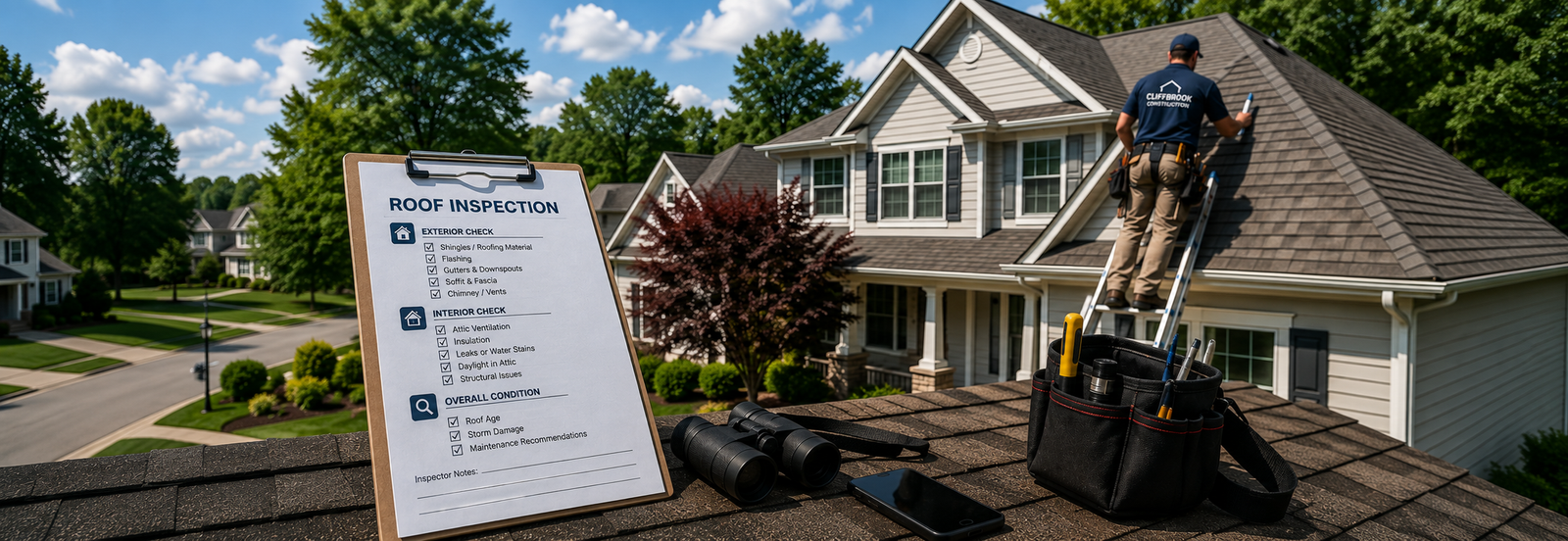
- Include gutters in your annual roof inspection, so problems are caught while small.
None of this is expensive or difficult, but it protects one of your home's largest investments. Regular attention to gutters, along with the roof inspections we describe in our roof inspection guide, is the simplest insurance against the silent, costly damage that failing gutters cause. If you are unsure where your gutters stand, especially heading into fall, a quick professional look will tell you.