When homeowners plan a roof replacement, the permit question often gets overlooked, or worse, waved off by a contractor eager to start quickly. But in Montgomery County, a permit is not optional paperwork; it is a legal requirement that protects you, your investment and your home's future sale. Getting it right is simple when you understand the process, and getting it wrong can be surprisingly expensive.
This guide answers the core question, do you need a roof replacement permit in Montgomery County, along with every practical follow-up: cost, responsibility, inspections, code, and the genuine consequences of skipping it. Let us start with the direct answer.
The Short Answer: Yes
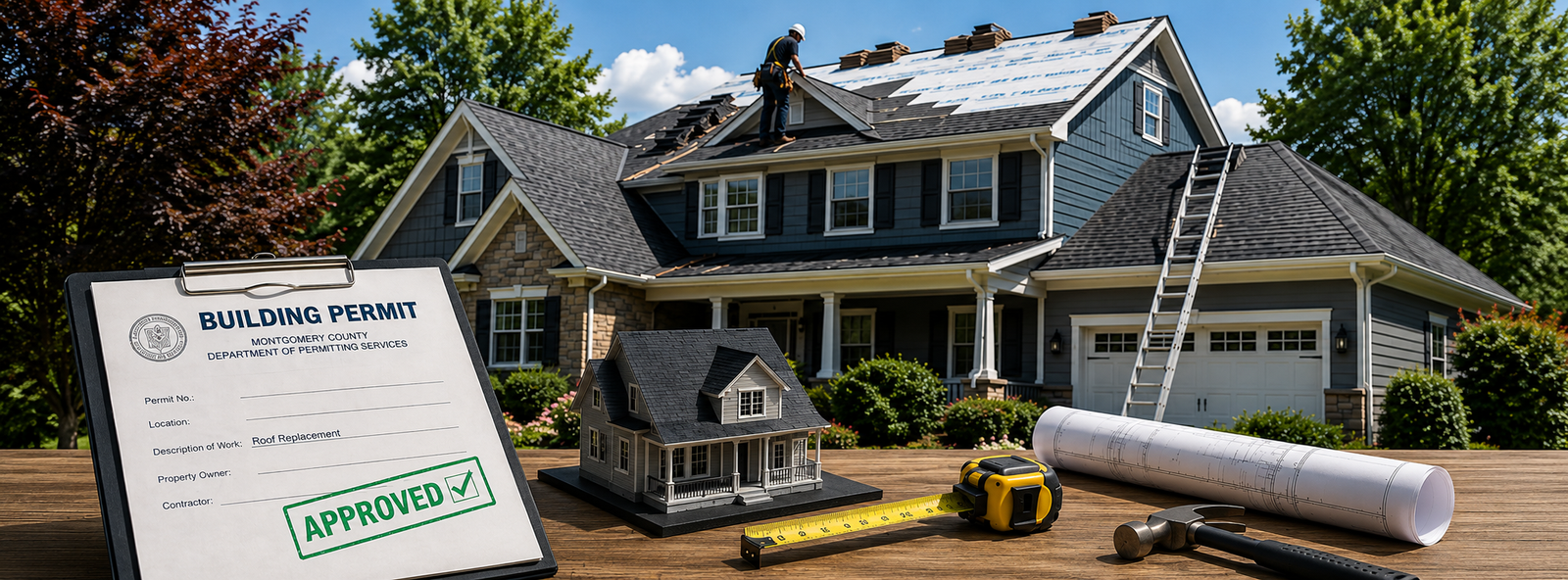
In Montgomery County, Maryland, replacing a roof, meaning tearing off the old covering and installing a new one, generally requires a building permit. Montgomery County follows the Maryland-adopted building codes, and a full re-roof is considered permit-worthy work that also requires inspection. This applies whether you are switching materials or installing the same type of shingle you had before.
The main exception is minor repair work. Patching a small section or swapping out a handful of damaged shingles typically does not require a permit. The line is roughly between repair (usually no permit) and replacement (permit required). Because the county sets and occasionally updates these thresholds, the safest move is always to confirm current requirements with Montgomery County's Department of Permitting Services, or simply hire a licensed contractor who handles it for you.
Why Roofing Permits Exist in the First Place
It is easy to see a permit as bureaucratic friction, but permits serve real, homeowner-protecting purposes. A permit triggers an inspection, and that inspection is the county confirming that the work was done to code, with proper materials, underlayment, flashing and installation. That protects you from shoddy or unsafe work.
Permits also create an official record that the work was done and approved. That record matters enormously when you sell your home, refinance, or file certain insurance claims. A properly permitted, inspected roof is a documented asset; an undocumented one can become a liability. In other words, the permit is not there to slow you down, it is there to make sure the single most important protective layer of your home was installed correctly and can be proven so later.
When You Definitely Need a Permit
You should count on needing a permit in situations like these:
- Full roof replacement (re-roof): tearing off the old roof and installing a new one, the classic case.
- Changing roofing material: switching from asphalt to metal, slate or another material, which involves structural and code considerations.
- Structural work: repairing or replacing decking, rafters or trusses, or altering the roof structure.
- Adding or altering roof features: new skylights, dormers or significant changes to the roofline.
- Significant storm-damage rebuilds: where a large portion of the roof is being reconstructed rather than patched.
If your project falls into any of these categories, plan on a permit as a normal part of the job. A reputable contractor will factor it into the timeline and estimate without being asked.
When You Might Not Need One
Smaller jobs often fall below the permit threshold. These usually do not require a permit, though it is always worth confirming:
- Minor repairs: replacing a few blown-off or damaged shingles.
- Small patches: sealing a minor leak or fixing a small area of the roof.
- Routine maintenance: resealing flashing, minor gutter work and general upkeep.
The gray area is the size of the repair. A genuinely minor fix is one thing; a "repair" that covers a large portion of the roof may effectively be a partial replacement in the county's eyes. When in doubt, ask the county or your contractor rather than guessing, because the cost of guessing wrong falls on you as the homeowner. Our guide on roof repair vs replacement can help you understand where your project sits.
Permit thresholds and fee schedules are set by Montgomery County's Department of Permitting Services and can change. This guide explains how the system generally works, but for your specific project, the definitive source is the county itself, or a licensed local contractor who works within it every week and will confirm the requirement as part of your estimate.
Who Pulls the Permit for Roof Replacement?
In the normal course of business, the licensed roofing contractor pulls the permit as part of the job. This is one of the real, practical benefits of hiring a licensed professional: they know the county's process, they submit the application, and they schedule the inspection. You do not have to navigate any of it.
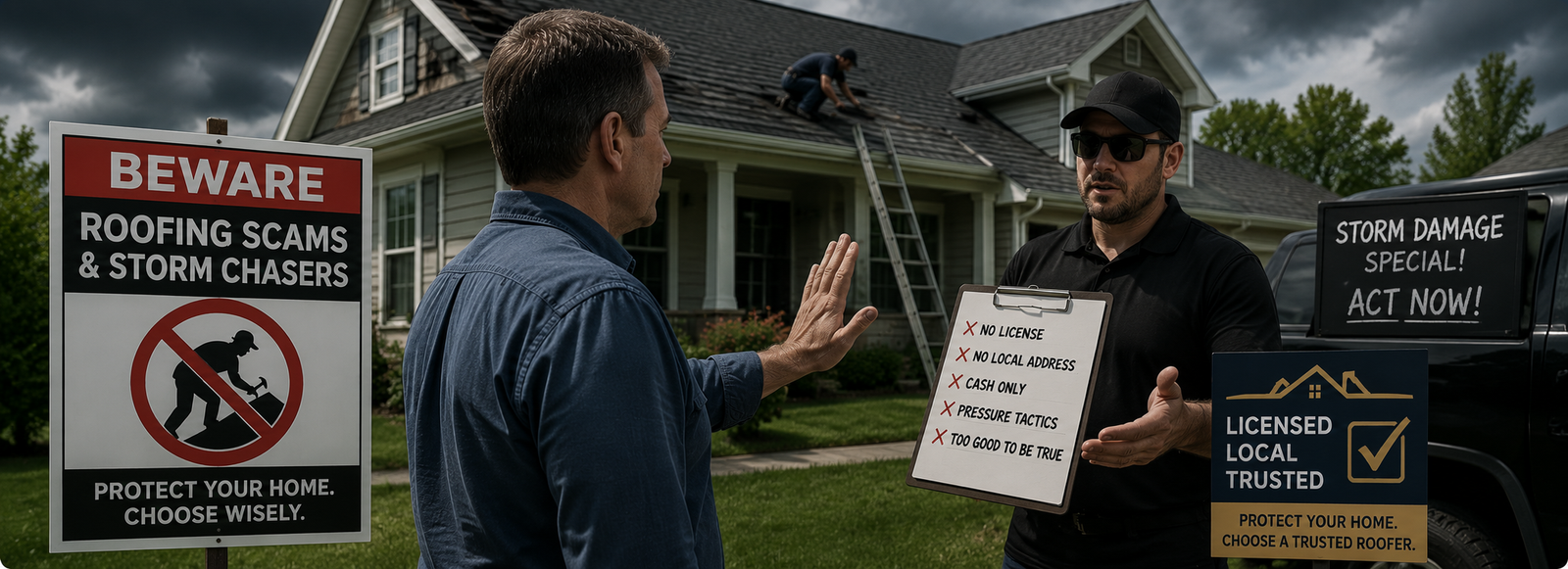
Here is an important protective point. Be wary of any contractor who asks you, the homeowner, to pull the permit in your own name for their work. Legitimate, licensed contractors pull permits under their own license. A contractor pushing the permit onto you is a warning sign, it can shift liability to you if something goes wrong, and it is sometimes a signal that the contractor is not properly licensed to pull it themselves. This is one of the red flags we cover in our guide on avoiding roofing scams and storm chasers.
If a roofing contractor asks you to pull the permit in your name for work they are performing, pause. A properly licensed contractor pulls the permit under their own license. Being asked to do it yourself often means the contractor either cannot, or does not want the accountability, and either way it puts the liability on you.
What Does a Roofing Permit Cost?
Permit fees in Montgomery County are set by the Department of Permitting Services and are generally based on the value or scope of the work. For a typical residential roof replacement, the permit cost is a relatively small portion of the overall project, not a make-or-break expense. When a licensed contractor handles your roof, the permit fee is usually included in, or itemized on, their estimate.
Because fee schedules change over time, the most accurate number comes straight from the county's Department of Permitting Services or from your contractor's current written quote. The right way to think about it: the permit is a normal, expected line item in a roof-replacement budget, not an optional add-on to be negotiated away. A contractor who offers to "skip the permit to save you money" is not doing you a favor, they are handing you a future liability.
How the Permit and Inspection Process Works
The process is straightforward, especially when a contractor runs it for you. In general terms it looks like this:
- Application: The contractor (or homeowner) submits a permit application to Montgomery County's Department of Permitting Services with the project details.
- Permit issued: Once approved, the permit is issued and work can begin legally.
- Work performed: The roof is torn off and replaced according to code.
- Inspection(s): Depending on scope, the county inspects the work, this can include the deck or underlayment before the new covering goes on, and a final inspection when complete.
- Sign-off / close-out: Once the work passes, the permit is closed out and your roof is officially documented as code-compliant.
That final, closed-out permit is what you want. It is the paper trail proving the job was done and approved, exactly the record a future buyer, inspector or insurer may ask to see. A good contractor manages every step of this for you and confirms the permit is properly closed at the end.
We Handle the Permits, Inspections and Everything Else
As a licensed Montgomery County contractor, we pull the permit under our own license, coordinate the county inspections, and make sure your new roof is fully documented and code-compliant, so you never have to think about the paperwork. Free estimates across the county.
The Real Risks of Unpermitted Roofing Work
Skipping the permit might save a little time upfront, but unpermitted roofing work creates risks that can cost far more down the line:
- Stop-work orders and fines: The county can halt the job and impose penalties if it discovers unpermitted work in progress.
- Retroactive inspection or redo: You may be required to have the work inspected after the fact, or even torn out and redone to meet code, at your expense.
- Problems selling your home: Buyers and their inspectors routinely ask about permits. Open or missing permits can delay, complicate or kill a sale, and may force you to fix things on the buyer's timeline.
- Insurance complications: If a problem arises from work that was never permitted or inspected, it can complicate an insurance claim.
- No proof of quality: Without an inspection, you have no independent confirmation the work was done correctly, exactly the situation storm chasers rely on.
The pattern is consistent: unpermitted work trades a small short-term saving for a large potential long-term cost. Doing it properly, with a permit and inspection, is cheap insurance against all of the above.
A Word on Roofing Code Requirements
The permit and inspection process exists to enforce roofing code requirements, the standards that govern how a roof must be built. These cover things like proper underlayment, ice-and-water shield in vulnerable areas, correct flashing, adequate ventilation and appropriate fastening. You do not need to memorize the code, that is your contractor's job, but it helps to know that the inspection is checking real, meaningful things that affect how well and how long your roof performs. Ventilation in particular is both a code and a longevity issue, which we explain in our guide on how long a roof lasts in Maryland.
What If I Want to Do It Myself?
A homeowner working on their own primary residence may be eligible to pull an owner permit in Montgomery County. But eligibility to pull the permit does not remove the responsibility that comes with it, you would be accountable for meeting code and passing inspection, and you take on all the safety risk of the work itself.
Roofing is genuinely dangerous, physically demanding and code-sensitive work. Even where a DIY owner permit is allowed, most homeowners come out ahead hiring a licensed contractor who pulls the permit, carries insurance that protects you, warranties the work, and knows the code cold. The money saved doing it yourself often evaporates the moment something is done wrong and has to be corrected, or worse, someone gets hurt. For the vast majority of homeowners, professional installation is the safer and, over time, cheaper path.
The Bottom Line
Yes, you almost certainly need a permit to replace your roof in Montgomery County. That permit is not red tape, it is protection: it ensures the work meets code, creates a record that safeguards your home's value, and shields you from the costly problems that unpermitted work invites. The good news is that with a licensed local contractor, the entire process is handled for you, application, inspections and close-out, so a properly permitted roof takes no extra effort on your part.
If you are planning a roof replacement anywhere in Montgomery County, from Gaithersburg to Clarksburg and beyond, we handle the permits, the inspections and the work itself, all under our own license, all to code. When you are ready, our guides on roof replacement cost and choosing a roofing contractor will help you plan the rest, and our roof and gutter service page has more on how we work.