Every January, after the first real cold snap, our phones start ringing with the same story: water stains spreading across a bedroom ceiling, a wall that feels damp, icicles the size of baseball bats hanging off the gutters. The culprit is almost always an ice dam, and by the time water is inside the house, the cheap fixes are behind you. The good news is that you can prevent ice dams on your roof almost entirely, and the best time to do it is before the snow flies.
Ice dam prevention is really attic work, not roof work, which surprises most homeowners. In this guide we will explain the physics in plain terms, walk through the three fixes that actually solve the problem, cover safe roof snow removal for when winter arrives anyway, and give you a complete winter roof preparation checklist.
What Causes Ice Dams on Roofs?
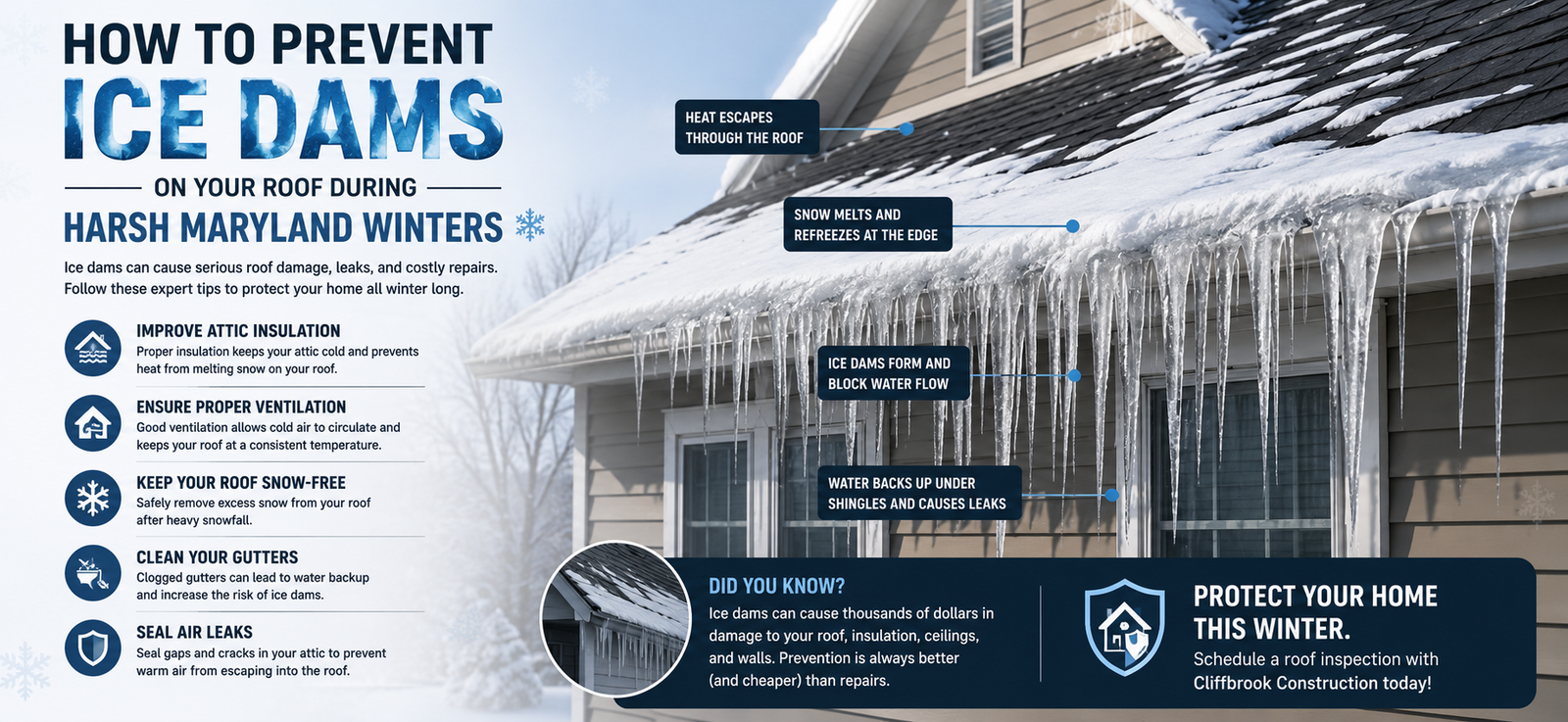
An ice dam needs three ingredients: snow on the roof, freezing outdoor temperatures, and, the one you control, a roof surface that is warmer in some places than others. Here is the sequence:
- Heat escapes into the attic. Warm air from the living space leaks up through gaps and thin insulation, warming the underside of the roof deck.
- Snow melts from below. The warmed upper roof melts the snow sitting on it, even when the air temperature is well below freezing.
- Meltwater refreezes at the eaves. The water runs down until it reaches the overhangs, which sit beyond the heated walls and stay cold, and freezes into a ridge of ice.
- The dam traps more water. Each cycle adds ice to the ridge. Meltwater pools behind it with nowhere to drain, and standing water on a roof always finds a way in, under shingles, through nail holes, into the decking.
Notice what is not on the list: the shingles. Ice dams are not a shingle defect, and a brand-new roof will grow dams just as readily as an old one if the attic below leaks heat. That is why the lasting fixes live in the attic.
The Damage Ice Dams Do
Freezing weather roof damage from ice dams shows up in two waves. The immediate wave is water intrusion: soaked roof decking, wet attic insulation (which loses its insulating value and grows mold), stained ceilings, peeling paint and damp drywall. The slower wave is structural: repeated wetting rots decking and rafter tails, corrodes fasteners, and degrades the roof edge year after year.
The weight is a problem too. Ice is heavy, and a large dam loads the gutters and roof edge with hundreds of pounds, tearing gutters loose and bending fasteners. Dams also feed the giant icicles that are a genuine hazard over walkways and doors. All of it is preventable, and prevention costs a fraction of one insurance claim's deductible. If you want a sense of how edge damage shortens a roof's overall life, our guide on how long a roof lasts in Maryland covers the full picture.
Fix 1: Attic Insulation (The Big One)
The single most effective way to prevent ice dams is to keep your heat out of the attic, and that is a two-part job: air sealing, then attic insulation.
Air sealing comes first. Warm air does not politely wait to conduct through insulation; it pours through physical gaps, around recessed light fixtures, bathroom fan housings, the attic hatch, plumbing and wiring penetrations, and chimney chases. Sealing these leaks with foam and caulk is unglamorous work that pays off more than almost anything else, because moving air carries far more heat (and moisture) than conduction ever will.
Then insulate to depth. For our climate zone, the target is roughly R-49 to R-60, about 14 to 18 inches of blown fiberglass or cellulose. Many older homes in the county have 6 inches or less. If you can see the tops of your ceiling joists when you peek into the attic, you are underinsulated, full stop. Topping up is one of the best-returning home improvements there is: it prevents ice dams, cuts heating and cooling bills year-round, and makes the house more comfortable.
After a snowfall, drive down your street and look at the roofs. The houses where snow melts in patches, or disappears from the roof while staying on the ground, are the houses leaking heat into their attics. A roof that holds an even blanket of snow is a roof with a cold deck, and a cold deck does not make ice dams. Your own roof is telling you the same story; you just have to look.
Fix 2: Roof Ventilation
Roof ventilation is the partner to insulation. Even a well-sealed attic picks up some heat, and ventilation flushes it out before it can warm the roof deck. The standard system is passive and simple: intake vents at the soffits draw in cold outside air, and a ridge vent (or other exhaust vents near the peak) lets the air escape, continuously washing the underside of the roof deck with outdoor-temperature air.
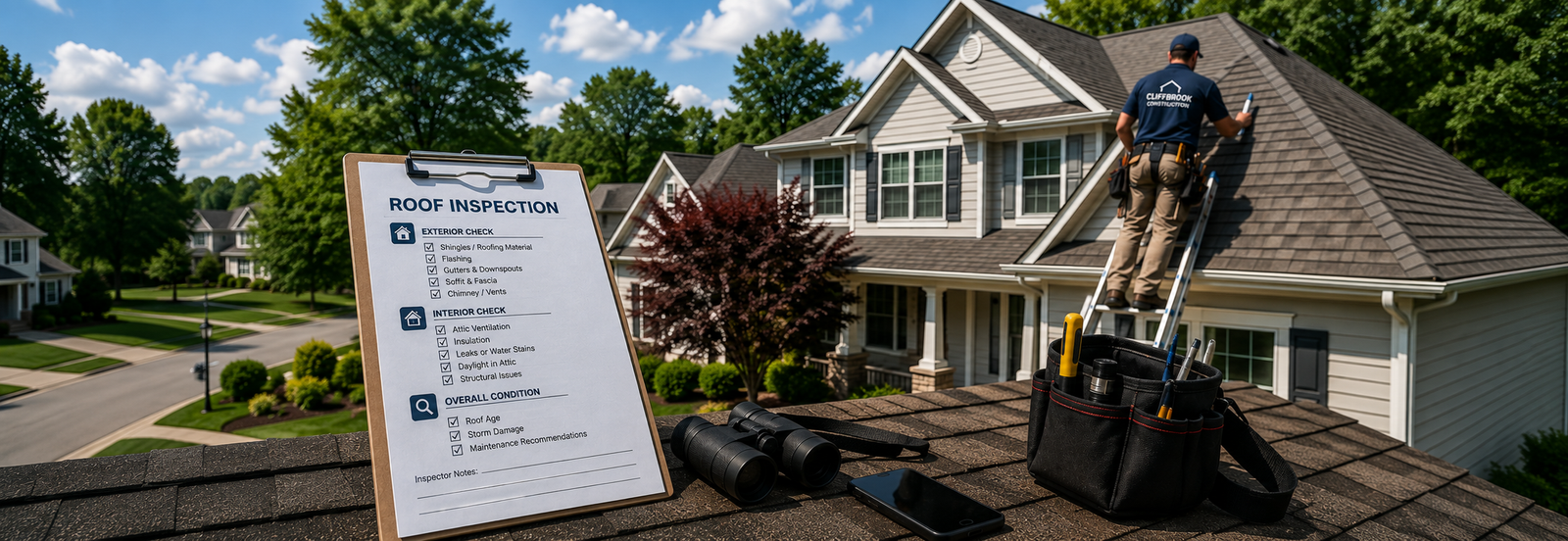
The most common failure we find is blocked soffit vents, usually buried under insulation that was pushed into the eaves, which chokes off the intake and stalls the whole system. Insulation baffles keep the airway open where the roof meets the walls. Proper ventilation does double duty, by the way: in winter it keeps the deck cold and dams away, and in summer it vents heat that would otherwise cook your shingles from below. It is one of the items we check on every visit, and it is covered in depth in our roof inspection guide.
Fix 3: Clean, Functional Gutters
Gutters do not start ice dams, but they decide how bad one gets. A gutter clogged with fall leaves holds standing water that freezes solid at the exact spot meltwater arrives, handing the dam a perfect foundation along the whole roof edge. Clear, well-pitched gutters with open downspouts give meltwater an escape route during every thaw, which keeps ice from accumulating.
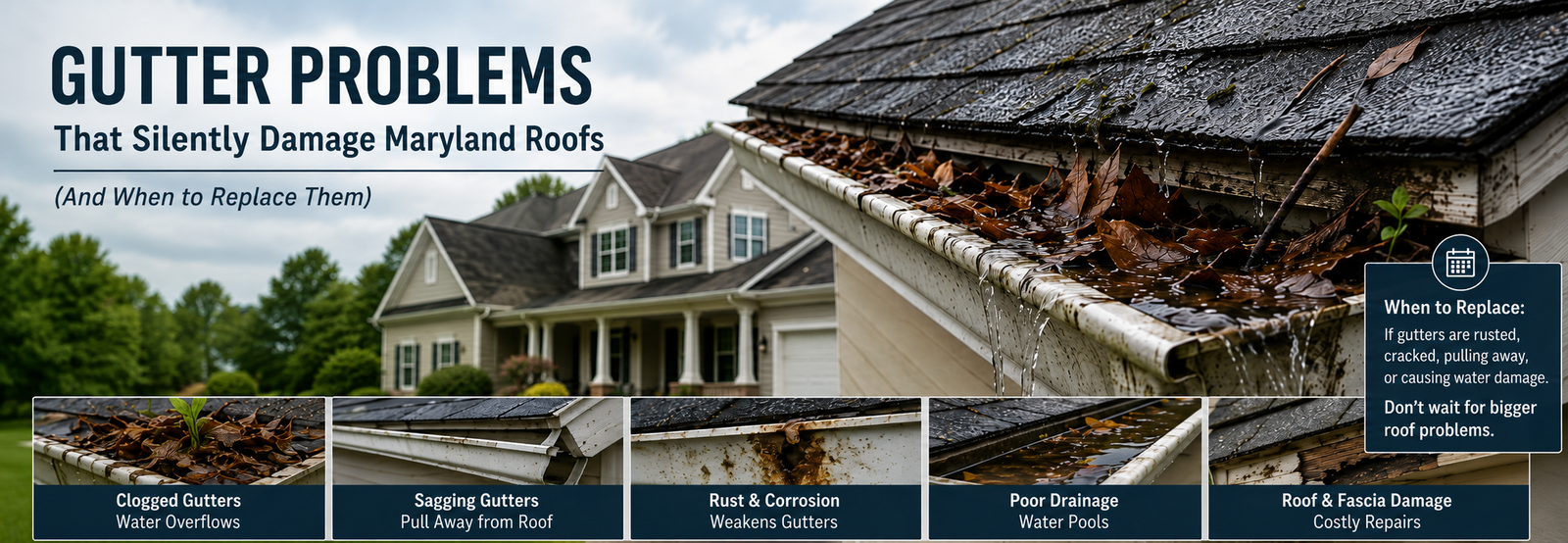
That makes late-fall gutter cleaning genuine winter roof preparation, not just tidiness. Gutter guards reduce the workload considerably in leafy neighborhoods, and seamless gutters resist the seam clogs and standing water that sectional systems suffer, we covered the full case in our seamless gutters guide, and the ways failing gutters hurt roofs year-round in gutter problems that silently damage Maryland roofs. If your gutters need attention before winter, our roof and gutter service handles cleaning, repair, guards and replacement together.
Get Your Roof Winter-Ready Before the First Freeze
We inspect the roof, gutters, attic insulation depth and ventilation together, then give you an honest list of what actually needs attention before winter, and what does not. Free, no-pressure inspections across Laytonsville, Damascus, Olney and all of Montgomery County.
How to Safely Remove Snow From Your Roof
When a heavy snow lands before the attic fixes are done, removing the snow near the eaves takes away the dam's raw material. The safe method for roof snow removal is a roof rake: a wide blade on a telescoping pole that lets you pull snow off the lower portion of the roof while standing on the ground.
- Work from the ground only. Never climb onto a snow-covered or icy roof. No amount of prevented ceiling damage is worth a fall.
- Clear the first 3 to 4 feet above the eaves. That is the zone where meltwater refreezes; you do not need to strip the whole roof.
- Leave a thin layer. Rake gently and stop short of the shingles. Scraping to bare shingles in freezing weather damages them.
- Mind what is above and behind you. Snow comes off in heavy sheets, and a long aluminum pole near power lines is dangerous. Keep clear of both.
- Rake after every significant snowfall of roughly 6 inches or more, especially with a cold stretch in the forecast.
For two-story eaves, steep pitches, or heavy accumulations, this becomes a professional job, and if a dam has already formed and water is entering the house, professionals with steam equipment can melt it off without harming the roof.
What NOT to Do About Ice Dams
Do not chip, hack or hammer at an ice dam. Every blow that fractures ice also fractures the frozen, brittle shingles underneath, and we repair the resulting damage every spring. Do not throw rock salt or driveway ice melt on the roof; it corrodes shingles, flashing and gutters and kills the plants below. Do not aim a torch or heat gun at the roof, for reasons that should be obvious. And do not climb up there yourself. If a dam is actively causing a leak, a calcium chloride sock laid across the dam can melt a relief channel as a stopgap, but the real answer is professional removal followed by fixing the attic so it never happens again.
Heat Cables and Ice & Water Shield
Two supporting measures deserve honest treatment. Heat cables, the zigzag electric cables along the eaves, melt drainage channels through ice so trapped water can escape. They work as a targeted bandage for stubborn spots, a shaded north eave, a complicated valley, but they treat the symptom, consume electricity all season, and will not save a roof over a leaky, underinsulated attic. Consider them a supplement to the real fixes, not a substitute.
Ice and water shield is different: it is a self-adhering waterproof membrane installed under the shingles along the eaves and valleys during roofing work. Maryland code requires it at the eaves precisely because of ice dams, it is the roof's last line of defense when water does back up. It can only be installed when the roof is opened up, which makes a roof replacement the moment to make sure your eaves get generous coverage. If your roof is approaching that decision anyway, our repair vs replacement guide walks through the call, and proper ice and water shield installation is standard on every roof we build.
Winterizing Your Roof: A Checklist for Homeowners
Here is the complete winterizing your roof checklist, best worked through in October and November, before the first hard freeze:
- Clean the gutters and downspouts after the leaves finish dropping, and confirm downspouts discharge well away from the foundation.
- Check attic insulation depth. If joist tops are visible or depth is under 14 inches, plan a top-up.
- Air-seal attic leaks around lights, fans, hatches, chimneys and plumbing chases.
- Verify ventilation is open, soffit vents clear of insulation, ridge vent unobstructed.
- Inspect the roof for loose or missing shingles, damaged flashing, and exposed nails, small gaps that winter exploits.
- Trim overhanging branches that drop debris into gutters and can snap under snow load.
- Buy a roof rake now, not during the storm when every hardware store is sold out.
- Check ceilings and attic after each thaw through the winter for early signs of moisture.
An hour of checklist work in the fall routinely saves thousands in freezing weather roof damage come February. Most of these items are exactly what a professional fall inspection covers in one visit.
Ice Dams in Laytonsville, Damascus and Northern Montgomery County
Winter roof maintenance in Laytonsville and the county's northern reaches deserves special mention, because winter is simply harder up there. The elevated, open terrain around Laytonsville, Damascus, Brookeville and Olney runs colder than downcounty, holds snow longer, and sees more freeze-thaw cycling, the exact recipe for ice dams. Many homes in these areas are older properties with the underinsulated attics to match.
Downcounty is not exempt: the mature tree cover across Kensington, Silver Spring and Gaithersburg keeps roofs shaded and gutters full of leaves, both of which feed ice problems. Wherever you are in Montgomery County, the prevention playbook is the same, seal, insulate, ventilate, clean the gutters, and it works.
We inspect all of it together: roof condition, gutter function, insulation depth and ventilation, in one free visit, and tell you plainly what needs doing before winter and what does not. With 75+ years of combined experience, MHIC licensing and a zero-subcontractor policy, the crew that inspects your roof is the same one that fixes it. Ice dams are a solved problem, the solving just has to happen before December.